Christopher B. Kulp – författare
Visar alla böcker från författaren Christopher B. Kulp. Handla med fri frakt och snabb leverans.
4 produkter
4 produkter
323 kr
Tillfälligt slut
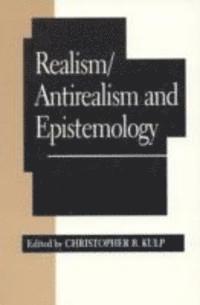
This landmark collection of essays by six renowned philosophers explores the implications of the contentious realism/antirealism debate for epistemology. The essays examine issues such as whether epistemology needs to be realist, the bearing of a realist conception of truth on epistemology, and realism and antirealism in terms of a pragmatist conception of epistemic justification. Richard Rorty's essay provides a critical commentary on the other five.
493 kr
Skickas inom 10-15 vardagar
This is a book on metaethics and moral epistemology. It asks two fundamental questions: (i) Is there any such thing as (non-relative) moral truth?; and (ii) If there is such truth, how do we come into epistemic contact with it? Roughly the first half of the book is aimed at answering the first question. Its animating idea is that we should take our ordinary, tutored moral judgments seriously—judgments typified by our conviction that it is clearly true that some acts, policies, social norms et al. are morally right or wrong, permissible or impermissible, praiseworthy or condemnable, etc., no matter when, where, or by whom they are performed. In order to provide a firm conceptual basis for such judgments, the book develops a theory of moral truth, based on a theory of moral facts. The account of moral truth and moral facts is further grounded on a theory of moral properties. In short, the book develops a theory of moral realism, roughly, the view that there are indeed non-relative, first-order moral truths. The second half of the book is aimed at answering the second question above. Building squarely on the metaethical theories developed earlier, the book argues for a non-empiricist theory of justified moral belief and knowledge. Pivotal to this project is a careful analysis of various forms of moral skepticism, by which I mean any conception of morality substantially at odds with the general contours of our ordinary moral thinking. All such skepticisms are rejected, and in their place a broadly intuitionist, epistemically fallibilist theory of moral knowledge is advanced. The conclusion reached is that we have very strong reason to believe that our ordinary moral thinking, although certainly liable to error, is fundamentally sound. Moral knowledge is ubiquitous.
858 kr
Skickas inom 10-15 vardagar
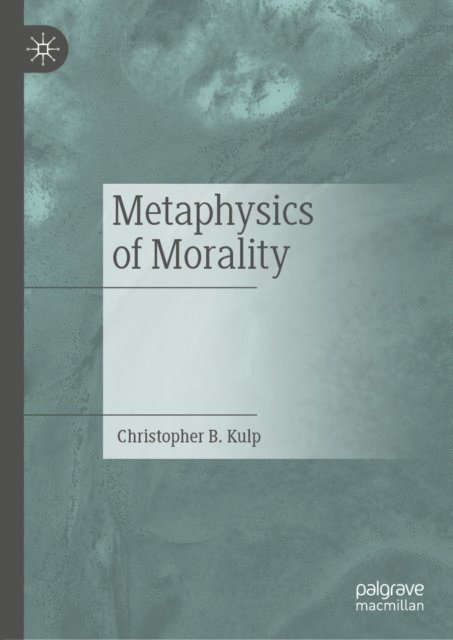
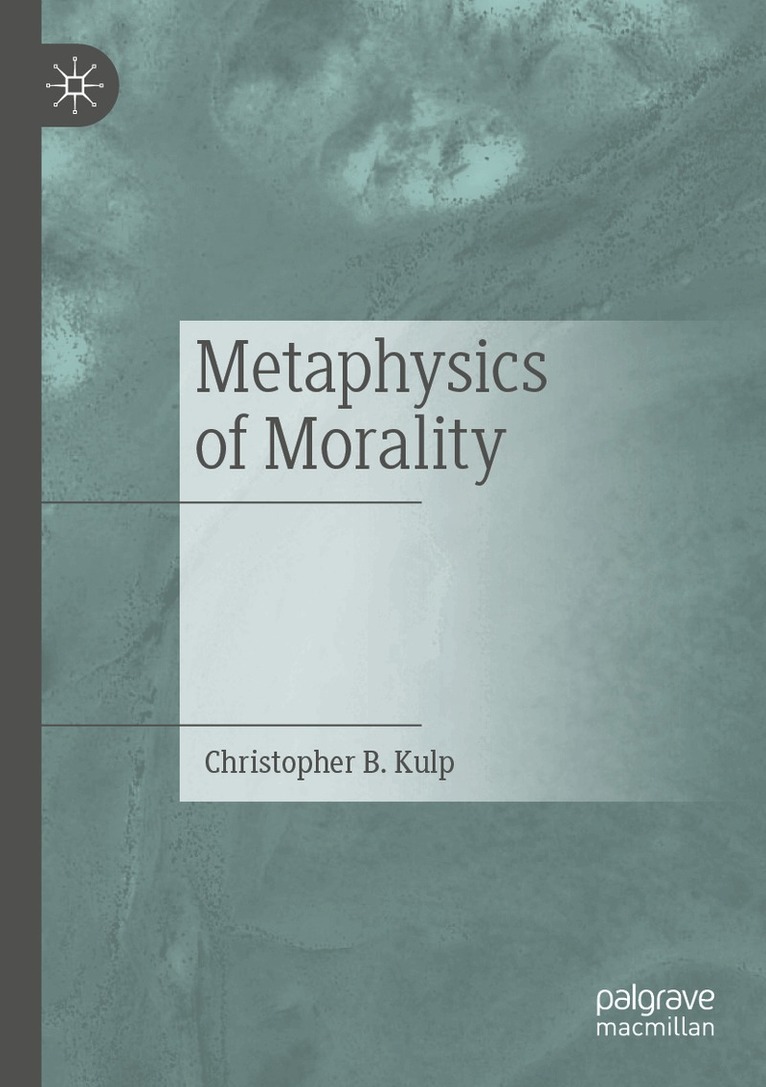
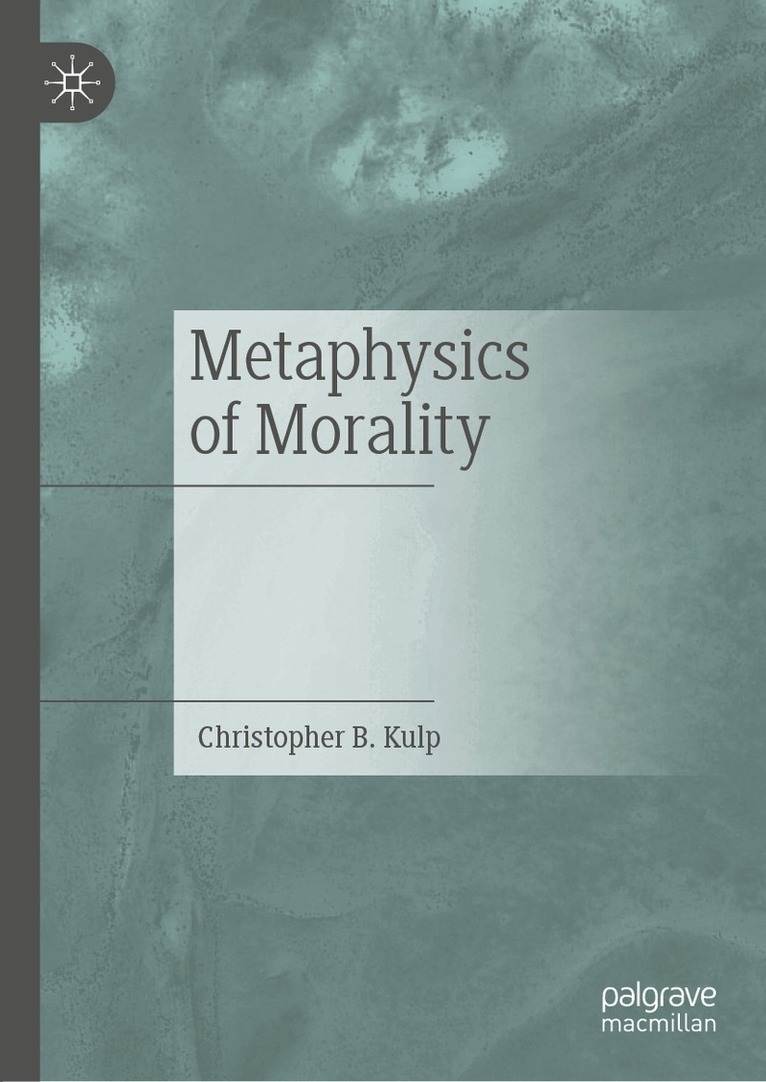
This is a book on metaethics—in particular, an inquiry into the metaphysical foundations of morality. After carefully exploring the metaphysical commitments, or lack thereof, of the leading versions of moral anti-realism, Kulp develops a new and in-depth theory of moral realism. Starting with the firm recognition of the importance of our common sense belief that we possess a great deal of moral knowledge—that, for example, some acts are objectively right and some objectively wrong—the book goes on to examine the metaphysical grounds of various skeptical responses to this perspective. In great part, the book is devoted to developing a version of realist metaethics: specifically, developing in detail realist theories of moral truth, moral facts, and moral properties.Concluding with the rejection of prominent contemporary forms of moral anti-realism, Kulp presents a rigorous non-naturalistic theory of moral realism, and a vindication of the basic commitments of commonsensemoral thought.
858 kr
Skickas inom 10-15 vardagar
This is a book on metaethics—in particular, an inquiry into the metaphysical foundations of morality. After carefully exploring the metaphysical commitments, or lack thereof, of the leading versions of moral anti-realism, Kulp develops a new and in-depth theory of moral realism. Starting with the firm recognition of the importance of our common sense belief that we possess a great deal of moral knowledge—that, for example, some acts are objectively right and some objectively wrong—the book goes on to examine the metaphysical grounds of various skeptical responses to this perspective. In great part, the book is devoted to developing a version of realist metaethics: specifically, developing in detail realist theories of moral truth, moral facts, and moral properties.Concluding with the rejection of prominent contemporary forms of moral anti-realism, Kulp presents a rigorous non-naturalistic theory of moral realism, and a vindication of the basic commitments of commonsensemoral thought.