Christopher Beach – författare
Visar alla böcker från författaren Christopher Beach. Handla med fri frakt och snabb leverans.
11 produkter
11 produkter
Inbunden, Engelska, 2015
821 kr
Skickas inom 5-8 vardagar
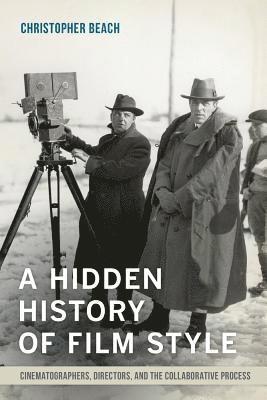
The image that appears on the movie screen is the direct and tangible result of the joint efforts of the director and the cinematographer. A Hidden History of Film Style is the first study to focus on the collaborations between directors and cinematographers, a partnership that has played a crucial role in American cinema since the early years of the silent era. Christopher Beach argues that an understanding of the complex director-cinematographer collaboration offers an important model that challenges the pervasive conventional concept of director as auteur. Drawing upon oral histories, early industry trade journals, and other primary materials, Beach examines key innovations like deep focus, color, and digital cinematography, and in doing so produces an exceptionally clear history of the craft. Through analysis of several key collaborations in American cinema from the silent era to the late twentieth century such as those of D. W. Griffith and Billy Bitzer, William Wyler and Gregg Toland, and Alfred Hitchcock and Robert Burks this pivotal book underlines the importance of cinematographers to both the development of cinematic technique and the expression of visual style in film.
Häftad, Engelska, 2015
307 kr
Skickas inom 5-8 vardagar
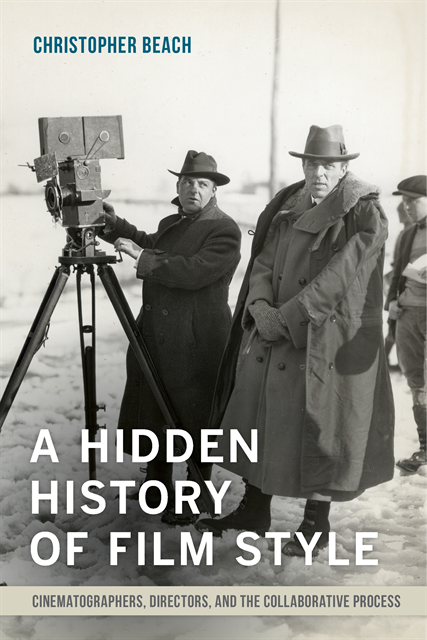
The image that appears on the movie screen is the direct and tangible result of the joint efforts of the director and the cinematographer. A Hidden History of Film Style is the first study to focus on the collaborations between directors and cinematographers, a partnership that has played a crucial role in American cinema since the early years of the silent era. Christopher Beach argues that an understanding of the complex director-cinematographer collaboration offers an important model that challenges the pervasive conventional concept of director as auteur. Drawing upon oral histories, early industry trade journals, and other primary materials, Beach examines key innovations like deep focus, color, and digital cinematography, and in doing so produces an exceptionally clear history of the craft. Through analysis of several key collaborations in American cinema from the silent era to the late twentieth century such as those of D. W. Griffith and Billy Bitzer, William Wyler and Gregg Toland, and Alfred Hitchcock and Robert Burks this pivotal book underlines the importance of cinematographers to both the development of cinematic technique and the expression of visual style in film.
Häftad, Engelska, 2002
561 kr
Skickas inom 7-10 vardagar
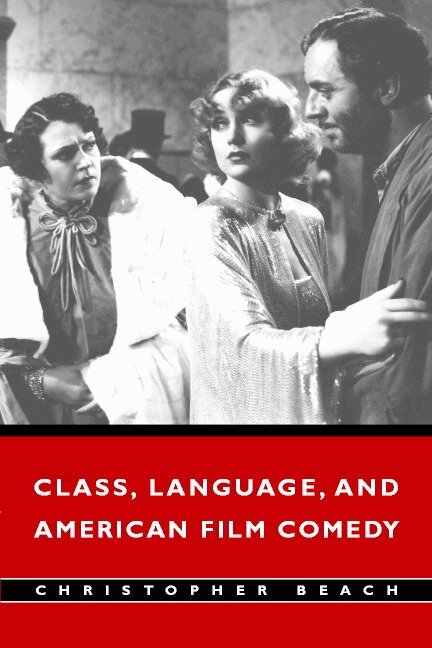
This book examines the evolution of American film comedy through the lens of language and the portrayal of social class. Christopher Beach argues that class has been an important element in the development of sound comedy as a cinematic form. With the advent of sound in the late 1920s and early 1930s, filmmakers recognized that sound and narrative enlarged the semiotic and ideological potential of film. Analyzing the use of language in the films of the Marx Brothers, Frank Capra, Woody Allen and the Coen brothers, among others, Class, Language, and American Film Comedy traces the history of Hollywood from the 1930s to the present, while offering a new approach to the study of class and social relationships through linguistic analysis.
Inbunden, Engelska, 2003
1 232 kr
Skickas inom 7-10 vardagar
The Cambridge Introduction to Twentieth-Century American Poetry is designed to give readers a brief but thorough introduction to the various movements, schools, and groups of American poets in the twentieth century. It will help readers to understand and analyze modern and contemporary poems. The first part of the book deals with the transition from the nineteenth-century lyric to the modernist poem, focussing on the work of major modernists such as Robert Frost, T. S. Eliot, Ezra Pound, Wallace Stevens, Marianne Moore, and W. C. Williams. In the second half of the book, the focus is on groups such as the poets of the Harlem Renaissance, the New Critics, the Confessionals, and the Beats. In each chapter, discussions of the most important poems are placed in the larger context of literary, cultural, and social history.
Häftad, Engelska, 2003
351 kr
Skickas inom 7-10 vardagar
The Cambridge Introduction to Twentieth-Century American Poetry is designed to give readers a brief but thorough introduction to the various movements, schools, and groups of American poets in the twentieth century. It will help readers to understand and analyze modern and contemporary poems. The first part of the book deals with the transition from the nineteenth-century lyric to the modernist poem, focussing on the work of major modernists such as Robert Frost, T. S. Eliot, Ezra Pound, Wallace Stevens, Marianne Moore, and W. C. Williams. In the second half of the book, the focus is on groups such as the poets of the Harlem Renaissance, the New Critics, the Confessionals, and the Beats. In each chapter, discussions of the most important poems are placed in the larger context of literary, cultural, and social history.
Häftad, Engelska, 2009
323 kr
Skickas inom 10-15 vardagar
This title analyzes the films and filmmaking career of director Hal Ashby, placing his work in the cultural context of filmmaking in the 1970s. Hal Ashby directed eleven feature films over the course of his career and was an important figure in the Hollywood Renaissance of the late 1960s and 1970s. Though he was a member of the same generation of filmmakers as Martin Scorsese, Francis Ford Coppola, and Robert Altman, Ashby has received comparatively little critical or scholarly validation for his work. Author Christopher Beach argues that despite his lower profile, Ashby was an exceptionally versatile and unusually creative director. Beach focuses primarily on Ashby's first seven films - "The Landlord", "Harold and Maude", "The Last Detail", "Shampoo", "Bound for Glory", "Coming Home", and "Being There" - to analyze Ashby's contributions to filmmaking culture in the 1970s. The first two chapters of this volume provide an overview of Ashby's filmmaking career, as Beach makes the case for Ashby's status as an auteur and provides a biographical survey of Ashby's most productive and successful decade, the 1970s.In the following chapters, Beach analyzes groups of films to uncover important thematic concerns in Ashby's work, including the treatment of a young male protagonist in "The Landlord" and "Harold and Maude", the representation of the U.S. military in "The Last Detail" and "Coming Home", and the role of television and mass media in "Shampoo" and "Being There". Beach also examines the crucial role of the musical score in Ashby's films, as well as the rapid decline of the director's career after Being There. "The Films of Hal Ashby" is based on Beach's extensive use of unpublished archival materials, as well as a number of interviews with actors, directors, producers, cinematographers, and others involved in the making of Ashby's films. This volume will interest film and television scholars, as well as readers interested in filmmakers of the 1970s.
Inbunden, Engelska, 2020
1 272 kr
Skickas inom 10-15 vardagar
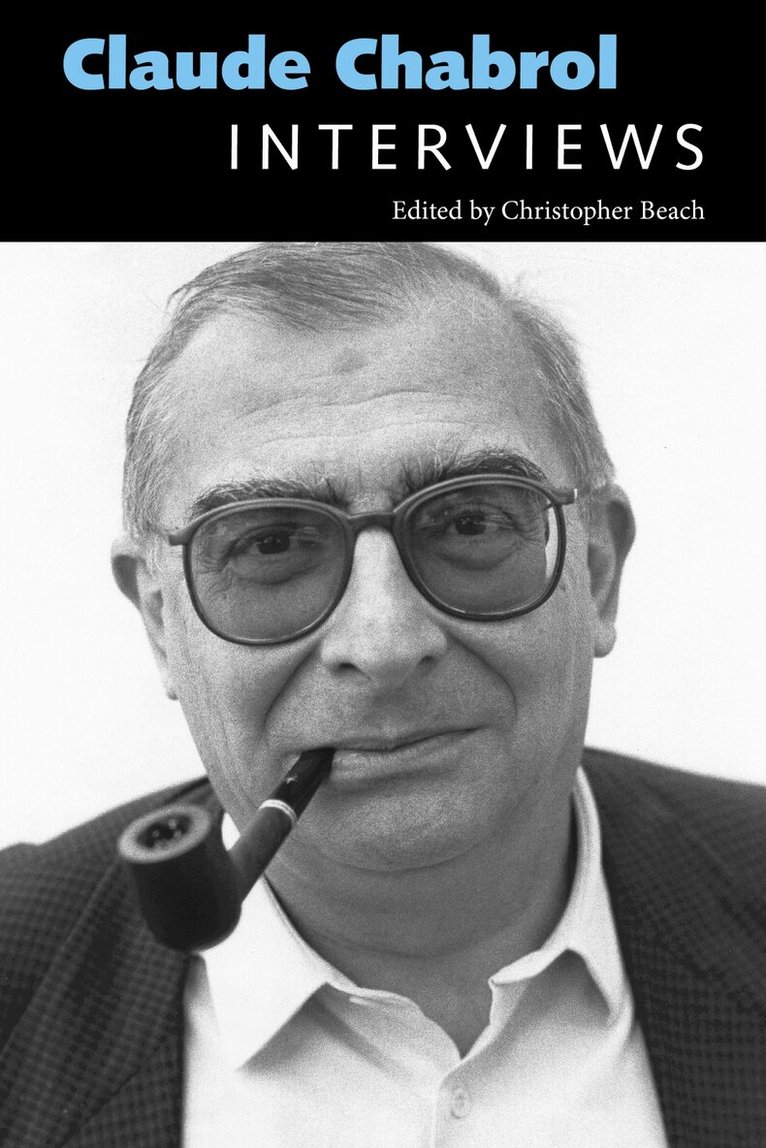
Claude Chabrol (1930–2010) was a founding member of the French New Wave, the group of filmmakers that revolutionized French filmmaking in the late 1950s and early 1960s. One of the most prolific directors of his generation, Chabrol averaged more than one film per year from 1958 until his death in 2010. Among his most influential films, Le Beau Serge, Les Cousins, and Les Bonnes Femmes established his central place within the New Wave canon. In contrast to other filmmakers of the New Wave such as Jean-Luc Godard and Éric Rohmer, Chabrol exhibited simultaneously a desire to create films as works of art and an impulse to produce work that would be commercially successful and accessible to a popular Audience. The seventeen interviews in this volume, most of which have been translated into English for the first time, offer new insights into Chabrol’s remarkably wide-ranging filmography, providing a sense of his attitudes and ideas about a number of Subjects. Chabrol shares anecdotes about his work with such actors as Isabelle Huppert, Gerard Depardieu, and Jean Yanne, and offers fresh perspectives on other directors including Jean-Luc Godard, Fritz Lang, and Alfred Hitchcock.His mistrust of conventional wisdom often leads him to make pronouncements intended as much to shock as to elucidate, and he frequently questions established ideas and normative attitudes toward moral, ethical, and social behaviors. Chabrol’s intelligence is far-reaching, moving freely between philosophy, politics, psychology, literature, and history, and his iconoclastic spirit, combined with his blend of sarcasm and self-deprecating humor, give his interviews a tone that hovers between a high moral seriousness and a cynical sense of hilarity in the face of the world’s complexities.
Häftad, Engelska, 2020
333 kr
Skickas inom 5-8 vardagar
Claude Chabrol (1930–2010) was a founding member of the French New Wave, the group of filmmakers that revolutionized French filmmaking in the late 1950s and early 1960s. One of the most prolific directors of his generation, Chabrol averaged more than one film per year from 1958 until his death in 2010. Among his most influential films, Le Beau Serge, Les Cousins, and Les Bonnes Femmes established his central place within the New Wave canon. In contrast to other filmmakers of the New Wave such as Jean-Luc Godard and Éric Rohmer, Chabrol exhibited simultaneously a desire to create films as works of art and an impulse to produce work that would be commercially successful and accessible to a popular Audience. The seventeen interviews in this volume, most of which have been translated into English for the first time, offer new insights into Chabrol’s remarkably wide-ranging filmography, providing a sense of his attitudes and ideas about a number of Subjects. Chabrol shares anecdotes about his work with such actors as Isabelle Huppert, Gerard Depardieu, and Jean Yanne, and offers fresh perspectives on other directors including Jean-Luc Godard, Fritz Lang, and Alfred Hitchcock.His mistrust of conventional wisdom often leads him to make pronouncements intended as much to shock as to elucidate, and he frequently questions established ideas and normative attitudes toward moral, ethical, and social behaviors. Chabrol’s intelligence is far-reaching, moving freely between philosophy, politics, psychology, literature, and history, and his iconoclastic spirit, combined with his blend of sarcasm and self-deprecating humor, give his interviews a tone that hovers between a high moral seriousness and a cynical sense of hilarity in the face of the world’s complexities.
Inbunden, Engelska, 2022
1 272 kr
Skickas inom 10-15 vardagar
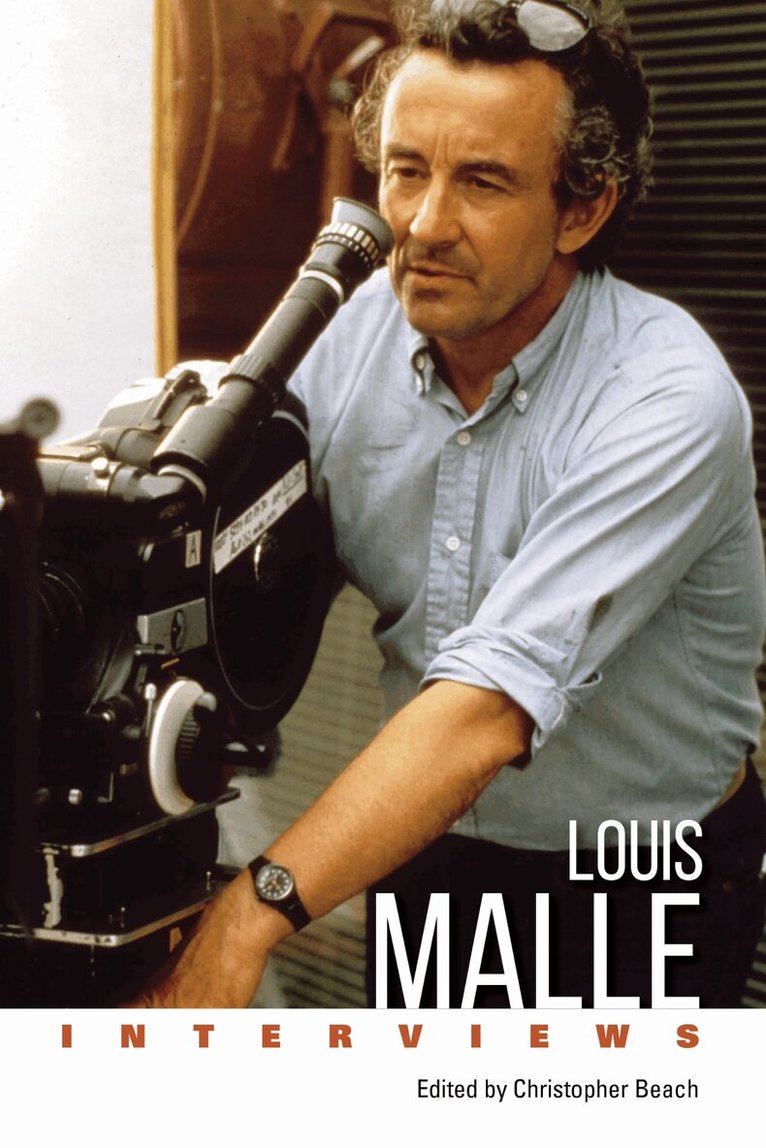
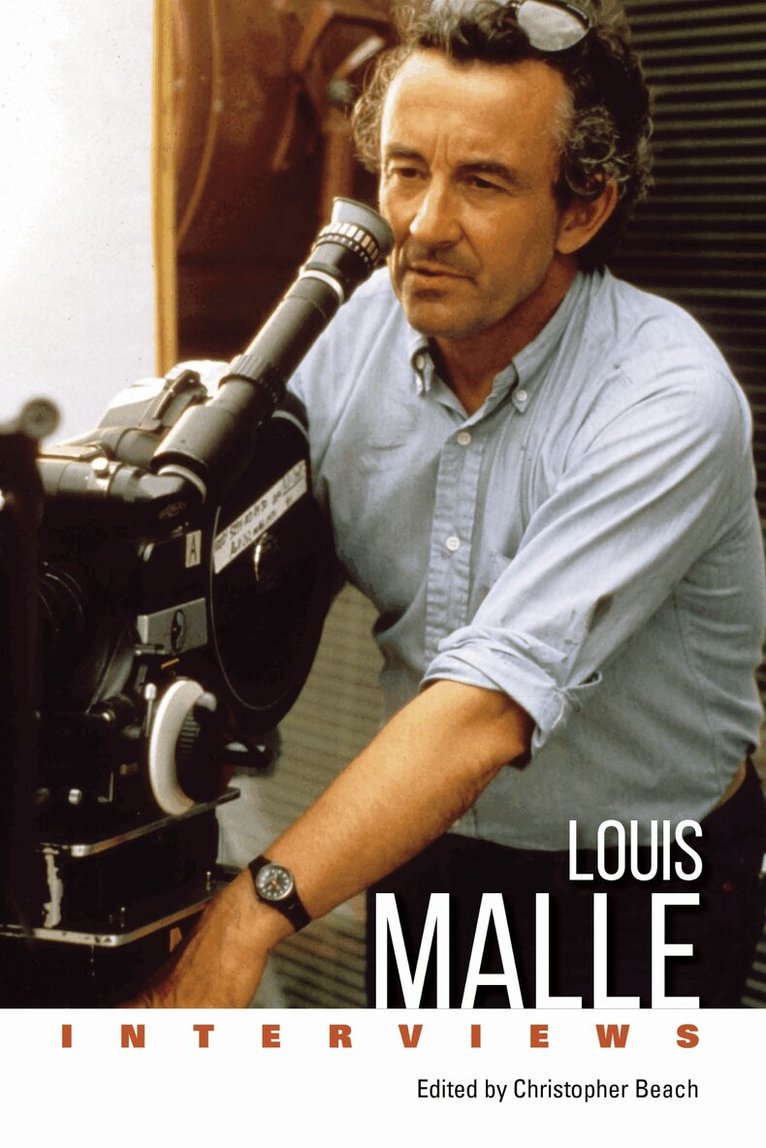
A filmmaker whose work exhibits a wide range of styles and approaches, Louis Malle (1932–1995) was the only French director of his generation to enjoy a significant career in both France and the United States. Although Malle began his career alongside members of the French New Wave like François Truffaut, Jean-Luc Godard, and Claude Chabrol, he never associated himself with that group. Malle is perhaps best known for his willingness to take on such difficult or controversial topics as suicide, incest, child prostitution, and collaboration with the Nazis during World War II. His filmography includes narrative films like Zazie dans le Métro, Murmur of the Heart, Atlantic City, My Dinner with Andre, and Au revoir les enfants, as well as several major documentaries. In the late 1970s, Malle moved to the United States, where he worked primarily outside of the Hollywood studio system. The films of his American period display his keen outsider’s eye, which allowed him to observe diverse aspects of American life in settings that ranged from turn-of-the-century New Orleans to present-day Atlantic City and the Texas Gulf Coast.Louis Malle: Interviews covers the entirety of Malle’s career and features seventeen interviews, the majority of which are translated into English here for the first time. As the collection demonstrates, Malle was an extremely intelligent and articulate filmmaker who thought deeply about his own choices as a director, the ideological implications of those choices, and the often-controversial themes treated in his films. The interviews address such topics as Malle’s approach to casting and directing actors, his attitude toward provocative subject matter and censorship, his understanding of the relationship between documentary and fiction film, and the differences between the film industries in France and the US. Malle also discusses his sometimes-challenging work with such actors as Brigitte Bardot, Pierre Blaise, and Brooke Shields, and sheds new light on the making of his films.
Häftad, Engelska, 2022
338 kr
Skickas inom 10-15 vardagar
A filmmaker whose work exhibits a wide range of styles and approaches, Louis Malle (1932–1995) was the only French director of his generation to enjoy a significant career in both France and the United States. Although Malle began his career alongside members of the French New Wave like François Truffaut, Jean-Luc Godard, and Claude Chabrol, he never associated himself with that group. Malle is perhaps best known for his willingness to take on such difficult or controversial topics as suicide, incest, child prostitution, and collaboration with the Nazis during World War II. His filmography includes narrative films like Zazie dans le Métro, Murmur of the Heart, Atlantic City, My Dinner with Andre, and Au revoir les enfants, as well as several major documentaries. In the late 1970s, Malle moved to the United States, where he worked primarily outside of the Hollywood studio system. The films of his American period display his keen outsider’s eye, which allowed him to observe diverse aspects of American life in settings that ranged from turn-of-the-century New Orleans to present-day Atlantic City and the Texas Gulf Coast.Louis Malle: Interviews covers the entirety of Malle’s career and features seventeen interviews, the majority of which are translated into English here for the first time. As the collection demonstrates, Malle was an extremely intelligent and articulate filmmaker who thought deeply about his own choices as a director, the ideological implications of those choices, and the often-controversial themes treated in his films. The interviews address such topics as Malle’s approach to casting and directing actors, his attitude toward provocative subject matter and censorship, his understanding of the relationship between documentary and fiction film, and the differences between the film industries in France and the US. Malle also discusses his sometimes-challenging work with such actors as Brigitte Bardot, Pierre Blaise, and Brooke Shields, and sheds new light on the making of his films.
Häftad, Engelska, 2022
123 kr
Skickas
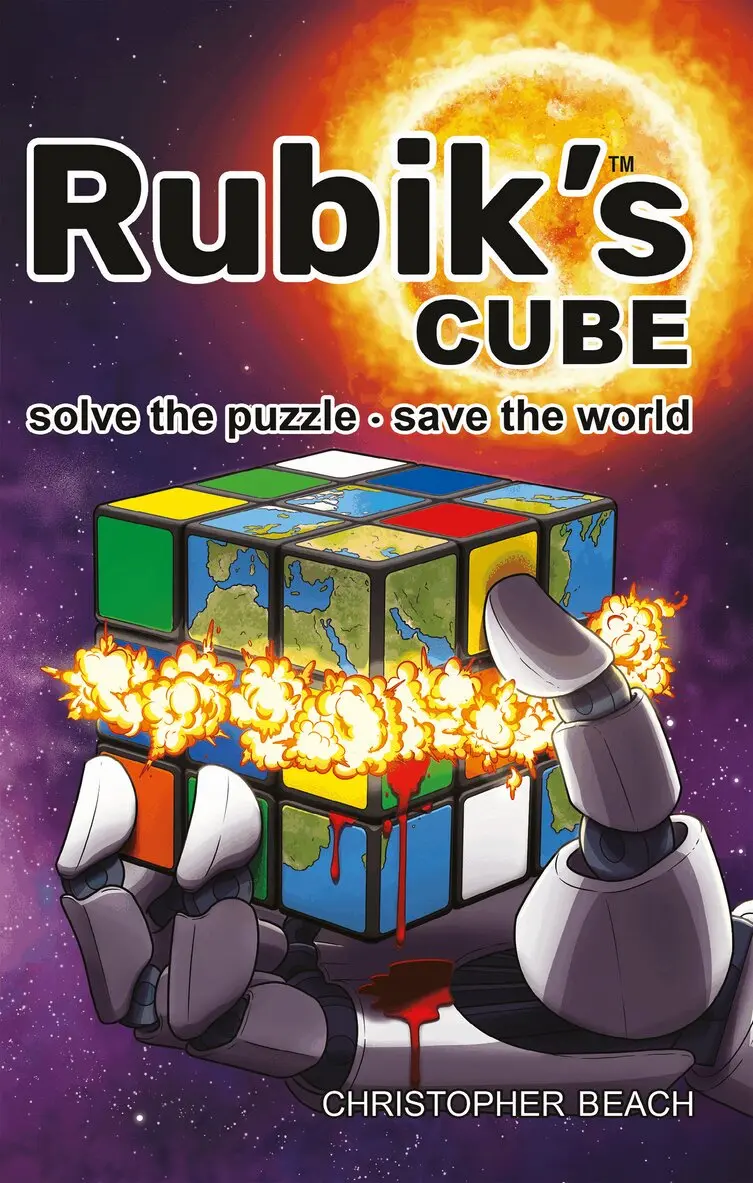
Teenager Ruben, entrusted with a time travelling cube, must save the world... it's not just a toy.The Cube has been brought to Earth by a time-travelling, biomechanical, shape-shifting alien dude, from a badass murderous nation, from a dusty corner of the cosmos, who are hell-bent on the annihilation of all breathing life forms. This alien nation needs somewhere new to live and Earth fits their requirements almost perfectly, once they have evicted the current tenants. The powerful object becomes the centre of a jealous and deadly power struggle and is nearly destroyed in a war between royal Hungarian twin brothers circa 898A.D. in Central Europe. Remains of the damaged Cube pass down through the generations, until it falls into the hands of young, twenty-first- century, Ruben Novak.Ruben is your average teenager about to spend his summer vacation surfing, swimming, and hanging out at the beach in L.A. with his girlfriend. His preordained destiny, written many hundreds of years ago, means the fun must stop and his gap year will have to wait.However, part of the alien cleansing process has already begun, with a ring of detonating spore bombs dumping deadly DNA-altering nano-particles high up in the upper atmosphere. The atomic clock is ticking, and Ruben hasn't even had breakfast yet. Guided by a powerful Overlord alien being, via the Cube, he will travel through time on five dangerous adventures to collect the remnants of the device needed to restore its full functionality and solve the ultimate puzzle: how to preserve life on Earth.At every twist and turn Ruben will be pursued by the mysterious and deadly Time-Warriors who are determined to take the Cube from him. They are a well-organised team of merciless henchmen whose actions are being directed, through time. Ruben's mission is critical; only he and the Cube will prevent the total annihilation of life on Earth