Christopher D. O'Sullivan - Böcker
Visar alla böcker från författaren Christopher D. O'Sullivan. Handla med fri frakt och snabb leverans.
6 produkter
6 produkter
716 kr
Skickas inom 10-15 vardagar
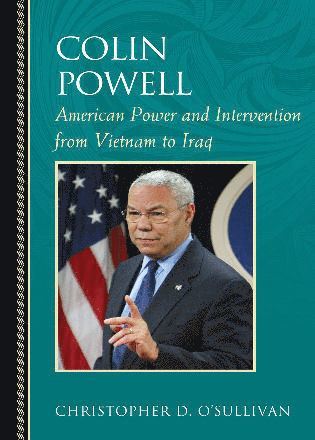
Few figures in the past quarter-century have played a more significant role in American foreign policy than Colin Powell. He wielded power at the highest levels of the most important foreign policy bureaucracies: the Pentagon, the White House, the joint chiefs, and the state department. As national security advisor in the Ronald Reagan administration, chairman of the joint chiefs of staff under George H.W. Bush and Bill Clinton, and secretary of state during George W. Bush's first term, he played a prominent role in four administrations, Republican and Democrat, spanning more than twenty years.Powell has been engaged in the most important debates over foreign and defense policy during the past two decades, such as the uses of American power in the wake of the Vietnam war, the winding down of the Cold War and the quest for new paths for American foreign policy, and the interventions in Panama (1989) and the Persian Gulf (1990–1991). During the Clinton era, he was involved in the controversies over interventions in Bosnia and Somalia. As America's top diplomat from 2001 to 2004, he helped shape the aims and goals of U.S. diplomacy after September 11, 2001, and in the run-up to the Iraq War.In this exploration of Powell's career and character, Christopher D. O'Sullivan reveals several broad themes crucial to American foreign policy and yields insights into the evolution of American foreign and defense policy in the post-Vietnam, post-Cold War eras. In addition, O'Sullivan explores the conflicts and debates between different foreign policy ideologies such as neo-conservatism and realism.O'Sullivan's book not only explains Powell's diplomatic style, it provides crucial insights into the American foreign policy tradition in the modern era.
206 kr
Skickas inom 10-15 vardagar
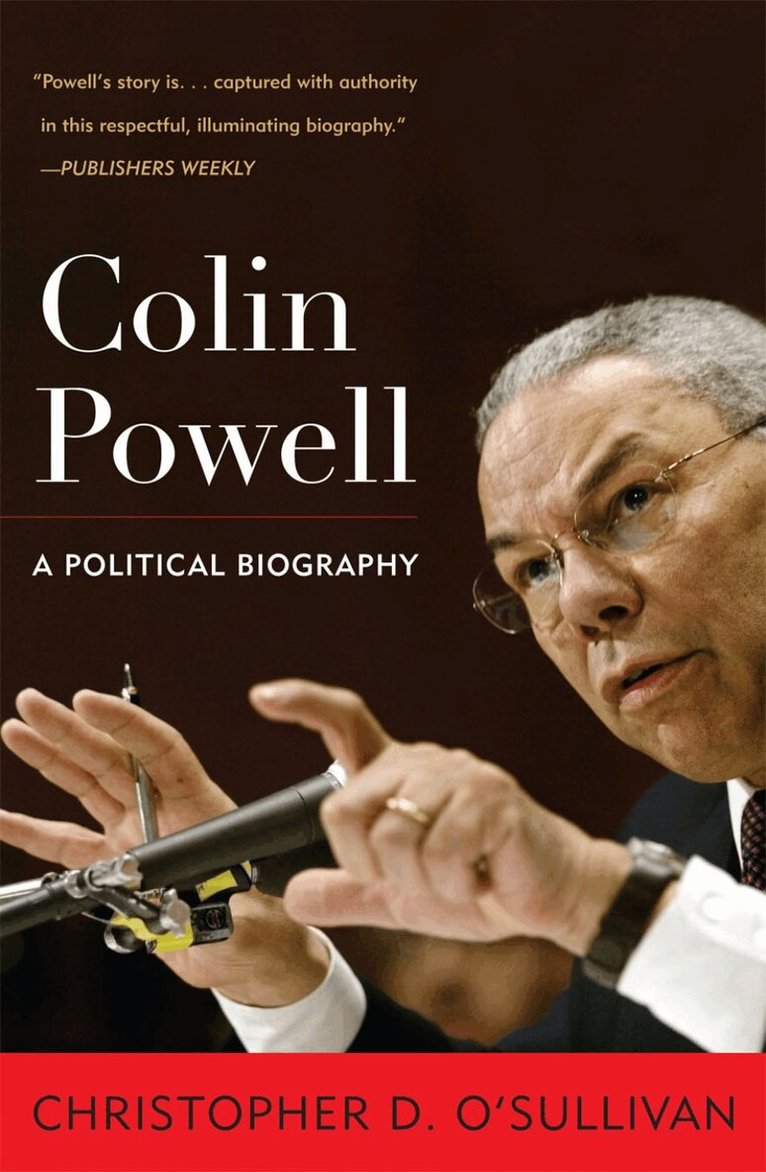
Few figures in the past quarter-century have played a more significant role in American foreign policy than Colin Powell. He wielded power at the highest levels of the most important foreign policy bureaucracies: the Pentagon, the White House, the joint chiefs, and the state department. As national security advisor in the Ronald Reagan administration, chairman of the joint chiefs of staff under George H.W. Bush and Bill Clinton, and secretary of state during George W. Bush's first term, he played a prominent role in four administrations, Republican and Democrat, spanning more than twenty years.Powell has been engaged in the most important debates over foreign and defense policy during the past two decades, such as the uses of American power in the wake of the Vietnam war, the winding down of the Cold War and the quest for new paths for American foreign policy, and the interventions in Panama (1989) and the Persian Gulf (1990–1991). During the Clinton era, he was involved in the controversies over interventions in Bosnia and Somalia. As America's top diplomat from 2001 to 2004, he helped shape the aims and goals of U.S. diplomacy after September 11, 2001, and in the run-up to the Iraq War.In this exploration of Powell's career and character, Christopher D. O'Sullivan reveals several broad themes crucial to American foreign policy and yields insights into the evolution of American foreign and defense policy in the post-Vietnam, post-Cold War eras. In addition, O'Sullivan explores the conflicts and debates between different foreign policy ideologies such as neo-conservatism and realism.O'Sullivan's book not only explains Powell's diplomatic style, it provides crucial insights into the American foreign policy tradition in the modern era.
594 kr
Skickas inom 7-10 vardagar
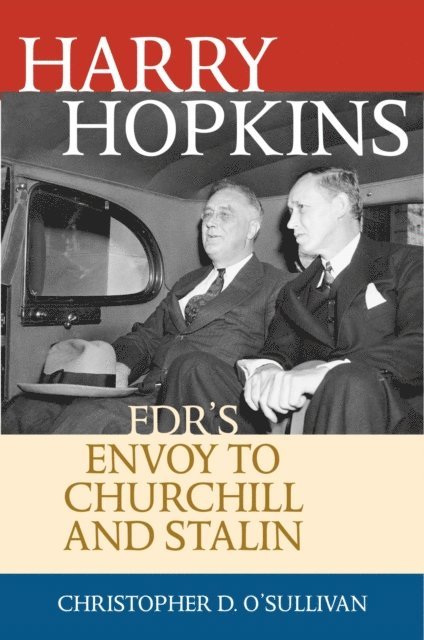
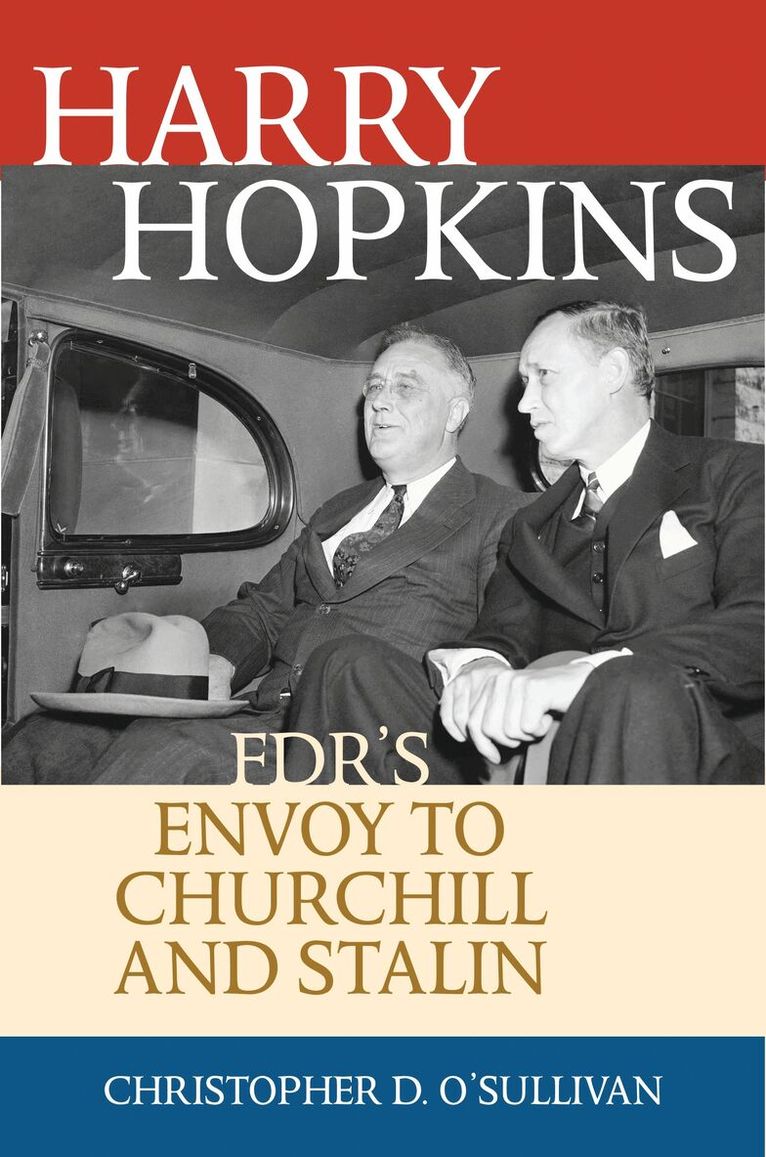
One of the most controversial figures of the New Deal Era, Harry Hopkins elicited few neutral responses from his contemporaries. Millions admired him and believed the New Deal agencies he headed had rescued them from despair, but many of President Roosevelt’s enemies passionately hated him and derisively called him the “world’s greatest spender” or FDR’s “left-wing Rasputin.” Hopkins was a paradoxical man: a trained social worker who enjoyed the company of the “swells,” attending cocktail parties, and gambling at the track. Once the quintessential New Dealer, during World War II he single-mindedly devoted himself to aiding the allies, downplaying his previous commitment to social reform and rupturing his friendship with Eleanor Roosevelt, among others. He was sickly and underweight, yet a profane and blunt-spoken man, lacking in any outward affectations of charisma. Still, FDR curiously saw Hopkins, who moved into the White House on the very day that Germany invaded France in May 1940, as his most suitable successor, the New Deal’s legatee, a possible Democratic nominee for president. Much of what FDR accomplished would never have been possible without Hopkins—whom the press described as not only FDR’s most trusted official, but also his most intimate personal friend. Analyzing Hopkins’ role in wartime diplomacy and his personal relationships with the twentieth-century’s most indispensable leaders, historian Christopher O’Sullivan offers enormous insight into the most controversial aspects of FDR’s foreign policy, the New Deal Era, and the beginning of modern American history.
1 786 kr
Skickas inom 10-15 vardagar
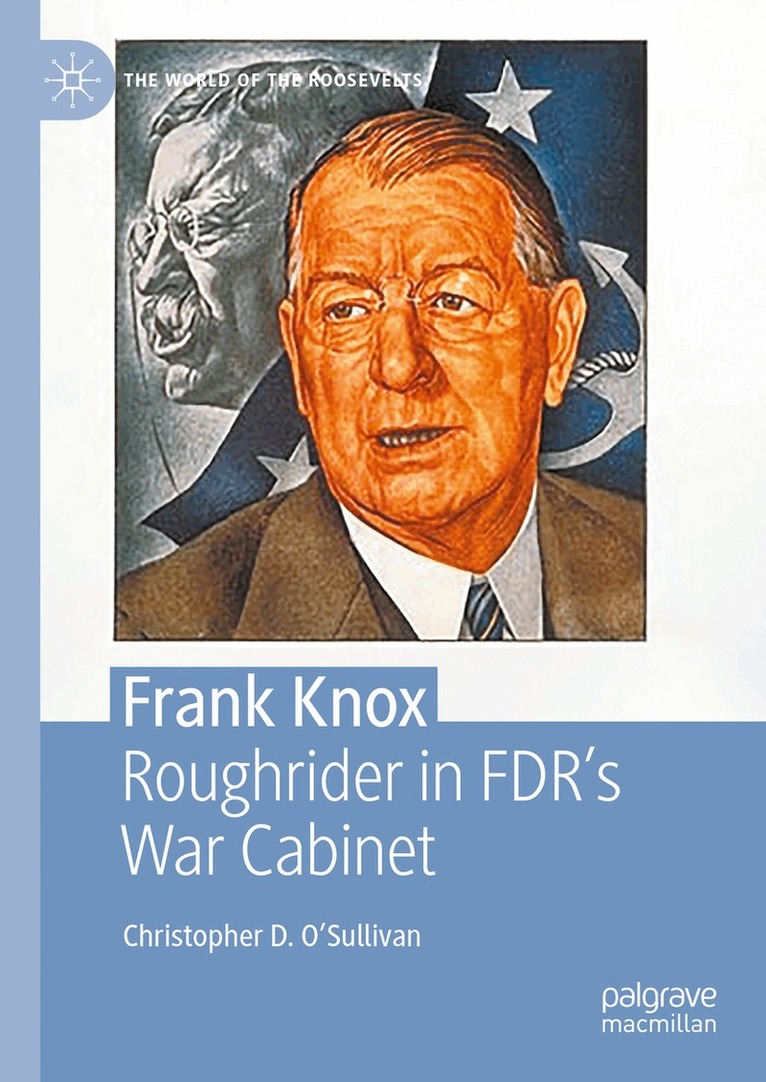
Frank Knox served as Secretary of the Navy during some of the most eventful years in U.S. naval history, his tenure coinciding with a number of dramas such as the innovative 1940 bases-for-destroyers initiative (which he conceptualized prior to entering the administration), the undeclared naval war in the Atlantic against Germany’s U-boats in 1941, the December 1941 attack on Pearl Harbor, the subsequent naval war in the Pacific, and naval landings in North Africa and Italy. Knox’s most important contribution to the war effort was his leadership in building a 1,000-ship fleet, without which the much-heralded landings and battles might never have been possible. In this comprehensive biography, Christopher D. O’Sullivan offers a portrait of the Roughrider in FDR’s cabinet.
631 kr
Skickas inom 5-8 vardagar
1 733 kr
Skickas inom 10-15 vardagar
Frank Knox served as Secretary of the Navy during some of the most eventful years in U.S. naval history, his tenure coinciding with a number of dramas such as the innovative 1940 bases-for-destroyers initiative (which he conceptualized prior to entering the administration), the undeclared naval war in the Atlantic against Germany’s U-boats in 1941, the December 1941 attack on Pearl Harbor, the subsequent naval war in the Pacific, and naval landings in North Africa and Italy. Knox’s most important contribution to the war effort was his leadership in building a 1,000-ship fleet, without which the much-heralded landings and battles might never have been possible. In this comprehensive biography, Christopher D. O’Sullivan offers a portrait of the Roughrider in FDR’s cabinet.