Christopher Ewing – författare
Visar alla böcker från författaren Christopher Ewing. Handla med fri frakt och snabb leverans.
3 produkter
3 produkter
Inbunden, Engelska, 2024
575 kr
Skickas inom 10-15 vardagar
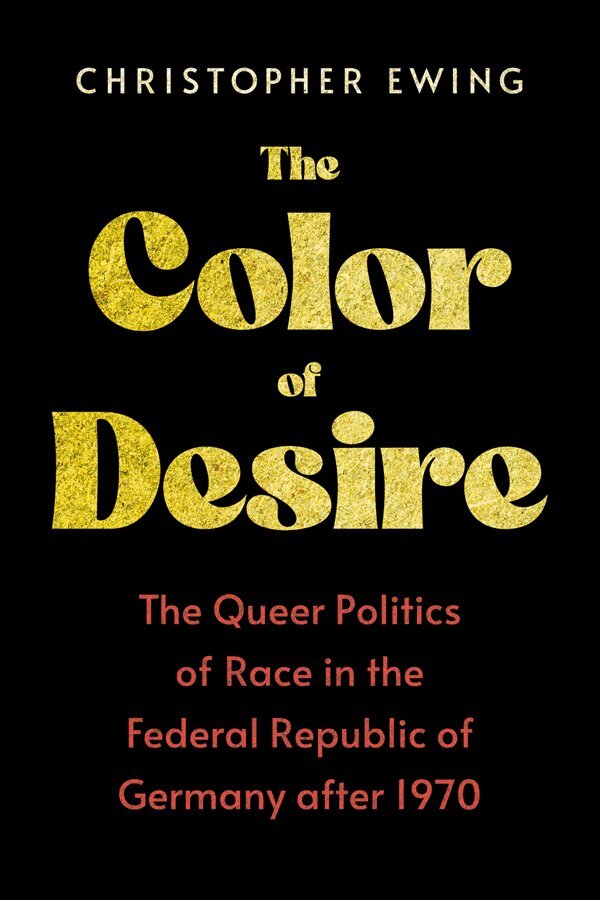
The Color of Desire tells the story of how, in the aftermath of gay liberation, race played a crucial role in shaping the trajectory of queer, German politics. Focusing on the Federal Republic of Germany, Christopher Ewing charts both the entrenchment of racisms within white, queer scenes and the formation of new, antiracist movements that contested overlapping marginalizations. Far from being discrete political trajectories, racist and antiracist politics were closely connected, as activists worked across groups to develop their visions for queer politics. Ewing describes not only how AIDS workers, gay tourists, white lesbians, queer immigrants, and Black feminists were connected in unexpected ways but also how they developed contradictory concerns that comprised the full landscape of queer politics. Out of these connections, which often exceeded the bounds of the Federal Republic, arose new forms of queer fascism as well as their multiple, antiracist contestations. Both unsettled the appeals to national belonging, or "homonationalism," on which many white queer activists based their claims. Thus, the story of the making of homonationalism is also the story of its unmaking.The Color of Desire explains how the importance of racism to queer politics cannot—and should not—be understood without also attending to antiracism. Actors worked across different groups, making it difficult to chart separable political trajectories. At the same time, antiracist activists also used the fractures and openings in groups that were heavily invested in the logics of whiteness to formulate new, antiracist organizations and, albeit in constrained ways, shifted queer politics more generally.
Inbunden, Engelska, 2026
1 458 kr
Skickas inom 10-15 vardagar
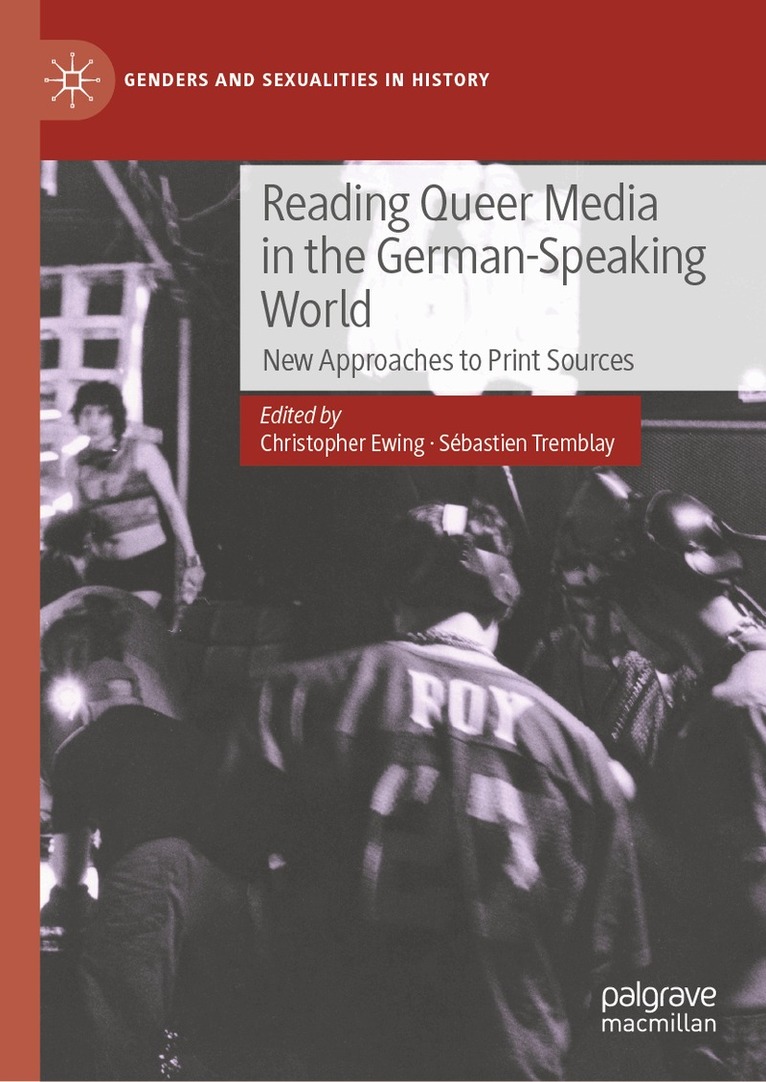
This book places print media at the centre of studying queer German history. In so doing, it explicitly interrogates the exclusions that certain media forms can engender as well as the possibilities that magazines, novels, poetry, and erotica, among others offered queer and trans* Germans through the twentieth and twenty-first centuries. It brings together scholars from the separate yet related fields of German history, German literary studies, and media studies, as well as archival and curatorial practices of public history from Austria, Canada, Germany, the United Kingdom, and the United States to provide a collaborative study of these sources. In so doing, it argues that just as we need to take an inclusive approach to defining what queer print media is and could be, we also need to take seriously the textual forms of these sources in order to understand the wealth of queer experiences in the past.
1 672 kr
Läs direkt efter köp
This book places print media at the centre of studying queer German history. In so doing, it explicitly interrogates the exclusions that certain media forms can engender as well as the possibilities that magazines, novels, poetry, and erotica, among others offered queer and trans* Germans through the twentieth and twenty-first centuries. It brings together scholars from the separate yet related fields of German history, German literary studies, and media studies, as well as archival and curatorial practices of public history from Austria, Canada, Germany, the United Kingdom, and the United States to provide a collaborative study of these sources. In so doing, it argues that just as we need to take an inclusive approach to defining what queer print media is and could be, we also need to take seriously the textual forms of these sources in order to understand the wealth of queer experiences in the past.