Christopher J. Corbally – författare
2 068 kr
Skickas inom 10-15 vardagar
918 kr
Skickas inom 5-8 vardagar
774 kr
Läs direkt efter köp
Religious capacity is a highly elaborate, neurocognitive human trait that has a solid evolutionary foundation. This book uses a multidisciplinary approach to describe millions of years of biological innovations that eventually give rise to the modern trait and its varied expression in humanity’s many religions. The authors present a scientific model and a central thesis that the brain organs, networks, and capacities that allowed humans to survive physically also gave our species the ability to create theologies, find sustenance in religious practice, and use religion to support the social group. Yet, the trait of religious capacity remains non-obligatory, like reading and mathematics. The individual can choose not to use it.
The approach relies on research findings in nine disciplines, including the work of countless neuroscientists, paleoneurologists, archaeologists, cognitive scientists, and psychologists.
This is a cutting-edge examination of the evolutionary origins of humanity’s interaction with the supernatural. It will be of keen interest to academics working in Religious Studies, Neuroscience, Cognitive Science, Anthropology, Evolutionary Biology, and Psychology.
774 kr
Läs direkt efter köp
Religious capacity is a highly elaborate, neurocognitive human trait that has a solid evolutionary foundation. This book uses a multidisciplinary approach to describe millions of years of biological innovations that eventually give rise to the modern trait and its varied expression in humanity’s many religions. The authors present a scientific model and a central thesis that the brain organs, networks, and capacities that allowed humans to survive physically also gave our species the ability to create theologies, find sustenance in religious practice, and use religion to support the social group. Yet, the trait of religious capacity remains non-obligatory, like reading and mathematics. The individual can choose not to use it.
The approach relies on research findings in nine disciplines, including the work of countless neuroscientists, paleoneurologists, archaeologists, cognitive scientists, and psychologists.
This is a cutting-edge examination of the evolutionary origins of humanity’s interaction with the supernatural. It will be of keen interest to academics working in Religious Studies, Neuroscience, Cognitive Science, Anthropology, Evolutionary Biology, and Psychology.
685 kr
Skickas inom 10-15 vardagar
1 274 kr
Läs direkt efter köp
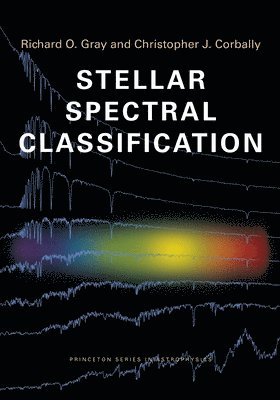
Written by leading experts in the field, Stellar Spectral Classification is the only book to comprehensively discuss both the foundations and most up-to-date techniques of MK and other spectral classification systems. Definitive and encyclopedic, the book introduces the astrophysics of spectroscopy, reviews the entire field of stellar astronomy, and shows how the well-tested methods of spectral classification are a powerful discovery tool for graduate students and researchers working in astronomy and astrophysics. The book begins with a historical survey, followed by chapters discussing the entire range of stellar phenomena, from brown dwarfs to supernovae. The authors account for advances in the field, including the addition of the L and T dwarf classes; the revision of the carbon star, Wolf-Rayet, and white dwarf classification schemes; and the application of neural nets to spectral classification. Copious figures illustrate the morphology of stellar spectra, and the book incorporates recent discoveries from earth-based and satellite data. Many examples of spectra are given in the red, ultraviolet, and infrared regions, as well as in the traditional blue-violet optical region, all of which are useful for researchers identifying stellar and galactic spectra. This essential reference includes a glossary, handy appendixes and tables, an index, and a Web-based resource of spectra. In addition to the authors, the contributors are Adam J. Burgasser, Margaret M. Hanson, J. Davy Kirkpatrick, and Nolan R. Walborn.
52 kr
Läs direkt efter köp
If youre a teacher or parent struggling to get youngsters or young adults interested in space science and astronomyor an inquisitive studentthen youll love this fun-filled book of theatrical scenes.
In addition to astronomers and astronauts, the scenes also feature engineers, accountants, graphic artists, public relations practitioners, biologists, meteorologists, and others who play a critical role in space adventures.
Scenarios will take you into the past and into the future and include:
A cosmologist and a computer graphics artist are preparing a presentation for public television on theories about the distribution of galaxies in the universe, and the placement of voids where no galaxies are found.
An astrobiologist and an engineer discover the first positive biosignature data from an exoplanet near Earth. The findings provide a big surprise.
Two recent high school graduates explore a star factory (nebula) in the constellation Orion, and using a video arcade game, they make speculations about the future.
While the props and costumes needed for scripts are minimal, the scenes promote deep learning. Get ready to be entertained and informed with Space Science and Astronomy Theatre.