Christopher J. Lee – författare
Visar alla böcker från författaren Christopher J. Lee. Handla med fri frakt och snabb leverans.
18 produkter
18 produkter
Inbunden, Engelska, 2021
1 837 kr
Skickas inom 10-15 vardagar
This clear and engaging introduction is the first book to assess the ideas of Kwame Anthony Appiah, the Ghanaian-British philosopher who is a leading public intellectual today. The book focuses on the theme of ‘identity’ and is structured around five main topics, corresponding to the subjects of his major works: race, culture, liberalism, cosmopolitanism, and moral revolutions. This helpful book:• Teaches students about the sources, opportunities, and dilemmas of personal and social identity—whether on the basis of race, gender, sexuality, or class, among others—in the purview of Appiah. • Locates Appiah within a broader tradition of intellectual engagement with these issues—involving such thinkers as W. E. B. Du Bois, John Stuart Mill, and Martha Nussbaum—and, thus, how Appiah is both an inheritor and innovator of preceding ideas. • Seeks to inspire students on how to approach and negotiate identity politics in the present. This book ultimately imparts a more diverse and wider-reaching geographic sense of philosophy through the lens of Appiah and his intellectual contributions, as well as emphasizing the continuing social relevance of philosophy and critical theory more generally to everyday life today.
Häftad, Engelska, 2021
390 kr
Skickas inom 10-15 vardagar
This clear and engaging introduction is the first book to assess the ideas of Kwame Anthony Appiah, the Ghanaian-British philosopher who is a leading public intellectual today. The book focuses on the theme of ‘identity’ and is structured around five main topics, corresponding to the subjects of his major works: race, culture, liberalism, cosmopolitanism, and moral revolutions. This helpful book:• Teaches students about the sources, opportunities, and dilemmas of personal and social identity—whether on the basis of race, gender, sexuality, or class, among others—in the purview of Appiah. • Locates Appiah within a broader tradition of intellectual engagement with these issues—involving such thinkers as W. E. B. Du Bois, John Stuart Mill, and Martha Nussbaum—and, thus, how Appiah is both an inheritor and innovator of preceding ideas. • Seeks to inspire students on how to approach and negotiate identity politics in the present. This book ultimately imparts a more diverse and wider-reaching geographic sense of philosophy through the lens of Appiah and his intellectual contributions, as well as emphasizing the continuing social relevance of philosophy and critical theory more generally to everyday life today.
Häftad, Engelska, 2015
218 kr
Skickas
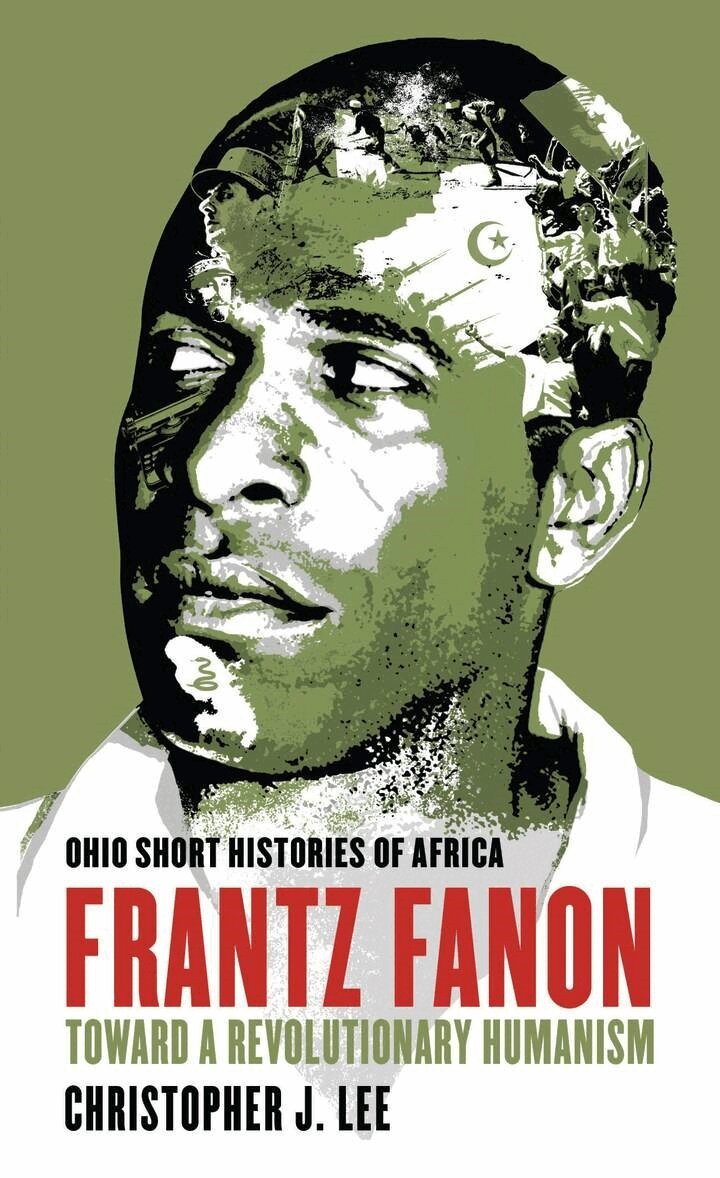
Psychiatrist, philosopher, and revolutionary, Frantz Fanon is one of the most important intellectuals of the twentieth century. He presented powerful critiques of racism, colonialism, and nationalism in his classic books, Black Skin, White Masks (1952) and The Wretched of the Earth (1961). This biography reintroduces Fanon for a new generation of readers, revisiting these enduring themes while also arguing for those less appreciated—namely, his anti-Manichean sensibility and his personal ethic of radical empathy, both of which underpinned his utopian vision of a new humanism. Written with clarity and passion, Christopher J. Lee's account ultimately argues for the pragmatic idealism of Frantz Fanon and his continued importance today.
Inbunden, Engelska, 2014
1 306 kr
Skickas inom 5-8 vardagar
In Unreasonable Histories, Christopher J. Lee unsettles the parameters and content of African studies as currently understood. At the book's core are the experiences of multiracial Africans in British Central Africa-contemporary Malawi, Zimbabwe, and Zambia-from the 1910s to the 1960s. Drawing on a spectrum of evidence-including organizational documents, court records, personal letters, commission reports, popular periodicals, photographs, and oral testimony-Lee traces the emergence of Anglo-African, Euro-African, and Eurafrican subjectivities which constituted a grassroots Afro-Britishness that defied colonial categories of native and non-native. Discriminated against and often impoverished, these subaltern communities crafted a genealogical imagination that reconfigured kinship and racial descent to make political claims and generate affective meaning. But these critical histories equally confront a postcolonial reason that has occluded these experiences, highlighting uneven imperial legacies that still remain. Based on research in five countries, Unreasonable Histories ultimately revisits foundational questions in the field, to argue for the continent's diverse heritage and to redefine the meanings of being African in the past and present-and for the future.
Häftad, Engelska, 2014
436 kr
Skickas inom 5-8 vardagar
In Unreasonable Histories, Christopher J. Lee unsettles the parameters and content of African studies as currently understood. At the book's core are the experiences of multiracial Africans in British Central Africa-contemporary Malawi, Zimbabwe, and Zambia-from the 1910s to the 1960s. Drawing on a spectrum of evidence-including organizational documents, court records, personal letters, commission reports, popular periodicals, photographs, and oral testimony-Lee traces the emergence of Anglo-African, Euro-African, and Eurafrican subjectivities which constituted a grassroots Afro-Britishness that defied colonial categories of native and non-native. Discriminated against and often impoverished, these subaltern communities crafted a genealogical imagination that reconfigured kinship and racial descent to make political claims and generate affective meaning. But these critical histories equally confront a postcolonial reason that has occluded these experiences, highlighting uneven imperial legacies that still remain. Based on research in five countries, Unreasonable Histories ultimately revisits foundational questions in the field, to argue for the continent's diverse heritage and to redefine the meanings of being African in the past and present-and for the future.
Inbunden, Engelska, 2022
433 kr
Skickas inom 5-8 vardagar
One of South Africa’s best-known writers during the apartheid era, Alex La Guma was a lifelong activist and a member of the South African Communist Party and the African National Congress. Persecuted and imprisoned by the South African regime in the 1950s and 60s, La Guma went into exile in the United Kingdom with his wife and children in 1966, eventually serving as the ANC’s diplomatic representative for Latin America and the Caribbean in Cuba. Culture and Liberation captures a different dimension of his long writing career by collecting his political journalism, literary criticism, and other short pieces published while he was in exile. This volume spans La Guma’s political and literary life in exile through accounts of his travels to Algeria, Lebanon, Vietnam, Soviet Central Asia, and elsewhere, along with his critical assessments of Paul Robeson, Nadine Gordimer, Maxim Gorky, Alexander Solzhenitsyn, and Pablo Neruda, among other writers. The first dedicated collection of La Guma’s exile writing, Culture and Liberation restores an overlooked dimension of his life and work, while opening a window on a wider world of cultural and political struggles in Africa, Asia, and Latin America during the second half of the twentieth century.
Inbunden, Engelska, 2025
2 215 kr
Skickas inom 10-15 vardagar
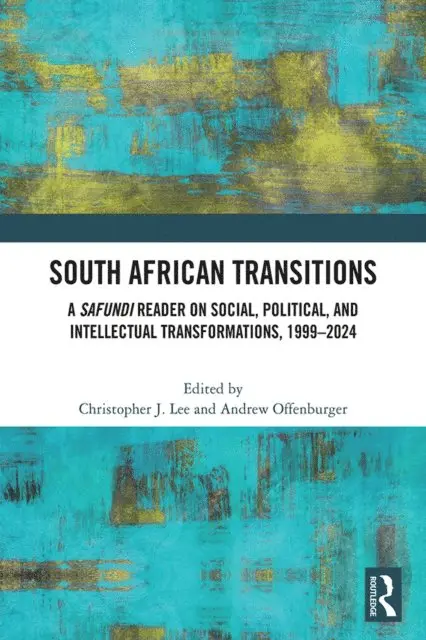
This book addresses the multiple repercussions of South Africa’s democratic transition beginning in 1994 by examining a number of themes with local, national, regional, and global relevance: the politics of nation building, public memory, residential segregation, higher education, media, racism, trade unionism, women’s rights, and global climate change, to name only a few.Drawing from the rich archive of previously published articles from the journal Safundi, South African Transitions documents both the country’s, and the journal’s mutual history over the past quarter century. Divided into five sections, the first part of the book explores the broad theme of South Africa’s transition to non-racial democracy by foregrounding issues of nationalism, diplomacy, rural change, social trauma, historical commemoration, and political feeling at local, national, and international levels. The second section focuses on the question of civil society, including essays on media, racism, histories of segregation, legacies of criminal violence, and comparative patterns of incarceration, underscoring the endurance of certain long-term problems and the emergence of new ones. Part three surveys the role of education in transforming South Africa, while part four situates South Africa’s opportunities and challenges within regional and global contexts to better understand the South African situation and its relationship to conditions around the world. The penultimate section has contributions that confront the present by identifying the struggles and crises of South Africa’s current political moment, including labor movements, the matter of land restitution, feminist activism, LGBTQI rights, and the Marikana Massacre of 2012. The book ends with an essay on the fire at Jagger Library at the University of Cape Town by historian Bill Nasson, a moment of contingent destruction that speaks of the Covid-19 pandemic and the burgeoning climate crisis at present.Traversing across time and place, South African Transitions will be an indispensable resource for scholars, researchers, activists and policymakers, as well as those readers who are generally interested in understanding South Africa’s social, political, and intellectual transformations over the past several decades.
Häftad, Engelska, 2026
662 kr
Skickas inom 10-15 vardagar
This book addresses the multiple repercussions of South Africa’s democratic transition beginning in 1994 by examining a number of themes with local, national, regional, and global relevance: the politics of nation building, public memory, residential segregation, higher education, media, racism, trade unionism, women’s rights, and global climate change, to name only a few.Drawing from the rich archive of previously published articles from the journal Safundi, South African Transitions documents both the country’s, and the journal’s mutual history over the past quarter century. Divided into five sections, the first part of the book explores the broad theme of South Africa’s transition to non-racial democracy by foregrounding issues of nationalism, diplomacy, rural change, social trauma, historical commemoration, and political feeling at local, national, and international levels. The second section focuses on the question of civil society, including essays on media, racism, histories of segregation, legacies of criminal violence, and comparative patterns of incarceration, underscoring the endurance of certain long-term problems and the emergence of new ones. Part three surveys the role of education in transforming South Africa, while part four situates South Africa’s opportunities and challenges within regional and global contexts to better understand the South African situation and its relationship to conditions around the world. The penultimate section has contributions that confront the present by identifying the struggles and crises of South Africa’s current political moment, including labor movements, the matter of land restitution, feminist activism, LGBTQI rights, and the Marikana Massacre of 2012. The book ends with an essay on the fire at Jagger Library at the University of Cape Town by historian Bill Nasson, a moment of contingent destruction that speaks of the Covid-19 pandemic and the burgeoning climate crisis at present.Traversing across time and place, South African Transitions will be an indispensable resource for scholars, researchers, activists and policymakers, as well as those readers who are generally interested in understanding South Africa’s social, political, and intellectual transformations over the past several decades.
Inbunden, Engelska, 2025
2 215 kr
Skickas inom 10-15 vardagar
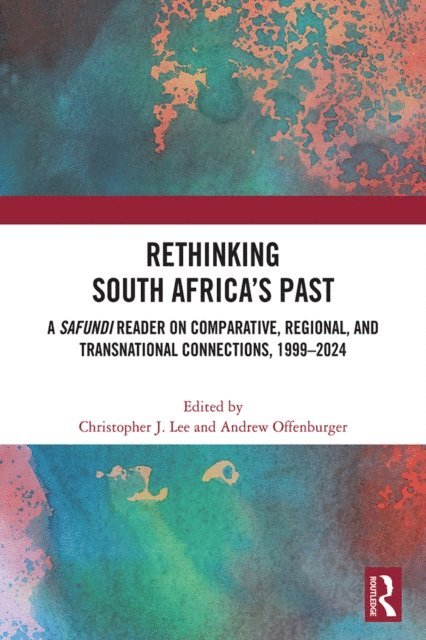
This book presents key historical scholarship published in Safundi from 1999 to 2024, tracing South Africa’s past through approaches of comparative history, transnational history, and visual history, in addition to addressing the importance of topics like gender, labor and class dynamics, as well as regional historiographies.The first section of the book focuses on comparative history as a founding method for Safundi, given the journal’s origins in American and South African studies, while also recalibrating this approach through a variety of topics—cities, biographies and practices of violence—rather than nation-states writ large. Drawing upon innovative sources of evidence, the second section moves beyond the comparative method to address transnational histories as a new narrative technique for storytelling and analysis. Whether issues of education, immigration or visiting musicians to South Africa, these chapters demonstrate the importance of a post-national approach for understanding the past. The sections that follow fan out into other subject areas, including the uses of visual history, gender roles, class cultures and environmental history, all of which illuminate connections between South African history and other parts of the world.This book will be an indispensable resource for scholars, students, activists and policymakers, as well as those readers who are generally interested in understanding South Africa’s complex history over the past several centuries.
Häftad, Engelska, 2026
685 kr
Kommande
This book presents key historical scholarship published in Safundi from 1999 to 2024, tracing South Africa’s past through approaches of comparative history, transnational history, and visual history, in addition to addressing the importance of topics like gender, labor and class dynamics, as well as regional historiographies.The first section of the book focuses on comparative history as a founding method for Safundi, given the journal’s origins in American and South African studies, while also recalibrating this approach through a variety of topics—cities, biographies and practices of violence—rather than nation-states writ large. Drawing upon innovative sources of evidence, the second section moves beyond the comparative method to address transnational histories as a new narrative technique for storytelling and analysis. Whether issues of education, immigration or visiting musicians to South Africa, these chapters demonstrate the importance of a post-national approach for understanding the past. The sections that follow fan out into other subject areas, including the uses of visual history, gender roles, class cultures and environmental history, all of which illuminate connections between South African history and other parts of the world.This book will be an indispensable resource for scholars, students, activists and policymakers, as well as those readers who are generally interested in understanding South Africa’s complex history over the past several centuries.
Inbunden, Engelska, 2026
3 497 kr
Skickas inom 10-15 vardagar
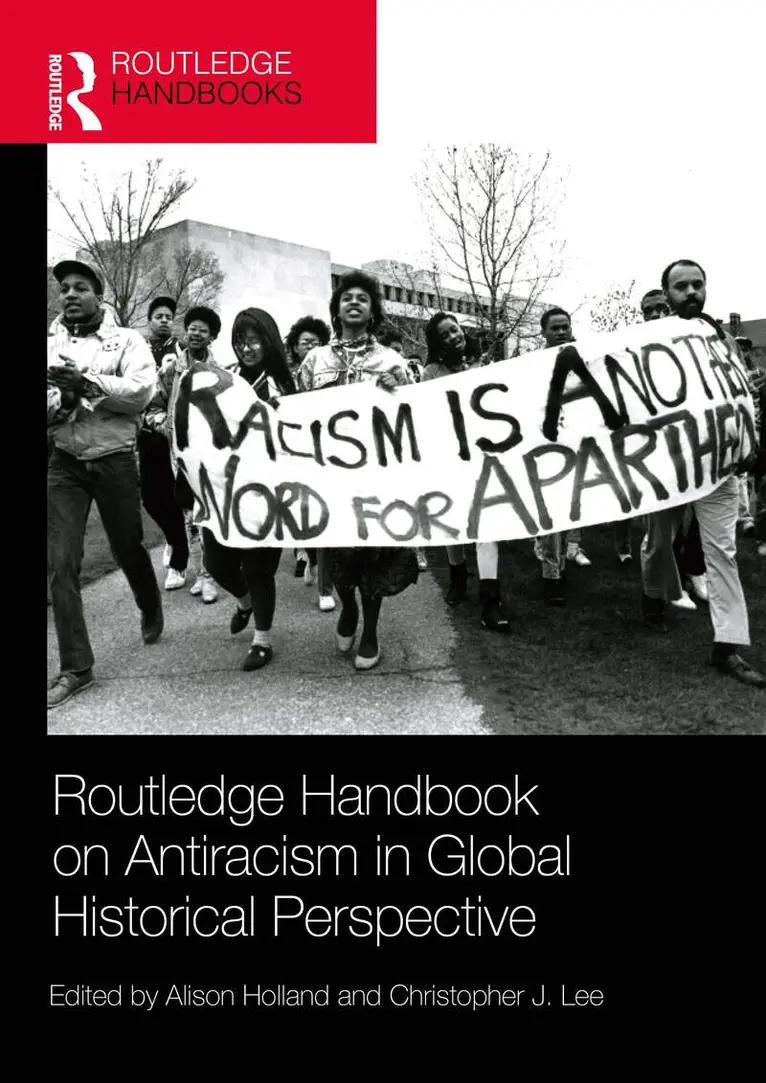
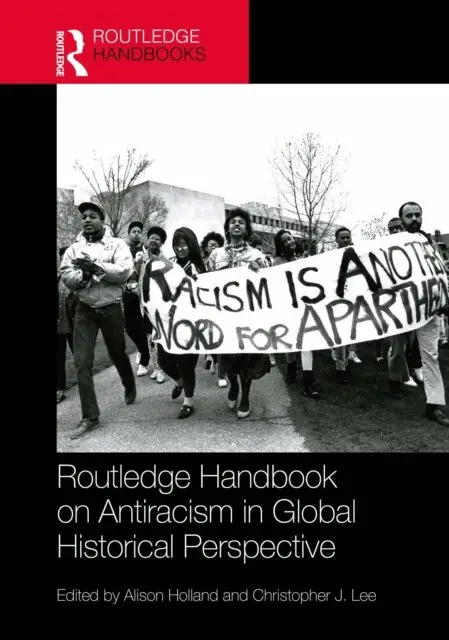
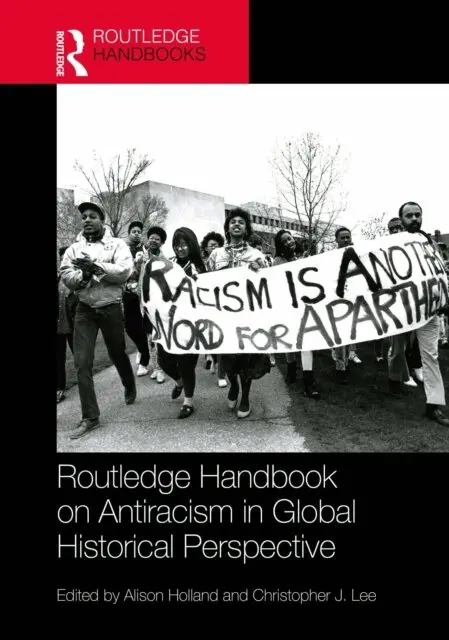
This Handbook is the first multidisciplinary anthology of research on antiracism in global historical perspective. It demonstrates the importance of a historical lens for understanding the deep lineages of antiracism and reveals the myriad ways—transracial, transnational, and transhistorical—that antiracism has shaped world history.Drawing on case studies from Africa, Asia, Australia, Europe, South America, and North America from the eighteenth century to the present, this volume situates antiracism across a variety of temporal, geographical, and ideological contexts that span the globe. By highlighting the perspectives of racially marginalized individuals and communities, it showcases the distinctiveness and importance of key thinkers, ideas, and methodologies in regional and national contexts. Further, by recovering complex histories, including memories and legacies, of antiracism, this Handbook illustrates how faultlines of race, class, and gender informed internal debates, priorities and outcomes. It emphasizes the creativity and labour of antiracist activism at the local and international levels.The Routledge Handbook on Antiracism in Global Historical Perspective ultimately underscores the diverse genealogies of antiracism and its transnational networks of political solidarity in order to contribute to future research and teaching as well as political praxis in the present. A vital resource for students, teachers, and activists alike, it presents a synthesis of some of the best work on antiracism to date by leading scholars, both emerging and internationally recognized, across the humanities and social sciences.
Inbunden, Engelska, 2025
2 215 kr
Skickas inom 10-15 vardagar
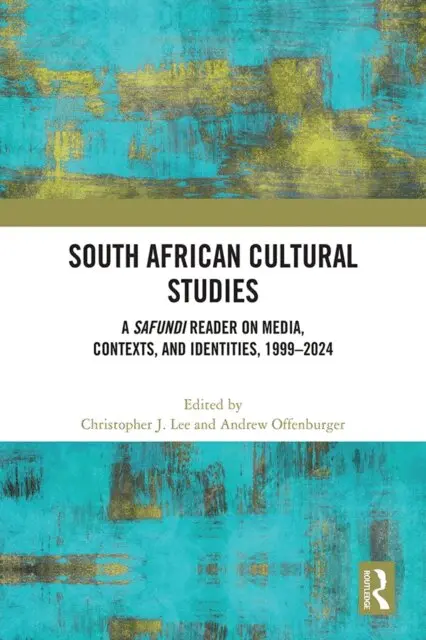
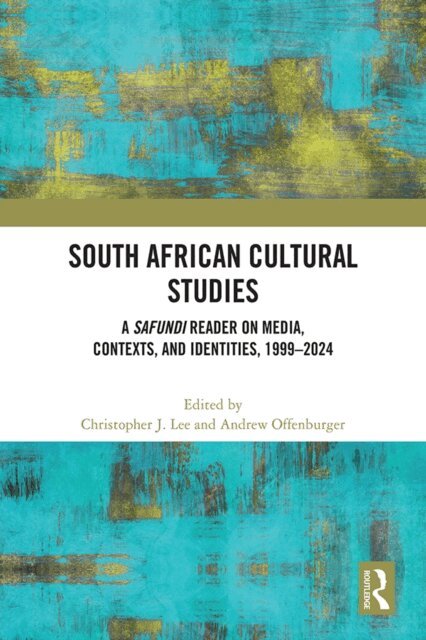
This book offers a holistic guide as to how South African identity and culture can be understood in the past, present, and future.Drawing from the rich archive of previously published articles from the journal Safundi, South African Cultural Studies documents the mutual histories of the country and the journal over the past quarter century. Divided into six sections, the first section addresses cultural figures, including Oprah Winfrey, Trevor Noah, Olive Schreiner, and Dimitri Tsafendas - an unusual group that illustrates the unique and international character of South African culture. The second part brings attention to the important role that photography has had in depicting and narrating South African cultural life, whether through the intimacies found in recent images by Zanele Muholi or the historical work of David Goldblatt and Santu Mofokeng. The third section of the book looks at music as another idiom that has proven indispensable for South African social life with Miriam Makeba, Rodriguez, and Die Antwoord providing examples. The fourth and fifth sections of this book address sexuality and film, respectively, underscoring at once the contrasting approaches to popular culture that have surfaced in Safundi as well as their requisite abilities for grasping everyday tastes and mores. The worlds of Ms. magazine, District 9, Black Panther, and Spike Lee, to pick only several topics raised, supply ways of thinking across these chapters. The final section of the volume concludes with the role of place in the construction of culture, whether museums, national monuments, the Spur restaurant franchise, or landscapes like the Karoo.This book will be an indispensable resource for scholars, students, activists and critics, as well as readers who are generally interested in understanding South Africa’s cultural history over the past century.
Inbunden, Engelska, 2025
2 474 kr
Skickas inom 10-15 vardagar
The collection delves into crucial themes and debates in South African literature, addressing the innovative aesthetics of Black poetry, the political complexities of "white writing," non-fiction's significance, and the role of geography in South Africa’s regional fiction. It particularly examines how literary works have engaged with the country's evolving post-apartheid identity and its place in global contexts.South African Literary Studies: A Safundi Reader on Genre, Method, and Ideas, 1999-2024 marks the culminating volume in a series celebrating Safundi's twenty-fifth anniversary. This comprehensive collection showcases the journal's evolution from its initial focus on US-South African comparative histories to its embrace of a wider range of interdisciplinary and literary studies. Divided into seven sections, this volume explores a diverse set of literary approaches, including transnational comparisons featuring influential figures like Maya Angelou, Alan Paton, Zora Neale Hurston, and Bessie Head. It further addresses the works of poets and novelists who have shaped South African literature, including Lesego Rampolokeng, Keorapetse Kgositsile, and J. M. Coetzee, while also offering illuminating interviews with writers such as Chris Abani, C. A. Davids, and Mark Behr.Through its exploration of various genres, methods, and ideas, this volume retains Safundi's founding spirit of examining comparative and transnational connections while also demonstrating how literary criticism has become indispensable in defining South African culture and identity after apartheid.
Inbunden, Engelska, 2017
1 339 kr
Skickas inom 10-15 vardagar
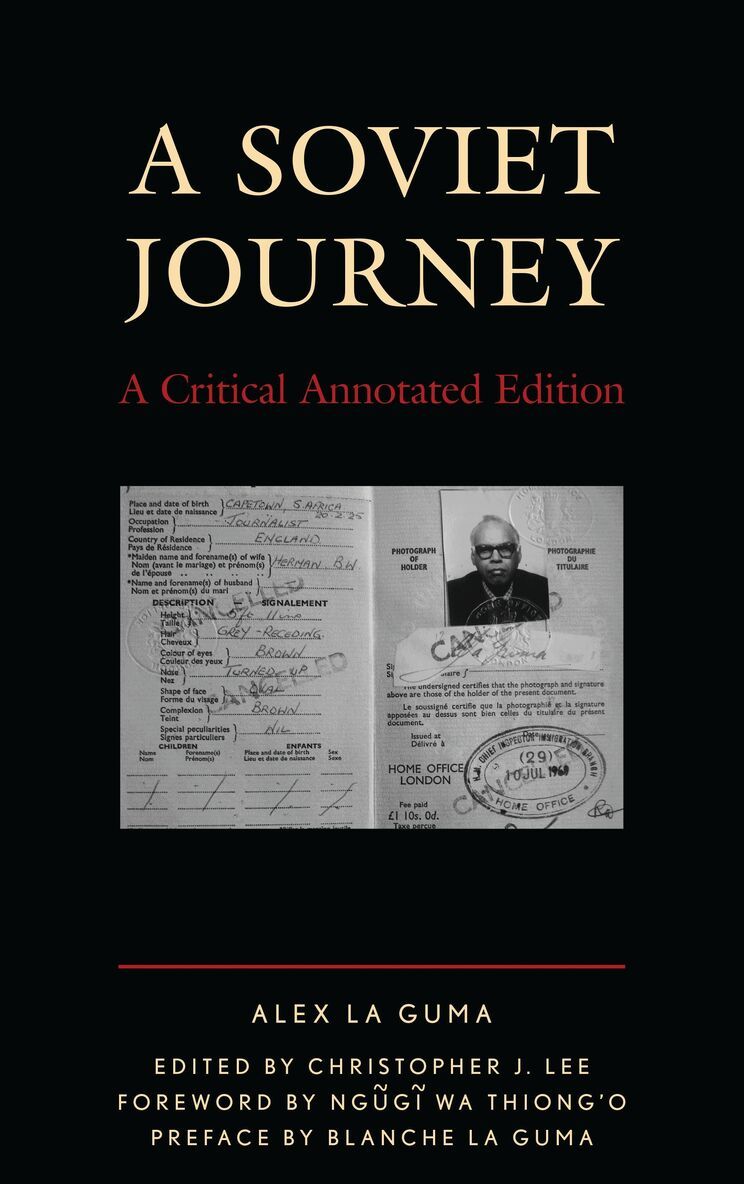
In 1978, the South African activist and novelist Alex La Guma (1925–1985) published A Soviet Journey, a memoir of his travels in the Soviet Union. Today it stands as one of the longest and most substantive first-hand accounts of the USSR by an African writer. La Guma’s book is consequently a rare and important document of the anti-apartheid struggle and the Cold War period, depicting the Soviet model from an African perspective and the specific meaning it held for those envisioning a future South Africa. For many members of the African National Congress and the South African Communist Party, the Soviet Union represented a political system that had achieved political and economic justice through socialism—a point of view that has since been lost with the collapse of the USSR and the end of the Cold War. This new edition of A Soviet Journey—the first since 1978—restores this vision to the historical record, highlighting how activist-intellectuals like La Guma looked to the Soviet Union as a paradigm of self-determination, decolonization, and postcolonial development. The introduction by Christopher J. Lee discusses these elements of La Guma’s text, in addition to situating La Guma more broadly within the intercontinental spaces of the Black Atlantic and an emergent Third World. Presenting a more expansive view of African literature and its global intellectual engagements, A Soviet Journey will be of interest to readers of African fiction and non-fiction, South African history, postcolonial Cold War studies, and radical political thought.
Häftad, Engelska, 2019
568 kr
Skickas inom 10-15 vardagar
In 1978, the South African activist and novelist Alex La Guma (1925–1985) published A Soviet Journey, a memoir of his travels in the Soviet Union. Today it stands as one of the longest and most substantive first-hand accounts of the USSR by an African writer. La Guma’s book is consequently a rare and important document of the anti-apartheid struggle and the Cold War period, depicting the Soviet model from an African perspective and the specific meaning it held for those envisioning a future South Africa. For many members of the African National Congress and the South African Communist Party, the Soviet Union represented a political system that had achieved political and economic justice through socialism—a point of view that has since been lost with the collapse of the USSR and the end of the Cold War. This new edition of A Soviet Journey—the first since 1978—restores this vision to the historical record, highlighting how activist-intellectuals like La Guma looked to the Soviet Union as a paradigm of self-determination, decolonization, and postcolonial development. The introduction by Christopher J. Lee discusses these elements of La Guma’s text, in addition to situating La Guma more broadly within the intercontinental spaces of the Black Atlantic and an emergent Third World. Presenting a more expansive view of African literature and its global intellectual engagements, A Soviet Journey will be of interest to readers of African fiction and non-fiction, South African history, postcolonial Cold War studies, and radical political thought.
Häftad, Engelska, 2017
162 kr
Skickas inom 5-8 vardagar
Object Lessons is a series of short, beautifully designed books about the hidden lives of ordinary things. Jet lag is a momentary condition resulting from the human body and its inner clock being pitched against the time-leaping effects of modern aviation. But more than that, it is a situation that explains time, technology, and the human body. Jet lag epitomizes the accelerated world we live in. It makes the speed and discomfort of globalization tangible on a personal level. Tracing physiological, temporal, technological, and cultural meanings, Christopher J. Lee’s Jet Lag ponders our intrinsic human limits in the face of modern innovation, revealing the latent costs of global cosmopolitanism today.Object Lessons is published in partnership with an essay series in The Atlantic.
Häftad, Engelska, 2019
352 kr
Tillfälligt slut
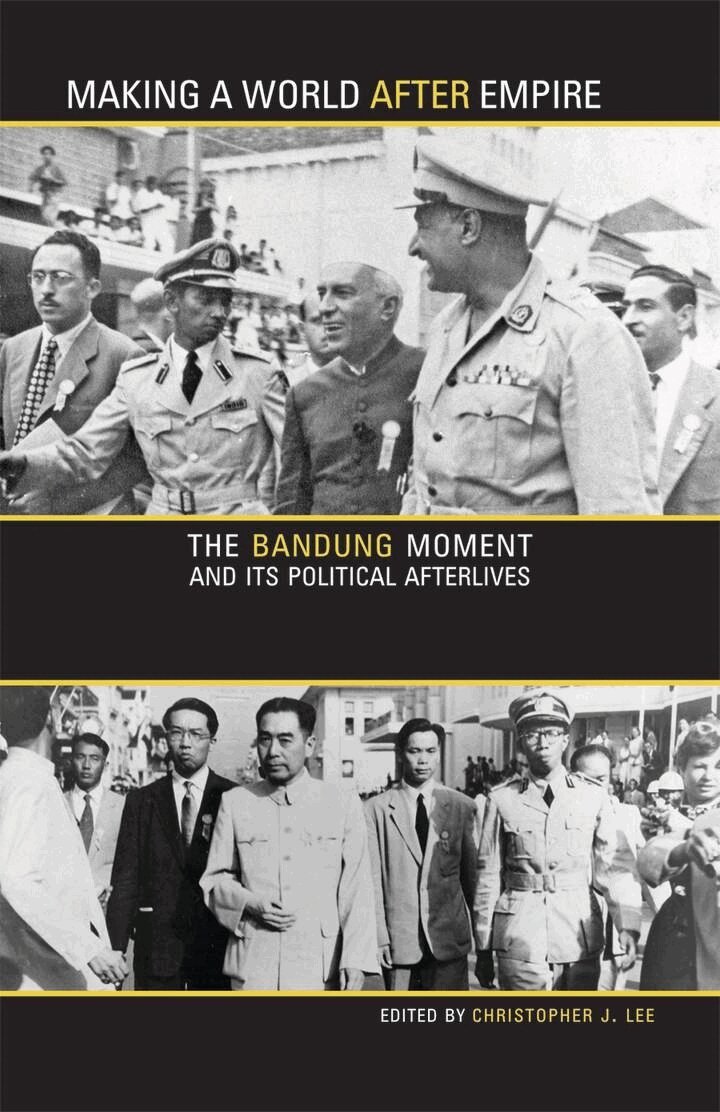
In April 1955, twenty-nine countries from Africa, Asia, and the Middle East came together for a diplomatic conference in Bandung, Indonesia, intending to define the direction of the postcolonial world. Ostensibly representing two-thirds of the world's population, the Bandung conference occurred during a key moment of transition in the mid-twentieth century—amid the global wave of decolonization that took place after the Second World War and the nascent establishment of a new Cold War world order in its wake. Participants such as Jawaharlal Nehru of India, Gamal Abdel Nasser of Egypt, Zhou Enlai of China, and Sukarno of Indonesia seized this occasion to attempt the creation of a political alternative to the dual threats of Western neocolonialism and the Cold War interventionism of the United States and the Soviet Union.The essays collected here explore the diverse repercussions of this event, tracing diplomatic, intellectual, and sociocultural histories that ensued as well as addressing the broader intersection of postcolonial and Cold War history. With a new foreword by Vijay Prashad and a new preface by the editor, Making a World after Empire speaks to contemporary discussions of decolonization, Third Worldism, and the emergence of the Global South, thus reestablishing the conference's importance in twentieth-century global history.Contributors: Michael Adas, Laura Bier, James R. Brennan, G. Thomas Burgess, Antoinette Burton, Dipesh Chakrabarty, Julian Go, Christopher J. Lee, Jamie Monson, Jeremy Prestholdt, and Denis M. Tull.
Häftad, Engelska, 2016
129 kr
Tillfälligt slut
Psychiatrist, revolutionary, writer and philosopher, Frantz Fanon (1925-1961) played many roles during his brief life. Born on the island of Martinique, he died in the United States from cancer, following a meteoric career that took him to France, Algeria, Tunisia, and numerous places in between. Best known for Black Skin, White Masks (1952) and The Wretched of the Earth (1961), Fanon drew upon psychology, European philosophy, and his own experience to articulate radical critiques of racism, colonialism, and nationalism that still vitally inform understandings of these issues. Yet Fanon remains controversial, given his advocacy of violent struggle, and, consequently, is often misunderstood. This biography - the most succinct and straightforward to date - demythologises Fanon by situating his life and ideas within the historical circumstances he encountered. Synthesising a range of secondary literature with readings of his work, it elevates enduring aspects of Fanon's legacy, while also countering interpretations of his writing that have granted uncritical omniscience to his views. Written with clarity and passion, Christopher J.Lee's account ultimately argues for the complexity of Frantz Fanon and his continued importance today.