Christopher J. Preston – författare
179 kr
Läs direkt efter köp
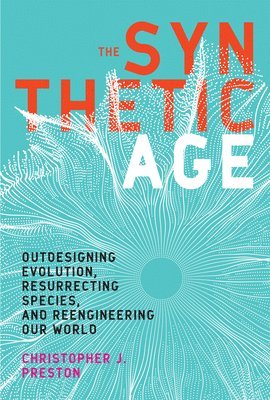
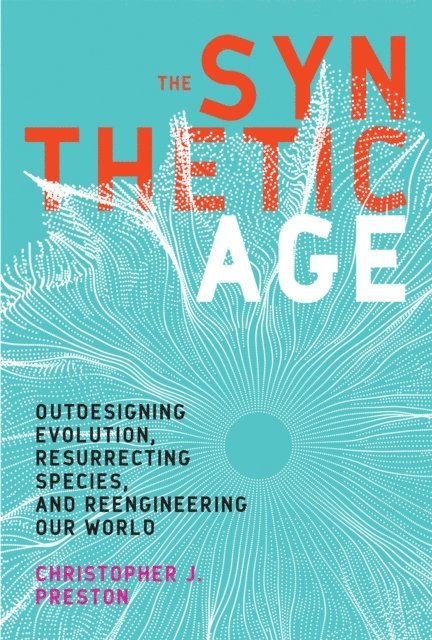
Imagining a future in which humans fundamentally reshape the natural world using nanotechnology, synthetic biology, de-extinction, and climate engineering.
We have all heard that there are no longer any places left on Earth untouched by humans. The significance of this goes beyond statistics documenting melting glaciers and shrinking species counts. It signals a new geological epoch. In The Synthetic Age, Christopher Preston argues that what is most startling about this coming epoch is not only how much impact humans have had but, more important, how much deliberate shaping they will start to do. Emerging technologies promise to give us the power to take over some of Nature''s most basic operations. It is not just that we are exiting the Holocene and entering the Anthropocene; it is that we are leaving behind the time in which planetary change is just the unintended consequence of unbridled industrialism. A world designed by engineers and technicians means the birth of the planet''s first Synthetic Age.
Preston describes a range of technologies that will reconfigure Earth''s very metabolism: nanotechnologies that can restructure natural forms of matter; “molecular manufacturing” that offers unlimited repurposing; synthetic biology''s potential to build, not just read, a genome; “biological mini-machines” that can outdesign evolution; the relocation and resurrection of species; and climate engineering attempts to manage solar radiation by synthesizing a volcanic haze, cool surface temperatures by increasing the brightness of clouds, and remove carbon from the atmosphere with artificial trees that capture carbon from the breeze.
What does it mean when humans shift from being caretakers of the Earth to being shapers of it? And in whom should we trust to decide the contours of our synthetic future? These questions are too important to be left to the engineers.
295 kr
Läs direkt efter köp
240 kr
Skickas
Gibbs States on Countable Sets
526 kr
Skickas inom 7-10 vardagar
697 kr
Skickas inom 10-15 vardagar
559 kr
Läs direkt efter köp
658 kr
Läs direkt efter köp
1 634 kr
Skickas inom 10-15 vardagar
1 977 kr
Läs direkt efter köp
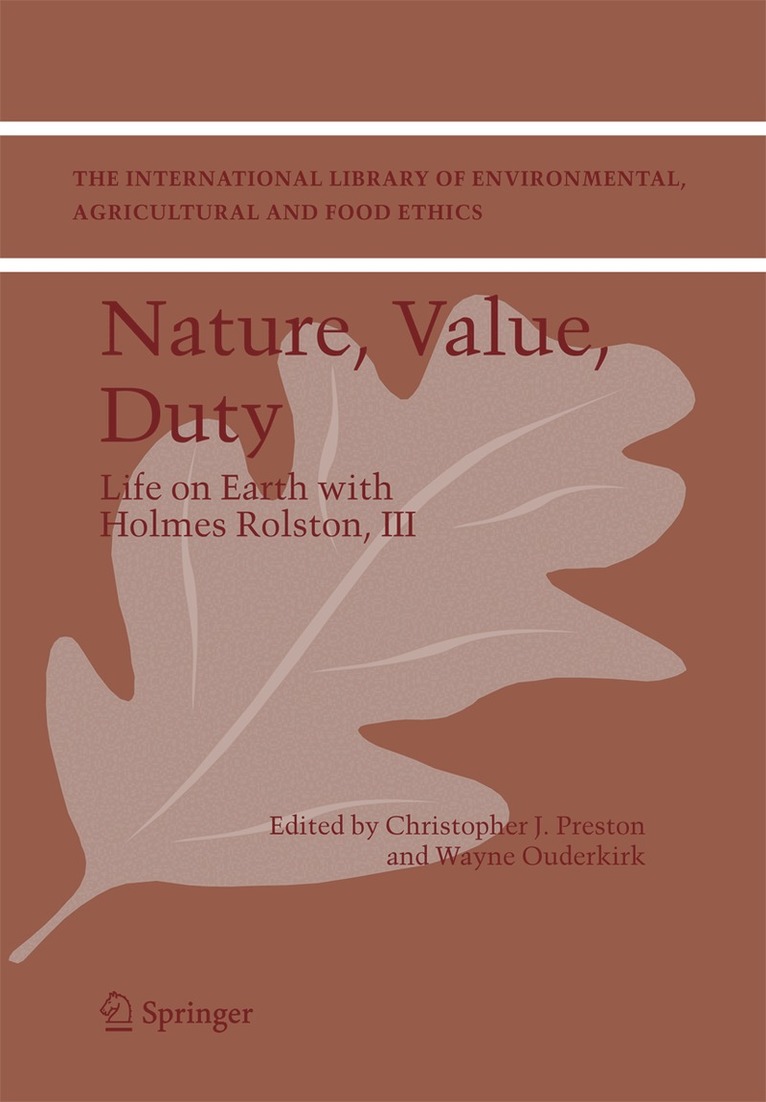
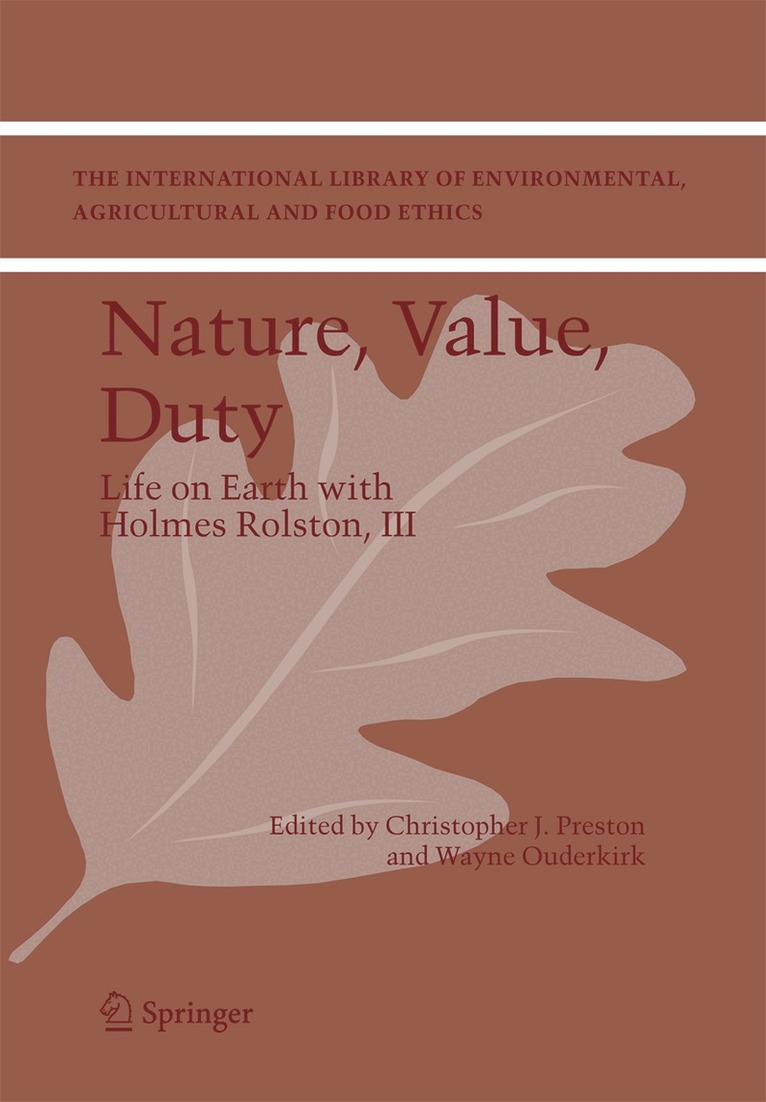
Gifford Lecturer and Templeton Prize winner Holmes Rolston, III is widely known as the father of environmental ethics. His writings range between natural philosophy and theology and include detailed presentations of an interlocking position that includes aesthetics, value theory, natural resource policy, wilderness advocacy, and sustainable development.
"Nature Value and Duty: Life on Earth with Holmes Rolston, III" is a collection of contemporary writings on the work of Holmes Rolston, III. The authors contributing to this volume are a mixture of senior scholars in environmental ethics and new voices in philosophy and in literature. Together they provide an in depth evaluation of many of the topics discussed by Rolston. They probe the strengths and weaknesses of his work and suggest valuable correctives. Rolston himself, in a detailed reply to each of his critics at the end of the volume, reveals where some of these criticisms sting him the most and in the process provides one of the most detailed and articulate defenses of his position ever offered.
264 kr
Läs direkt efter köp
1 802 kr
Skickas inom 10-15 vardagar
615 kr
Skickas inom 10-15 vardagar
648 kr
Läs direkt efter köp
362 kr
Skickas inom 10-15 vardagar
339 kr
Läs direkt efter köp
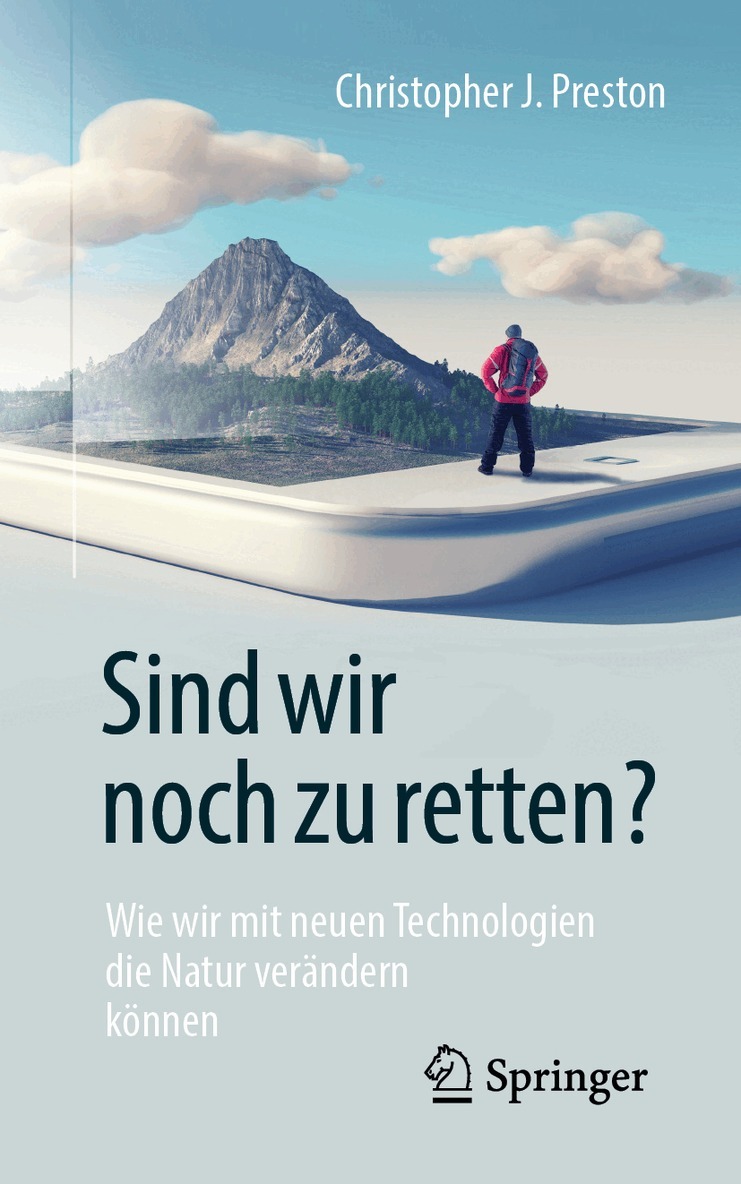
Nanotechnologie, synthetische Biologie, Wiedererweckung ausgestorbener Arten und Geoengineering – werden Menschen die Natur in Zukunft mit solchen Methoden grundlegend umgestalten? Man könnte es sich vorstellen.
Auf der Erde gibt es keinen von Menschen unberührten Ort mehr – das hat wohl jeder schon einmal gehört. Aber die Bedeutung dieser Tatsache erschöpft sich nicht in Statistiken, die Gletscherschmelze und Artensterben dokumentieren. Vielmehr kennzeichnet sie den Beginn einer neuen Epoche der Erdgeschichte. Und das Auffälligste an diesem Synthetischen Zeitalter, so Christopher Preston, sind nicht nur die Auswirkungen des Menschen als solche, sondern die Veränderungen, die wir von nun an gezielt und absichtlich herbeiführen werden. Neue Technologien werden uns die Macht verleihen, viele grundlegende Abläufe der Natur selbst in die Hand zu nehmen. Damit verlassen wir nicht nur das Holozän und treten ins Anthropozän ein; wir lassen auch eine Zeit hinter uns, in der globaler Wandel nicht nur die unbeabsichtigte Folge einer ungezügelten Industrialisierung ist. Mit einer von Ingenieuren und Technikern gestalteten Welt beginnt das erste Synthetische Zeitalter unseres Planeten.
Preston beschreibt eine Reihe von Technologien, die den „Stoffwechsel“ der Erde umgestalten werden: Nanotechnologie gibt den natürlichen Formen der Materie eine neue Struktur; „molekulare Produktion“ eröffnet unzählige neue Anwendungsmöglichkeiten; synthetische Biologie erlaubt es uns, Genome nicht nur zu lesen, sondern auch aufzubauen; „biologische Mini-Maschinen“ überflügeln die Evolution; Arten werden umgesiedelt und wieder zum Leben erweckt; und mit Geoengineering kann man die Sonnenstrahlung mit Vulkandunst abschirmen, die Temperaturen auf der Erde durch hellere Wolken senken und mit künstlichen Bäumen, die Kohlenstoff aus Wind gewinnen, das CO2 aus der Atmosphäre beseitigen.
Was bedeutet es, wenn Menschen die Erde nicht nur verwalten, sondern auch grundlegend umgestalten? Und wem sollten wir vertrauen, wenn es darum geht, über die Umrisse unserer synthetischen Zukunft zu entscheiden? Solche Fragen sind zu wichtig, als dass man sie den Ingenieuren überlassen sollte.
1 634 kr
Skickas inom 10-15 vardagar
157 kr
Tillfälligt slut