Christopher James – författare
432 kr
Skickas inom 3-6 vardagar
447 kr
Läs direkt efter köp
447 kr
Läs direkt efter köp
818 kr
Skickas inom 11-20 vardagar
236 kr
Skickas inom 5-8 vardagar
213 kr
Skickas inom 5-8 vardagar
312 kr
Skickas inom 3-6 vardagar
111 kr
Skickas
176 kr
Skickas inom 5-8 vardagar
280 kr
Skickas inom 5-8 vardagar
280 kr
Skickas inom 5-8 vardagar
162 kr
Skickas
268 kr
Läs direkt efter köp
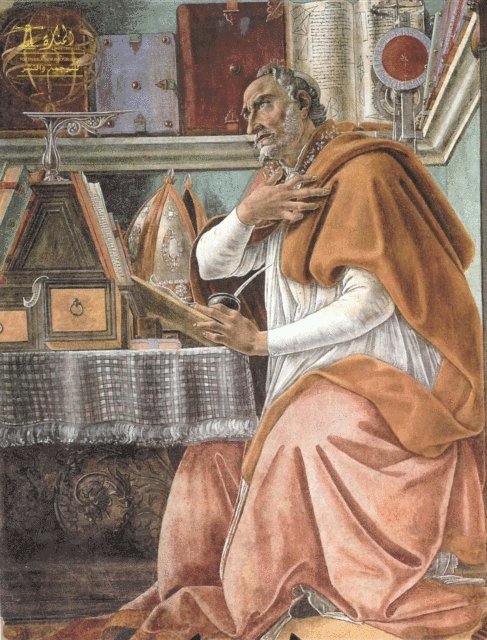
St. Augustine, also called Saint Augustine of Hippo, original Latin name Aurelius Augustinus, (born November 13, 354, Tagaste, Numidia [now Souk Ahras, Algeria]—died August 28, 430, Hippo Regius [now Annaba, Algeria]; feast day August 28), bishop of Hippo from 396 to 430, one of the Latin Fathers of the Church and perhaps the most significant Christian thinker after St. Paul. Augustine’s adaptation of classical thought to Christian teaching created a theological system of great power and lasting influence. His numerous written works, the most important of which are Confessions (c. 400) and The City of God (c. 413–426), shaped the practice of biblical exegesis and helped lay the foundation for much of medieval and modern Christian thought. In Roman Catholicism he is formally recognized as a doctor of the church.
Augustine is remarkable for what he did and extraordinary for what he wrote. If none of his written works had survived, he would still have been a figure to be reckoned with, but his stature would have been more nearly that of some of his contemporaries. However, more than five million words of his writings survive, virtually all displaying the strength and sharpness of his mind (and some limitations of range and learning) and some possessing the rare power to attract and hold the attention of readers in both his day and ours. His distinctive theological style shaped Latin Christianity in a way surpassed only by Scripture itself. His work continues to hold contemporary relevance, in part because of his membership in a religious group that was dominant in the West in his time and remains so today.
Intellectually, Augustine represents the most influential adaptation of the ancient Platonic tradition with Christian ideas that ever occurred in the Latin Christian world. Augustine received the Platonic past in a far more limited and diluted way than did many of his Greek-speaking contemporaries, but his writings were so widely read and imitated throughout Latin Christendom that his particular synthesis of Christian, Roman, and Platonic traditions defined the terms for much later tradition and debate. Both modern Roman Catholic and Protestant Christianity owe much to Augustine, though in some ways each community has at times been embarrassed to own up to that allegiance in the face of irreconcilable elements in his thought. For example, Augustine has been cited as both a champion of human freedom and an articulate defender of divine predestination, and his views on sexuality were humane in intent but have often been received as oppressive in effect.
164 kr
Läs direkt efter köp
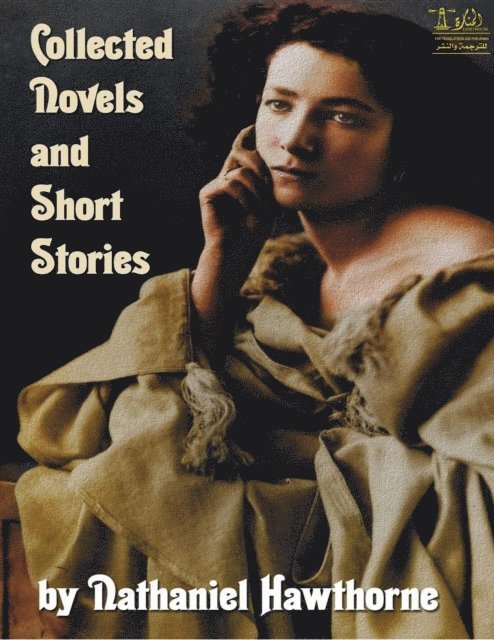
Nathaniel Hawthorne, (born July 4, 1804, Salem, Mass., U.S.—died May 19, 1864, Plymouth, N.H.), American novelist and short-story writer who was a master of the allegorical and symbolic tale. One of the greatest fiction writers in American literature, he is best known for The Scarlet Letter (1850) and The House of the Seven Gables (1851).
Early years
Hawthorne’s ancestors had lived in Salem since the 17th century. His earliest American ancestor, William Hathorne (Nathaniel added the w to the name when he began to write), was a magistrate who had sentenced a Quaker woman to public whipping. He had acted as a staunch defender of Puritan orthodoxy, with its zealous advocacy of a “pure,” unaffected form of religious worship, its rigid adherence to a simple, almost severe, mode of life, and its conviction of the “natural depravity” of “fallen” man. Hawthorne was later to wonder whether the decline of his family’s prosperity and prominence during the 18th century, while other Salem families were growing wealthy from the lucrative shipping trade, might not be a retribution for this act and for the role of William’s son John as one of three judges in the Salem witchcraft trials of 1692. When Nathaniel’s father—a ship’s captain—died during one of his voyages, he left his young widow without means to care for her two girls and young Nathaniel, aged four. She moved in with her affluent brothers, the Mannings. Hawthorne grew up in their house in Salem and, for extensive periods during his teens, in Raymond, Maine, on the shores of Sebago Lake. He returned to Salem in 1825 after four years at Bowdoin College, in Brunswick, Maine. Hawthorne did not distinguish himself as a young man. Instead, he spent nearly a dozen years reading and trying to master the art of writing fiction.
First works
In college Hawthorne had excelled only in composition and had determined to become a writer. Upon graduation, he had written an amateurish novel, Fanshawe, which he published at his own expense—only to decide that it was unworthy of him and to try to destroy all copies. Hawthorne, however, soon found his own voice, style, and subjects, and within five years of his graduation he had published such impressive and distinctive stories as “The Hollow of the Three Hills” and “An Old Woman’s Tale.” By 1832, “My Kinsman, Major Molineux” and “Roger Malvin’s Burial,” two of his greatest tales—and among the finest in the language—had appeared. “Young Goodman Brown,” perhaps the greatest tale of witchcraft ever written, appeared in 1835.
II. FanshaweIII. The Scarlet LetterIV. The House of the Seven GablesV. The Blithedale RomanceVI. The Marble FaunVII. Doctor Grimshawe's Secret: a RomanceVIII. Twice-Told TalesIX. Mosses from an Old ManseX. The Snow Image and other storiesXI. TalesXII. Alice Doane’s AppealXIII. The Ancestral FootstepXIV. The Dolliver RomanceXV. Septimius FeltonXVI. Life of Franklin PierceXVII. Chiefly about War Matters
17 kr
Läs direkt efter köp
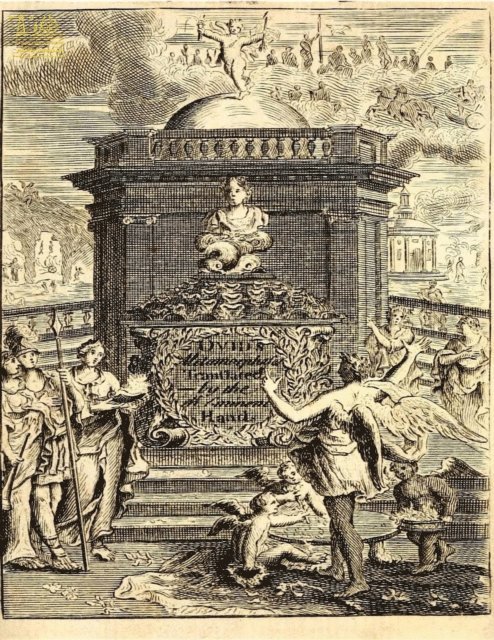
Ovid, Latin in full Publius Ovidius Naso, (born March 20, 43 bce, Sulmo, Roman Empire [now Sulmona, Italy]—died 17 ce, Tomis, Moesia [now Constanṭa, Romania]), Roman poet noted especially for his Ars amatoria and Metamorphoses. His verse had immense influence both by its imaginative interpretations of classical myth and as an example of supreme technical accomplishment.
Life
Publius Ovidius Naso was, like most Roman men of letters, a provincial. He was born at Sulmo, a small town about 90 miles (140 km) east of Rome. The main events of his life are described in an autobiographical poem in the Tristia (Sorrows). His family was old and respectable, and sufficiently well-to-do for his father to be able to send him and his elder brother to Rome to be educated. At Rome he embarked, under the best teachers of the day, on the study of rhetoric. Ovid was thought to have the makings of a good orator, but in spite of his father’s admonitions he neglected his studies for the verse writing that came so naturally to him.
As a member of the Roman knightly class (whose rank lay between the commons and the Senate), Ovid was marked by his position, and intended by his father, for an official career. First, however, he spent some time at Athens (then a favourite finishing school for young men of the upper classes) and traveled in Asia Minor and Sicily. Afterward he dutifully held some minor judicial posts, the first steps on the official ladder, but he soon decided that public life did not suit him. From then on he abandoned his official career to cultivate poetry and the society of poets.
16 kr
Läs direkt efter köp
The Poetical Works of Beattie, Blair and Falconer
James Beattie, the author of the Minstrel was born at Laurencekirk, in the county of Kincardineshire—a village situated in that beautiful trough of land called the Howe of the Mearns, and surmounted by the ridge of the Garvock Hills, which divide it from the German Ocean—on the 25th day of October 1735
32 kr
Läs direkt efter köp
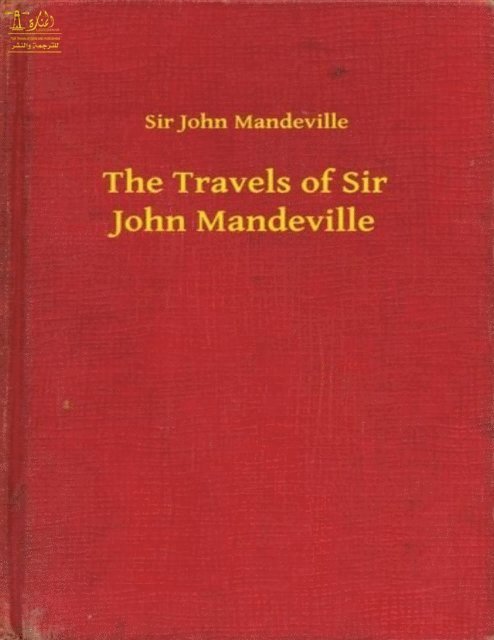
Sir John Mandeville, (flourished 14th century), purported author of a collection of travelers’ tales from around the world, The Voyage and Travels of Sir John Mandeville, Knight, generally known as The Travels of Sir John Mandeville. The tales are selections from the narratives of genuine travelers, embellished with Mandeville’s additions and described as his own adventures.
The actual author of the tales remains as uncertain as the existence of the English knight Sir John Mandeville himself. The book originated in French about 1356–57 and was soon translated into many languages, an English version appearing about 1375. The narrator Mandeville identifies himself as a knight of St. Albans. Incapacitated by arthritic gout, he has undertaken to stave off boredom by writing of his travels, which began on Michaelmas Day (September 29) 1322, and from which he returned in 1356. The 14th-century chronicler Jean d’Outremeuse of Liège claimed that he knew the book’s true author, a local physician named Jean de Bourgogne, and scholars afterward speculated that d’Outremeuse himself wrote the book. Modern historical research debunked the d’Outremeuse tradition but has yielded few more positive conclusions, and the actual author of the Travels remains unknown.
It is not certain whether the book’s true author ever traveled at all, since he selected his materials almost entirely from the encyclopaedias and travel books available to him, including those by William of Boldensele and Friar Odoric of Pordenone. The author enriched these itineraries with accounts of the history, customs, religions, and legends of the regions visited, culled from his remarkably wide reading, transforming and enlivening the originals by his literary skill and genuine creative imagination. The lands that he describes include the realm of Prester John, the land of darkness, and the abode of the Ten Lost Tribes of Israel, all legendary. Although in his time “Mandeville” was famous as the greatest traveler of the Middle Ages, in the ensuing age of exploration he lost his reputation as a truthful narrator. His book, notwithstanding, has always been popular and remains extremely readable.
467 kr
Läs direkt efter köp
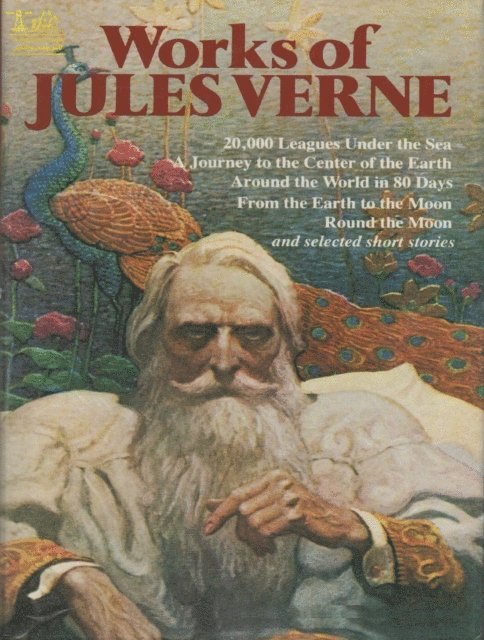
Jules Verne, a 19th century French author, is famed for such revolutionary science-fiction novels as 'Around the World in Eighty Days' and 'Twenty Thousand Leagues Under the Sea.'
Synopsis
Born in Nantes, France, in 1828, Jules Verne pursued a writing career after finishing law school. He hit his stride after meeting publisher Pierre-Jules Hetzel, who nurtured many of the works that would comprise the author's Voyages Extraordinaires. Often referred to as the "Father of Science Fiction," Verne wrote books about a variety of innovations and technological advancements years before they were practical realities. Although he died in 1905, his works continued to be published well after his death, and he became the second most translated author in the world.
Early Years
Jules Verne was born on February 8, 1828, in Nantes, France, a busy maritime port city. There, Verne was exposed to vessels departing and arriving, sparking his imagination for travel and adventure. While attending boarding school, he began to write short stories and poetry. Afterward, his father, a lawyer, sent his oldest son to Paris to study law.
A Writing Career Begins
While he tended to his studies, Jules Verne found himself attracted to literature and the theater. He began frequenting Paris' famed literary salons, and befriended a group of artists and writers that included Alexandre Dumas and his son. After earning his law degree in 1849, Verne remained in Paris to indulge his artistic leanings. The following year, his one-act play Broken Straws (Les Pailles rompues) was performed.
Verne continued to write despite pressure from his father to resume his law career, and the tension came to a head in 1852, when Verne refused his father's offer to open a law practice in Nantes. The aspiring writer instead took a meager-paying job as secretary of the Théâtre-Lyrique, giving him the platform to produce Blind Man's Bluff (Le Colin‑maillard) and The Companions of the Marjolaine (Les Compagnons de la Marjolaine).
This collection contain the following:
I. IntroductionII. Five Weeks in a BalloonIII. The English at the North PoleIV. The Field of IceV. Journey to the Interior of the EarthVI. From the Earth to the MoonVII. Round the MoonVIII. In Search of the CastawaysIX. Twenty-Thousand Leagues Under the SeaX. Around the World in 80 DaysXI. The Fur CountryXII. The Mysterious IslandXIII. The Survivors of the ChancellorXIV. Michael StrogoffXV. The Underground CityXVI. Off on a CometXVII. Eight Hundred Leagues on the AmazonXVIII. Robur the ConquerorXIX. The Master of the WorldXX. A Drama in the AirXXI. Master ZachariusXXII. A Winter Amid the IceXXIII. Doctor Ox’s ExperimentXXIV. In the Year 2889XXV. ROBUR THE CONQUERORXXVI. Works of Jules Verne
545 kr
Läs direkt efter köp
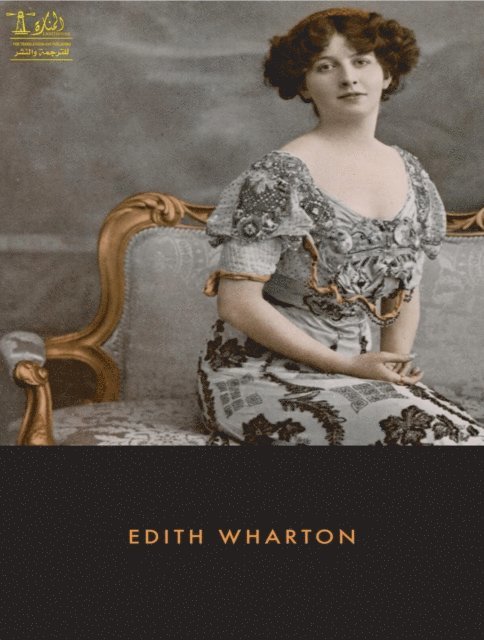
Edith Wharton, née Edith Newbold Jones, (born January 24, 1862, New York, New York, U.S.—died August 11, 1937, Saint-Brice-sous-Forêt, near Paris, France), American author best known for her stories and novels about the upper-class society into which she was born.
Edith Jones came of a distinguished and long-established New York family. She was educated by private tutors and governesses at home and in Europe, where the family resided for six years after the American Civil War, and she read voraciously. She made her debut in society in 1879 and married Edward Wharton, a wealthy Boston banker, in 1885.
Although she had had a book of her own poems privately printed when she was 16, it was not until after several years of married life that Wharton began to write in earnest. Her major literary model was Henry James, whom she knew, and her work reveals James’s concern for artistic form and ethical issues. She contributed a few poems and stories to Harper’s, Scribner’s, and other magazines in the 1890s, and in 1897, after overseeing the remodeling of a house in Newport, Rhode Island, she collaborated with the architect Ogden Codman, Jr., on The Decoration of Houses. Her next books, The Greater Inclination (1899) and Crucial Instances (1901), were collections of stories.
This collection contain the following:
I. IntroductionII. Crucial InstancesIII. The Descent of Man and other storiesIV. The Hermit and the Wild Woman and other storiesV. Tales of Men and GhostsVI. XinguVII. The ChoiceVIII. Coming HomeIX. The Triumph of NightX. KerfolXI. Autres Temps . . .XII. The Long RunXIII. Here and BeyondXIV. Certain PeopleXV. A Backward GlanceXVI. False DawnXVII. The Old MaidXVIII. The SparkXIX. New Year’s DayXX. The Mother's RecompenseXXI. Twilight SleepXXII. The ChildrenXXIII. Hudson River BracketedXXIV. The Gods ArriveXXV. The TouchstoneXXVI. The Valley of DecisionXXVII. SanctuaryXXVIII. The House of MirthXXIX. Madame de TreymesXXX. Fruit of the TreeXXXI. Ethan FromeXXXII. The ReefXXXIII. The Custom of the CountryXXXIV. Bunner SistersXXXV. SummerXXXVI. The Age of InnocenceXXXVII. The Glimpses of the Moon
148 kr
Skickas inom 5-8 vardagar
196 kr
Tillfälligt slut