Christopher Markiewicz – författare
Visar alla böcker från författaren Christopher Markiewicz. Handla med fri frakt och snabb leverans.
8 produkter
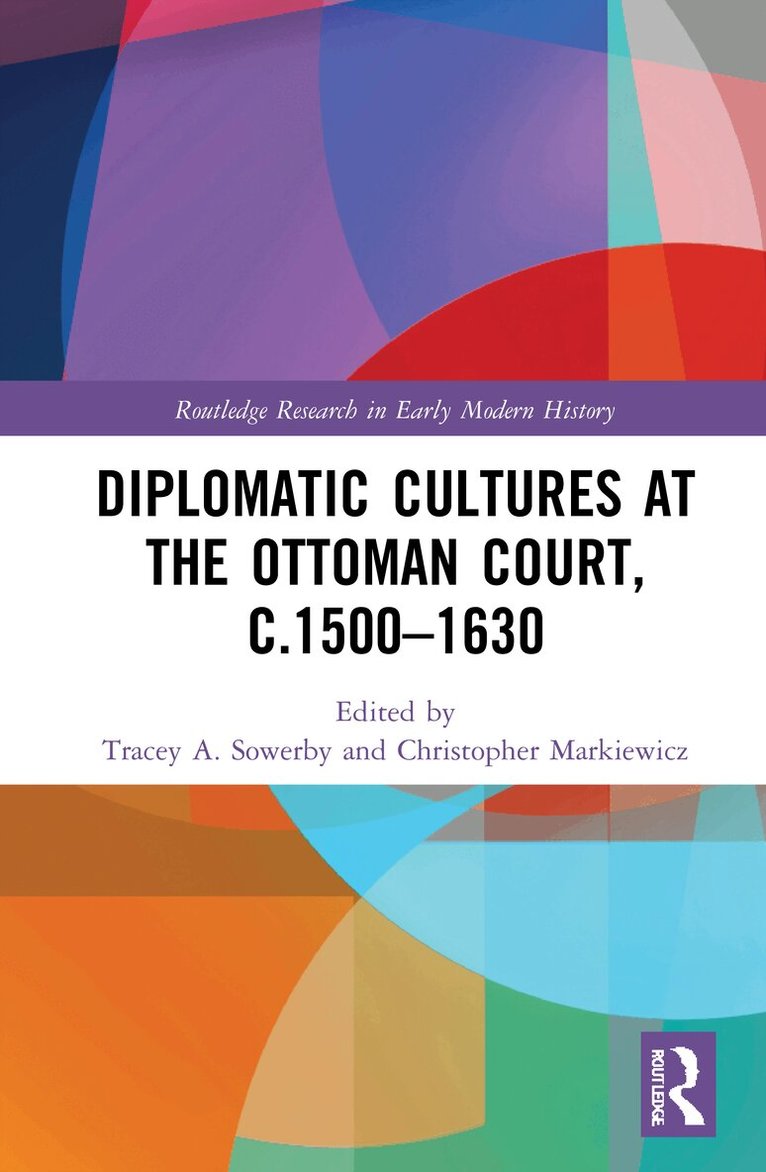
Diplomatic Cultures at the Ottoman Court, c.1500–1630
Av Tracey A. Sowerby, Christopher Markiewicz
Inbunden, 2021
2586 kr
Lägg i varukorg
In the sixteenth century, the Ottoman court in Constantinople emerged as the axial centre of early modern diplomacy in Eurasia. Diplomatic Cultures at the Ottoman Court, c.1500-1630 takes a unique approach to diplomatic relations by focusing on how diplomacy was conducted and diplomatic cultures …
Diplomatic Cultures at the Ottoman Court, c.1500–1630
Av Tracey A. Sowerby, Christopher Markiewicz
Häftad, 2023
667 kr
Lägg i varukorg
In the sixteenth century, the Ottoman court in Constantinople emerged as the axial centre of early modern diplomacy in Eurasia. Diplomatic Cultures at the Ottoman Court, c.1500-1630 takes a unique approach to diplomatic relations by focusing on how diplomacy was conducted and diplomatic cultures …
Diplomatic Cultures at the Ottoman Court, c.1500-1630
Av Christopher Markiewicz, Tracey A. Sowerby
E-bok, 2021
760 kr
Lägg i varukorg
In the sixteenth century, the Ottoman court in Constantinople emerged as the axial centre of early modern diplomacy in Eurasia. Diplomatic Cultures at the Ottoman Court, c.1500-1630 takes a unique approach to diplomatic relations by focusing on how diplomacy was conducted and diplomatic cultures …
Diplomatic Cultures at the Ottoman Court, c.1500-1630
Av Christopher Markiewicz, Tracey A. Sowerby
E-bok, 2021
760 kr
Lägg i varukorg
In the sixteenth century, the Ottoman court in Constantinople emerged as the axial centre of early modern diplomacy in Eurasia. Diplomatic Cultures at the Ottoman Court, c.1500-1630 takes a unique approach to diplomatic relations by focusing on how diplomacy was conducted and diplomatic cultures …
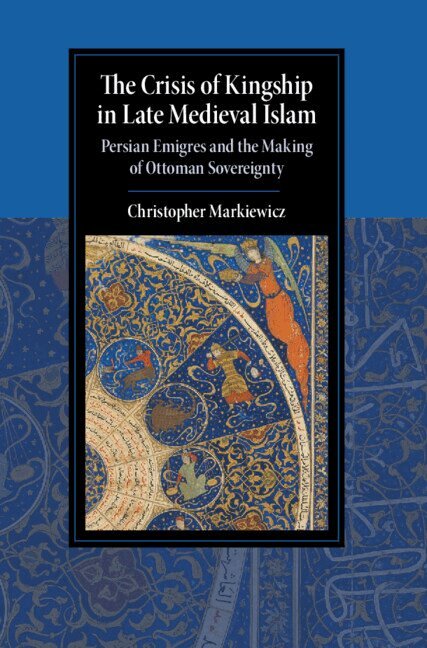
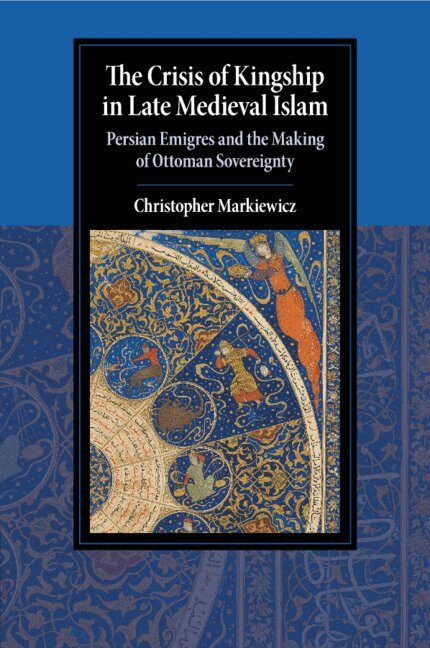
The Crisis of Kingship in Late Medieval Islam
Persian Emigres and the Making of Ottoman Sovereignty
Inbunden, 2019
1838 kr
Lägg i varukorg
In the early sixteenth century, the political landscape of West Asia was completely transformed: of the previous four major powers, only one - the Ottoman Empire - continued to exist. Ottoman survival was, in part, predicated on transition to a new mode of kingship, enabling its transformation from …
Crisis of Kingship in Late Medieval Islam
Persian Emigres and the Making of Ottoman Sovereignty
E-bok, 2019
657 kr
Lägg i varukorg
In the early sixteenth century, the political landscape of West Asia was completely transformed: of the previous four major powers, only one - the Ottoman Empire - continued to exist. Ottoman survival was, in part, predicated on transition to a new mode of kingship, enabling its transformation from …
The Crisis of Kingship in Late Medieval Islam
Persian Emigres and the Making of Ottoman Sovereignty
Häftad, 2020
687 kr
Lägg i varukorg
In the early sixteenth century, the political landscape of West Asia was completely transformed: of the previous four major powers, only one - the Ottoman Empire - continued to exist. Ottoman survival was, in part, predicated on transition to a new mode of kingship, enabling its transformation from …
Crisis of Kingship in Late Medieval Islam
Persian Emigres and the Making of Ottoman Sovereignty
E-bok, 2019
672 kr
Lägg i varukorg
In the early sixteenth century, the political landscape of West Asia was completely transformed: of the previous four major powers, only one - the Ottoman Empire - continued to exist. Ottoman survival was, in part, predicated on transition to a new mode of kingship, enabling its transformation from …