
Christopher Prestige Jones – författare
Visar alla böcker från författaren Christopher Prestige Jones. Handla med fri frakt och snabb leverans.
2 produkter
2 produkter
669 kr
Skickas inom 5-8 vardagar
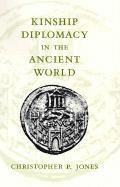
Heroic figures such as Heracles, Perseus, and Jason were seen by the Greeks not as mythical figures but as real people who in a bygone age traveled the world, settled new lands, and left descendants who, generation after generation, could trace their ancestry back to the "time of heroes." From the Homeric age to Byzantium, peoples and nations sharing the same fictive ancestry appealed to their kinship when forging military alliances, settling disputes, or negotiating trade connections. In this intriguing study of the political uses of perceived kinship, Christopher Jones gives us an unparalleled view of mythic belief in action.Throughout the centuries of Greek preeminence, the Roman Republic and Empire, and into the early Christian era, examples of kinship diplomacy abound. Ancient historians report, for instance, that when the forces of Alexander the Great reached what is now southern Pakistan they encountered a people called the Siboi, whom they judged to be descendants of Heracles. Since Alexander was himself a descendant of the same hero, the invading Macedonians and the Siboi were clearly kinsmen and so parted in peace. Examining the very origins of ancient diplomacy, and kinship as one of its basic constituents, Kinship Diplomacy addresses fundamental questions about communal and national identity and sheds new light on the force of Greek mythic traditions.
459 kr
Skickas inom 10-15 vardagar
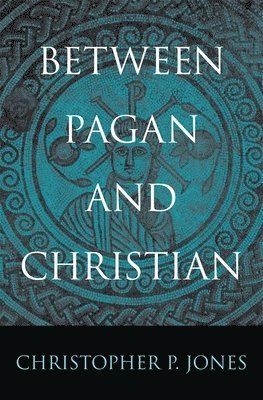
For the early Christians, “pagan” referred to a multitude of unbelievers: Greek and Roman devotees of the Olympian gods, and “barbarians” such as Arabs and Germans with their own array of deities. But while these groups were clearly outsiders or idolaters, who and what was pagan depended on the outlook of the observer, as Christopher Jones shows in this fresh and penetrating analysis. Treating paganism as a historical construct rather than a fixed entity, Between Pagan and Christian uncovers the ideas, rituals, and beliefs that Christians and pagans shared in Late Antiquity.While the emperor Constantine’s conversion in 312 was a momentous event in the history of Christianity, the new religion had been gradually forming in the Roman Empire for centuries, as it moved away from its Jewish origins and adapted to the dominant pagan culture. Early Christians drew on pagan practices and claimed important pagans as their harbingers—asserting that Plato, Virgil, and others had glimpsed Christian truths. At the same time, Greeks and Romans had encountered in Judaism observances and beliefs shared by Christians such as the Sabbath and the idea of a single, creator God. Polytheism was the most obvious feature separating paganism and Christianity, but pagans could be monotheists, and Christians could be accused of polytheism and branded as pagans. In the diverse religious communities of the Roman Empire, as Jones makes clear, concepts of divinity, conversion, sacrifice, and prayer were much more fluid than traditional accounts of early Christianity have led us to believe.