Christopher Rovee - Böcker
Visar alla böcker från författaren Christopher Rovee. Handla med fri frakt och snabb leverans.
3 produkter
3 produkter
931 kr
Skickas inom 10-15 vardagar
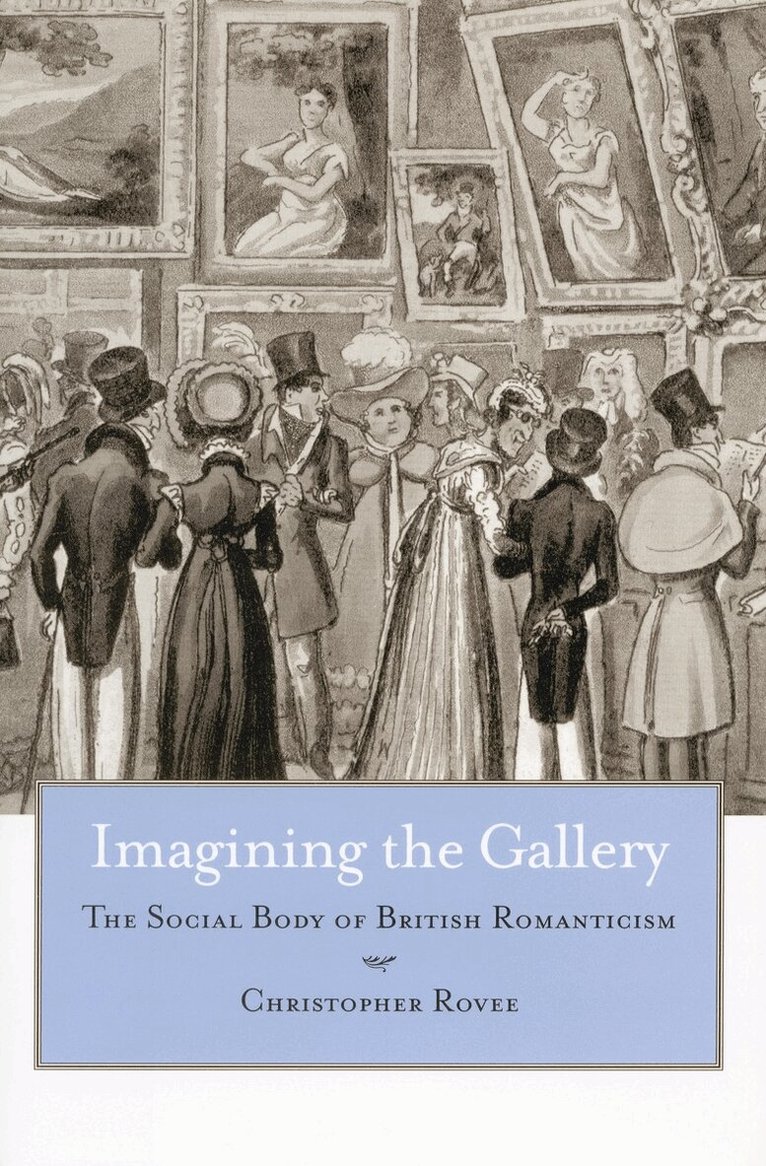
The Romantic period has long been associated with the sublime landscape. In Imagining the Gallery, we learn that it was also the age of the portrait. Rovee reads the rise of portraiture in the Romantic period as an index of a massive reimagining of the British social body. Cultural institutions such as art galleries, he argues, are bastions of conservatism as well as dynamic spaces for envisioning a new political order. From the family gallery at Pemberley in Austen's Pride and Prejudice to the printed portraits of working men and women that were published in books; from the eighty-plus paintings of the Poet Laureate William Wordsworth to the gigantic living portrait that is Victor Frankenstein's Monster, Imagining the Gallery reveals portraiture as an enormously influential cultural discourse that helped to remake the body politic in the image of the private individual.
1 361 kr
Skickas inom 10-15 vardagar
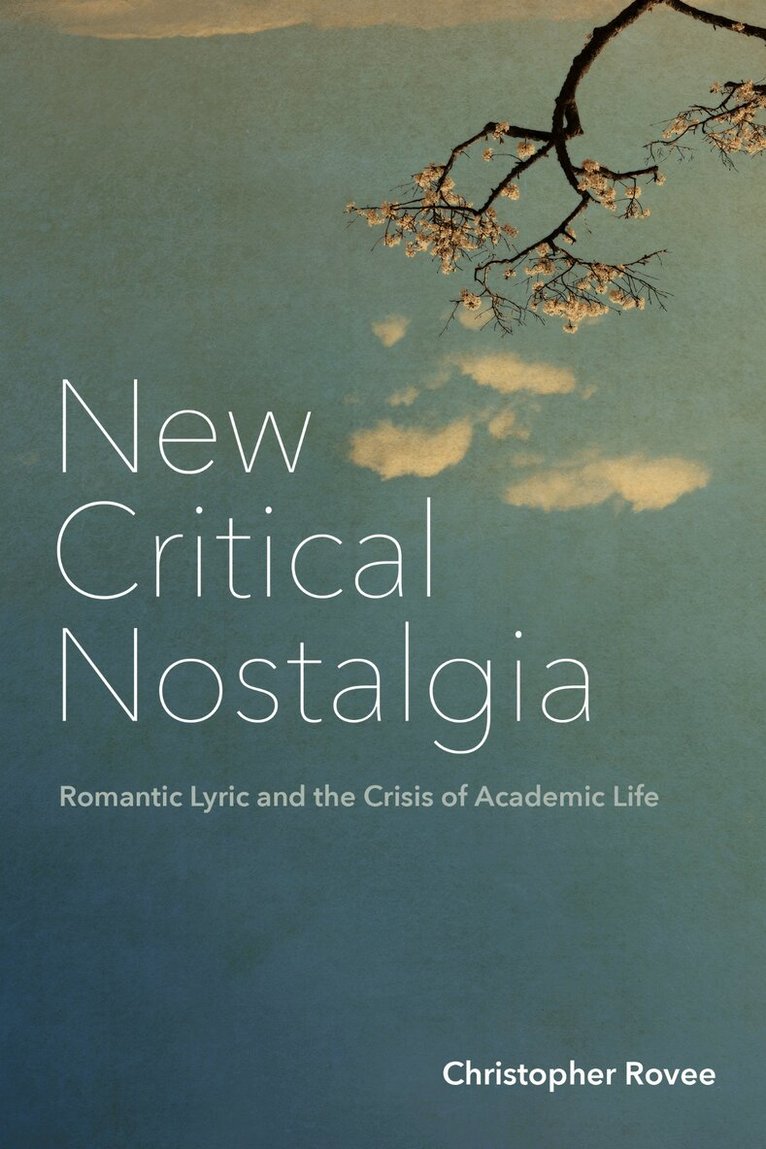
New Critical Nostalgia weighs the future of literary study by reassessing its past. It tracks today's impassioned debates about method back to the discipline's early professional era, when an unprecedented makeover of American higher education with far-reaching social consequences resulted in what we might call our first crisis of academic life. Rovee probes literary study's nostalgic attachments to this past, by recasting an essential episode in the historiography of English—the vigorous rejection of romanticism by American New Critics—in the new light of the American university's tectonic growth. In the process, he demonstrates literary study's profound investment in romanticism and reveals the romantic lyric's special affect, nostalgia, as having been part of English's professional identity all along. New Critical Nostalgia meticulously shows what is lost in reducing mid-century American criticism and the intense, quirky, and unpredictable writings of central figures, such as Cleanth Brooks, Josephine Miles, and W. K. Wimsatt, to a glib monolith of New Critical anti-romanticism. In Rovee's historically rich account, grounded in analysis of critical texts and enlivened by archival study, readers discover John Crowe Ransom's and William Wordsworth's shared existential nostalgia, witness the demolition of the "immature" Percy Shelley in the revolutionary textbook Understanding Poetry, explore the classroom give-and-take prompted by the close reading of John Keats, consider the strange ambivalence toward Lord Byron on the part of formalist critics and romantic scholars alike, and encounter the strikingly contemporary quantitative studies by one of the mid-century's preeminent poetry scholars, Josephine Miles. These complex and enthralling engagements with the romantic lyric introduce the reader to a dynamic intellectual milieu, in which professionals with varying methodological commitments (from New Critics to computationalists), working in radically different academic locales (from Nashville and New Haven to Baton Rouge and Berkeley), wrangled over what it means to read, with nothing less than the future of the discipline at stake.
372 kr
Skickas inom 7-10 vardagar
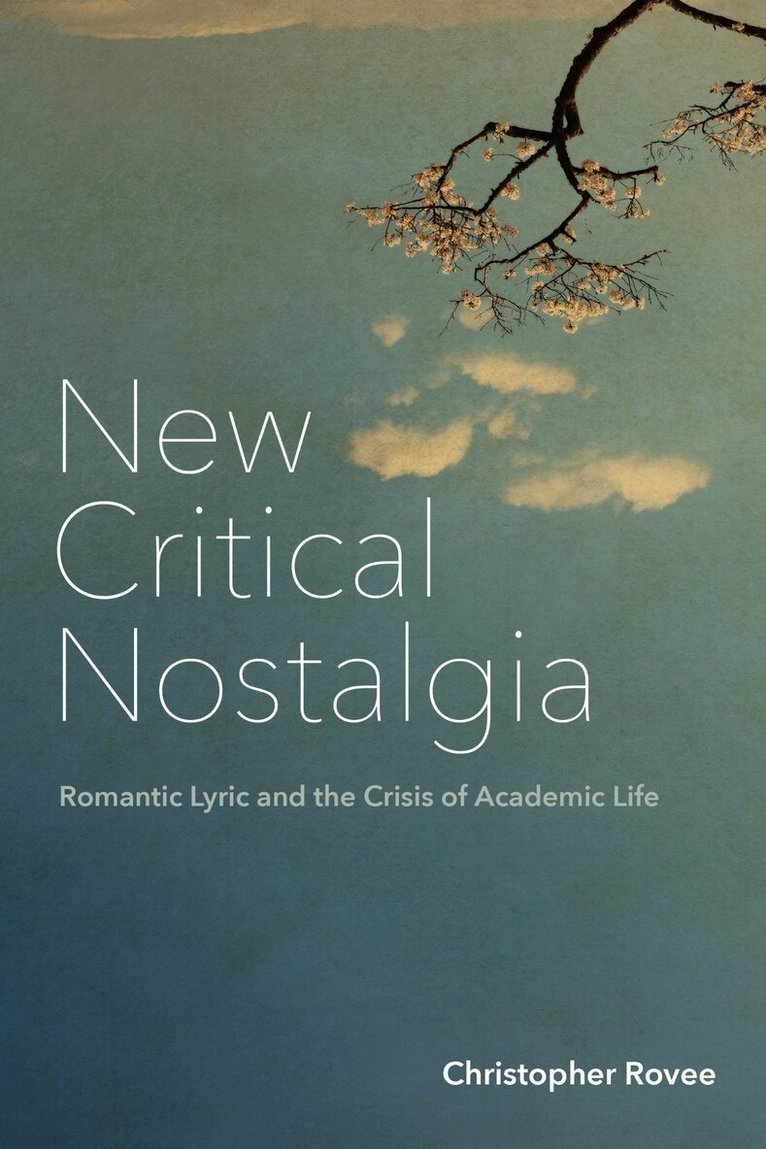
New Critical Nostalgia weighs the future of literary study by reassessing its past. It tracks today's impassioned debates about method back to the discipline's early professional era, when an unprecedented makeover of American higher education with far-reaching social consequences resulted in what we might call our first crisis of academic life. Rovee probes literary study's nostalgic attachments to this past, by recasting an essential episode in the historiography of English—the vigorous rejection of romanticism by American New Critics—in the new light of the American university's tectonic growth. In the process, he demonstrates literary study's profound investment in romanticism and reveals the romantic lyric's special affect, nostalgia, as having been part of English's professional identity all along. New Critical Nostalgia meticulously shows what is lost in reducing mid-century American criticism and the intense, quirky, and unpredictable writings of central figures, such as Cleanth Brooks, Josephine Miles, and W. K. Wimsatt, to a glib monolith of New Critical anti-romanticism. In Rovee's historically rich account, grounded in analysis of critical texts and enlivened by archival study, readers discover John Crowe Ransom's and William Wordsworth's shared existential nostalgia, witness the demolition of the "immature" Percy Shelley in the revolutionary textbook Understanding Poetry, explore the classroom give-and-take prompted by the close reading of John Keats, consider the strange ambivalence toward Lord Byron on the part of formalist critics and romantic scholars alike, and encounter the strikingly contemporary quantitative studies by one of the mid-century's preeminent poetry scholars, Josephine Miles. These complex and enthralling engagements with the romantic lyric introduce the reader to a dynamic intellectual milieu, in which professionals with varying methodological commitments (from New Critics to computationalists), working in radically different academic locales (from Nashville and New Haven to Baton Rouge and Berkeley), wrangled over what it means to read, with nothing less than the future of the discipline at stake.