Christopher S. Queen – författare
Visar alla böcker från författaren Christopher S. Queen. Handla med fri frakt och snabb leverans.
3 produkter
3 produkter
Häftad, Engelska, 1996
490 kr
Skickas inom 5-8 vardagar
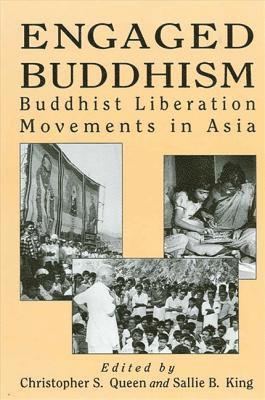
The first comprehensive coverage of socially and politically engaged Buddhism in Asia, presenting the historical development and institutional forms of engaged Buddhism in the light of traditional Buddhist conceptions of morality, interdependence, and liberationThis is the first comprehensive study of socially and politically engaged Buddhism in the lands of its origin. Nine accounts of contemporary movements in India, Sri Lanka, Thailand, Tibet, Taiwan, Vietnam, and Japan are framed by interpretive essays. The historical development and institutional forms of engaged Buddhism are considered in the light of traditional Buddhist conceptions of morality, interdependence, and liberation; and Western ideas of freedom, human rights, and democracy.Since the fiery self-immolation of the Vietnamese monk Thich Quang Duc on a Saigon street in 1963, "engaged Buddhism" has spread throughout Asia and the West. Twice in recent years the Nobel Prize for peace was awarded to Buddhists for their efforts to free their compatriots from totalitarian regimes.Engaged Buddhism presents ordained and lay Buddhist activists like Thich Nhat Hanh of Vietnam, Buddhadasa Bhikkhu and Sulak Sivaraksa of Thailand, A. T. Ariyaratne and the Sarvodaya Shramadana movement of Sri Lanka, Daisaku Ikeda and the Soka Gakkai movement of Japan, followers of the Indian Untouchable leader, Dr. B. R. Ambedkar, and Buddhist women throughout Asia. These leaders have campaigned relentlessly, attracted and organized millions of new converts, faced death threats, landed in jail, founded schools and universities, and produced a massive new Buddhist literature to restore social and economic justice to their societies.
E-bok
Engelska, 2012160 kr
Läs direkt efter köp
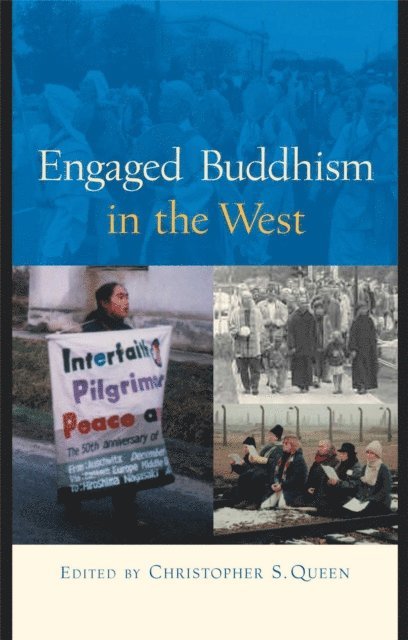
Engaged Buddhism is founded on the belief that genuine spiritual practice requires an active involvement in society. Engaged Buddhism in the West illuminates the evolution of this new chapter in the Buddhist tradition - including its history, leadership, and teachings - and addresses issues such as violence and peace, race and gender, homelessness, prisons, and the environment. Eighteen new studies explore the activism of renowned leaders and organizations, such as Thich Nhat Hanh, Bernard Glassman, Joanna Macy, the Buddhist Peace Fellowship, and the Free Tibet Movement, and the emergence of a new Buddhism in North America, Europe, South Africa, and Australia.
Inbunden, Engelska, 1996
1 079 kr
Tillfälligt slut
The first comprehensive coverage of socially and politically engaged Buddhism in Asia, presenting the historical development and institutional forms of engaged Buddhism in the light of traditional Buddhist conceptions of morality, interdependence, and liberationThis is the first comprehensive study of socially and politically engaged Buddhism in the lands of its origin. Nine accounts of contemporary movements in India, Sri Lanka, Thailand, Tibet, Taiwan, Vietnam, and Japan are framed by interpretive essays. The historical development and institutional forms of engaged Buddhism are considered in the light of traditional Buddhist conceptions of morality, interdependence, and liberation; and Western ideas of freedom, human rights, and democracy.Since the fiery self-immolation of the Vietnamese monk Thich Quang Duc on a Saigon street in 1963, "engaged Buddhism" has spread throughout Asia and the West. Twice in recent years the Nobel Prize for peace was awarded to Buddhists for their efforts to free their compatriots from totalitarian regimes.Engaged Buddhism presents ordained and lay Buddhist activists like Thich Nhat Hanh of Vietnam, Buddhadasa Bhikkhu and Sulak Sivaraksa of Thailand, A. T. Ariyaratne and the Sarvodaya Shramadana movement of Sri Lanka, Daisaku Ikeda and the Soka Gakkai movement of Japan, followers of the Indian Untouchable leader, Dr. B. R. Ambedkar, and Buddhist women throughout Asia. These leaders have campaigned relentlessly, attracted and organized millions of new converts, faced death threats, landed in jail, founded schools and universities, and produced a massive new Buddhist literature to restore social and economic justice to their societies.