Christopher Siwicki – författare
Visar alla böcker från författaren . Handla med fri frakt och snabb leverans.
4 produkter
4 produkter
E-bok
PDF, Engelska, 20191 572 kr
Läs direkt efter köp
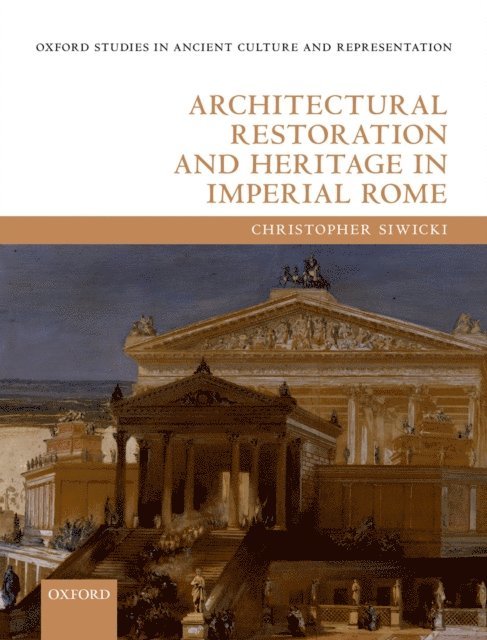
This volume addresses the treatment and perception of historic buildings in Imperial Rome, examining the ways in which public monuments were restored in order to develop an understanding of the Roman concept of built heritage. It considers examples from the first century BC to the second century AD, focusing primarily on the six decades between the Great Fire of AD 64 and the AD 120s, which constituted a period of dramatic urban transformation and architecturalinnovation in Rome. Through a detailed analysis of the ways in which the design, materiality, and appearance of buildings - including the temple of Jupiter Capitolinus and hut of Romulus - developed with successive restorations, the case is made for the existence of a consistent approach to the treatmentof historic buildings in this period. This study also explores how changes to particular monuments and to the urban fabric as a whole were received by the people who experienced them first-hand, uncovering attitudes to built heritage in Roman society more widely. By examining descriptions of destruction and restoration in literature of the first and second centuries AD, including the works of Seneca the Younger, Pliny the Elder, Martial, Tacitus, and Plutarch, it forms a picture of theconflicting ways in which Rome''s inhabitants responded to the redevelopment of their city. The results provide an alternative way of explaining key interventions in Rome''s built environment and challenge the idea that heritage is a purely modern phenomenon.
E-bok
Engelska, 20191 577 kr
Läs direkt efter köp
This volume addresses the treatment and perception of historic buildings in Imperial Rome, examining the ways in which public monuments were restored in order to develop an understanding of the Roman concept of built heritage. It considers examples from the first century BC to the second century AD, focusing primarily on the six decades between the Great Fire of AD 64 and the AD 120s, which constituted a period of dramatic urban transformation and architecturalinnovation in Rome. Through a detailed analysis of the ways in which the design, materiality, and appearance of buildings - including the temple of Jupiter Capitolinus and hut of Romulus - developed with successive restorations, the case is made for the existence of a consistent approach to the treatmentof historic buildings in this period. This study also explores how changes to particular monuments and to the urban fabric as a whole were received by the people who experienced them first-hand, uncovering attitudes to built heritage in Roman society more widely. By examining descriptions of destruction and restoration in literature of the first and second centuries AD, including the works of Seneca the Younger, Pliny the Elder, Martial, Tacitus, and Plutarch, it forms a picture of theconflicting ways in which Rome''s inhabitants responded to the redevelopment of their city. The results provide an alternative way of explaining key interventions in Rome''s built environment and challenge the idea that heritage is a purely modern phenomenon.
Häftad, Engelska, 2027
271 kr
Kommande
The city of Rome is the largest archaeological site in the world, capital and showcase of the Roman Empire and the centre of Christian Europe. Whether exploring Rome in person or wishing to understand it from afar, the Oxford Archaeological Guide is an essential resource for academics, students, historians, visitors, and all readers interested in the ancient city and the Roman world.The guide presents detailed archaeological explanations and historical background to both the most famous and lesser known sites of the city, combined with practical on-site information, including itineraries, museum tips, and glossaries. Amanda Claridge and Christopher Siwicki place Rome in the context of the development of the empire, highlighting the nature of Roman achievement, and explaining how Rome came to be the largest city in the ancient world. Accessibly written, it draws on the latest discoveries and the best of recent scholarship, to illuminate ancient Rome for experts and new-comers alike. For this expanded new edition the text has been extensively revised in line with recent discoveries, openings, and scholarship. Numerous new sites and illustrations have been added, the itineraries re-organized and expanded to suit the many changes that have taken place in the fifteen years since the previous edition, and the practical information, bibliography, and references fully updated.
Inbunden, Engelska, 2019
1 820 kr
Skickas inom 5-8 vardagar
This volume addresses the treatment and perception of historic buildings in Imperial Rome, examining the ways in which public monuments were restored in order to develop an understanding of the Roman concept of built heritage. It considers examples from the first century BC to the second century AD, focusing primarily on the six decades between the Great Fire of AD 64 and the AD 120s, which constituted a period of dramatic urban transformation and architectural innovation in Rome. Through a detailed analysis of the ways in which the design, materiality, and appearance of buildings - including the temple of Jupiter Capitolinus and hut of Romulus - developed with successive restorations, the case is made for the existence of a consistent approach to the treatment of historic buildings in this period. This study also explores how changes to particular monuments and to the urban fabric as a whole were received by the people who experienced them first-hand, uncovering attitudes to built heritage in Roman society more widely. By examining descriptions of destruction and restoration in literature of the first and second centuries AD, including the works of Seneca the Younger, Pliny the Elder, Martial, Tacitus, and Plutarch, it forms a picture of the conflicting ways in which Rome's inhabitants responded to the redevelopment of their city. The results provide an alternative way of explaining key interventions in Rome's built environment and challenge the idea that heritage is a purely modern phenomenon.