Christopher Spicer - Böcker
Visar alla böcker från författaren Christopher Spicer. Handla med fri frakt och snabb leverans.
3 produkter
3 produkter
2 150 kr
Skickas inom 10-15 vardagar
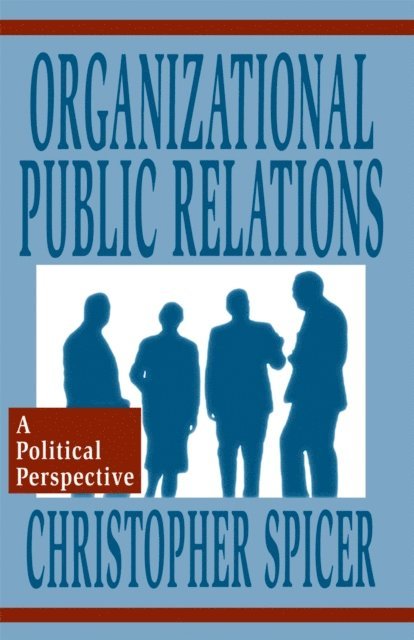
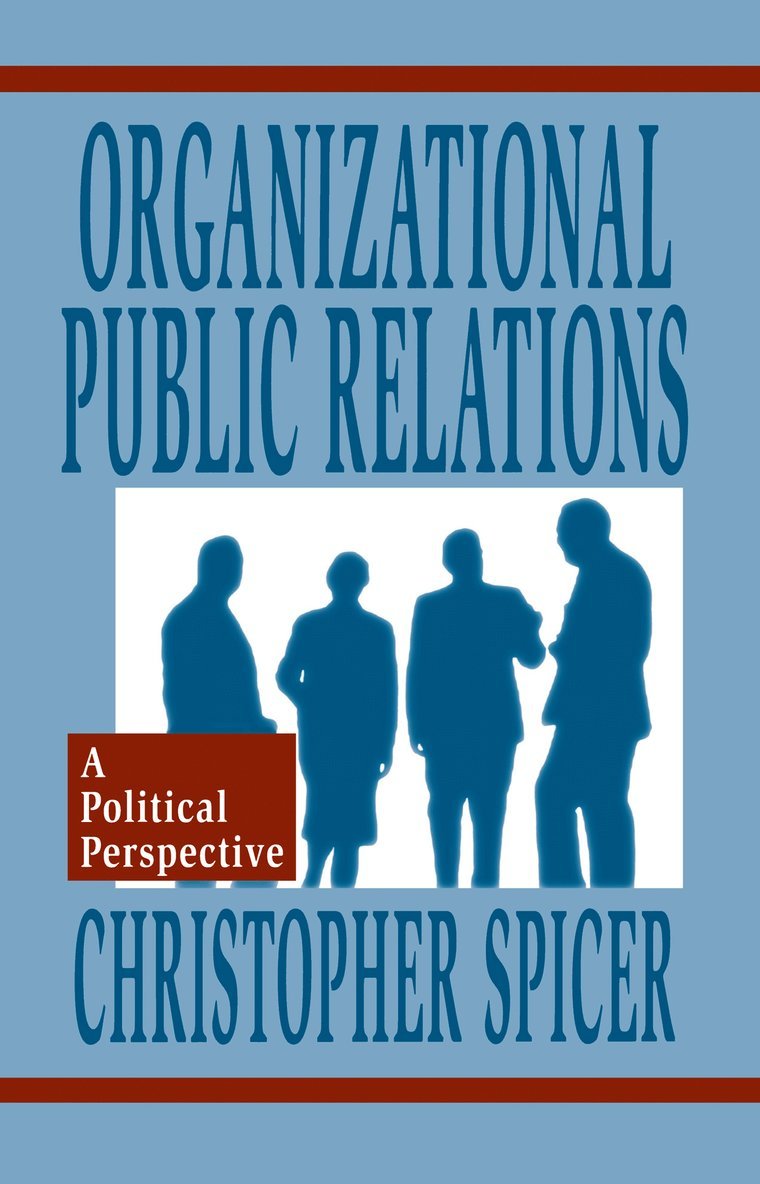
Public relations practitioners are often called upon to help chart their organization's strategic development, thus functioning as managerial decision makers linking the organization to its larger environment. This book is about understanding organizations, especially the role played by organizational decision making in the development and implementation of public relations programs and activities. It emphasizes the ways in which an organization's culture and decision making processes ultimately influence the success or failure of their public relations efforts.The research, case studies, and author's interpretations and suggestions explore the often confusing netherworld of organizational mindsets -- particularly as those world views affect the organization's relations with clients and other stakeholders. Understanding organizational politics is the way to understanding how and why decisions are made by the organization's dominant coalition. The primary goal of this text is to enhance our understanding of the ways in which organizations "work" -- the political process that accompanies organizational decision making.As an instrumental participant in the organizational political process, the public relations practitioner must posess knowledge and understanding of the organization's political process in order to succeed within that organization. Given the need for public relations practitioners to form coalitions, negotiate consensus, and advocate organizational interests, the political system metaphor is most approriate for understanding the relationship between organizational power and organizational public relations. This book, then, "steps back" from a focus solely on the design of public relations programs, and instead examines how the impetus for those programs emerges within the organization as a result of organizational politics in action.Its special features include:* practitioner responses at the end of each chapter providing commentary on the usefulness of the ideas presented;* sidebars from popular sources illustrating theories;* new case studies;* merging of management and organizational theory and research with communication theory and research;* a focus on external stakeholders from both an advocacy and a collaborative frame resulting in the creation of a "collaborative advocacy" framework for external communication; and* an extended examination of ethical considerations pertaining to organizational decision making and communication.
593 kr
Skickas inom 10-15 vardagar
Public relations practitioners are often called upon to help chart their organization's strategic development, thus functioning as managerial decision makers linking the organization to its larger environment. This book is about understanding organizations, especially the role played by organizational decision making in the development and implementation of public relations programs and activities. It emphasizes the ways in which an organization's culture and decision making processes ultimately influence the success or failure of their public relations efforts.The research, case studies, and author's interpretations and suggestions explore the often confusing netherworld of organizational mindsets -- particularly as those world views affect the organization's relations with clients and other stakeholders. Understanding organizational politics is the way to understanding how and why decisions are made by the organization's dominant coalition. The primary goal of this text is to enhance our understanding of the ways in which organizations "work" -- the political process that accompanies organizational decision making.As an instrumental participant in the organizational political process, the public relations practitioner must posess knowledge and understanding of the organization's political process in order to succeed within that organization. Given the need for public relations practitioners to form coalitions, negotiate consensus, and advocate organizational interests, the political system metaphor is most approriate for understanding the relationship between organizational power and organizational public relations. This book, then, "steps back" from a focus solely on the design of public relations programs, and instead examines how the impetus for those programs emerges within the organization as a result of organizational politics in action.Its special features include:* practitioner responses at the end of each chapter providing commentary on the usefulness of the ideas presented;* sidebars from popular sources illustrating theories;* new case studies;* merging of management and organizational theory and research with communication theory and research;* a focus on external stakeholders from both an advocacy and a collaborative frame resulting in the creation of a "collaborative advocacy" framework for external communication; and* an extended examination of ethical considerations pertaining to organizational decision making and communication.
1 738 kr
Skickas inom 5-8 vardagar
Biomaterials offer the potential to restore and supplement the function of tissues and organs following injury or disease. The use of inorganic materials in the clinic to date has been widespread, in the form of metallic joint replacements and ceramic dental and bone implants. Exciting new medical applications continue to emerge, enabled by innovative materials for neural interfaces and as anti-fouling agents. The Chemistry of Inorganic Biomaterials overviews the underlying chemistry behind the most common and cutting-edge inorganic materials in current use, or approaching use, in vivo. Framed from the context of the overarching material class/application, it provides a balanced and critical overview of the field by bringing together experts in both the fundamental inorganic and material chemistry, as well as key clinical considerations for biomedical applications. Written in an accessible style, this book will be of interest to advanced undergraduates, postgraduates and researchers in biomaterials, inorganic materials and materials chemistry.