Christopher Wills – författare
Visar alla böcker från författaren Christopher Wills. Handla med fri frakt och snabb leverans.
11 produkter
11 produkter
E-bok
PDF, Engelska, 201083 kr
Läs direkt efter köp
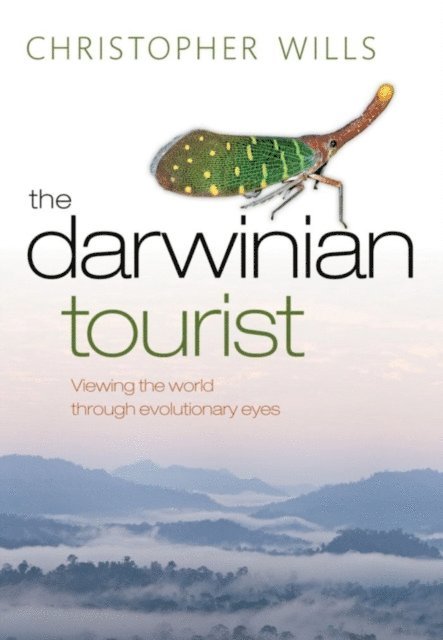
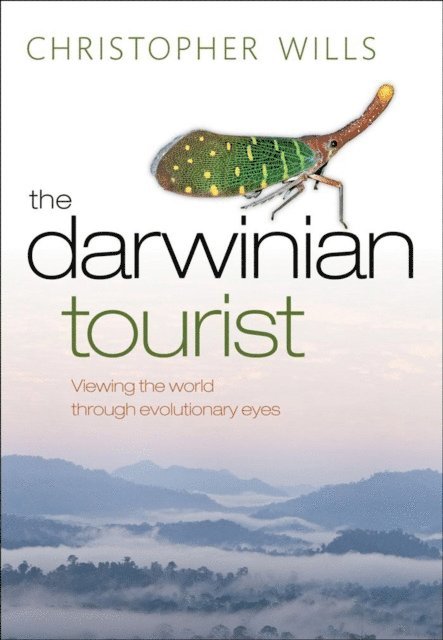
In this magnificently illustrated book, Christopher Wills takes us on a series of adventures. From the underwater life of Indonesia''s Lambeh Strait to a little valley in northern Israel, to an earthquake in the coral reef off the island of Yap and the dry valleys of western Mongolia, Wills demonstrates how ecology and evolution have interacted to yield the world we live in.Each chapter features a different location and brings out a different and important message. With the author''s own stunning photographs of the wildlife he discovered on his travels, he draws out the evolutionary stories behind the wildlife and shows how our understanding of the living world can be deepened by a Darwinian perspective. Wills demonstrates how looking at the world with evolutionary eyes leaves us with a renewed sense of wonder about life''s astounding present-day diversity, alongwith an appreciation of our evolutionary history.
E-bok
Engelska, 201084 kr
Läs direkt efter köp
In this magnificently illustrated book, Christopher Wills takes us on a series of adventures. From the underwater life of Indonesia''s Lambeh Strait to a little valley in northern Israel, to an earthquake in the coral reef off the island of Yap and the dry valleys of western Mongolia, Wills demonstrates how ecology and evolution have interacted to yield the world we live in.Each chapter features a different location and brings out a different and important message. With the author''s own stunning photographs of the wildlife he discovered on his travels, he draws out the evolutionary stories behind the wildlife and shows how our understanding of the living world can be deepened by a Darwinian perspective. Wills demonstrates how looking at the world with evolutionary eyes leaves us with a renewed sense of wonder about life''s astounding present-day diversity, alongwith an appreciation of our evolutionary history.
E-bok
PDF, Engelska, 2013138 kr
Läs direkt efter köp
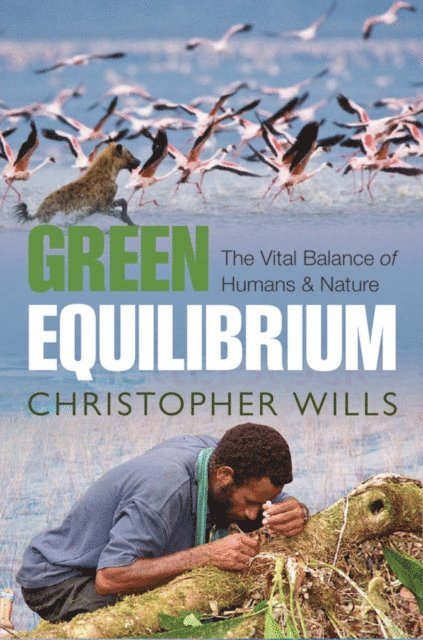
In Green Equilibrium, Christopher Wills explains the rules by which ecosystems maintain a diversity of interdependent species, in particular the balance of predators and prey. Wills is both an eminent academic and a hugely experienced field-biologist. In presenting the concept of ''green equilibrium'', he draws on a fascinating range of examples, including coral reefs off the densely populated Philippines, the isolated and densely forested valleys of Papua NewGuinea, the changing Himalayan kingdom of Bhutan, and a Californian ranch being allowed to return to a wild state. In each case he assesses the impact of modern changes and attempts at conservation on these delicately balanced ecosystems.Wills shows how human populations, too, are an integral part of the picture. We now know from genetic evidence that over the course of history, as humans spread out of Africa, populations adapted as a result of environmental conditions. Striking new evidence indicates that some human populations carry genes from past encounters with other hominids (Neanderthals and Denisovans), as well as genetic adaptations to local hazards such as malaria. Wills argues that the most effective approaches toconserving green equilibria come out of evolutionary insights, and from close involvement of the local communities who have lived and adapted to them.
E-bok
Engelska, 2013138 kr
Läs direkt efter köp
In Green Equilibrium, Christopher Wills explains the rules by which ecosystems maintain a diversity of interdependent species, in particular the balance of predators and prey. Wills is both an eminent academic and a hugely experienced field-biologist. In presenting the concept of ''green equilibrium'', he draws on a fascinating range of examples, including coral reefs off the densely populated Philippines, the isolated and densely forested valleys of Papua NewGuinea, the changing Himalayan kingdom of Bhutan, and a Californian ranch being allowed to return to a wild state. In each case he assesses the impact of modern changes and attempts at conservation on these delicately balanced ecosystems.Wills shows how human populations, too, are an integral part of the picture. We now know from genetic evidence that over the course of history, as humans spread out of Africa, populations adapted as a result of environmental conditions. Striking new evidence indicates that some human populations carry genes from past encounters with other hominids (Neanderthals and Denisovans), as well as genetic adaptations to local hazards such as malaria. Wills argues that the most effective approaches toconserving green equilibria come out of evolutionary insights, and from close involvement of the local communities who have lived and adapted to them.
Inbunden, Engelska, 2024
471 kr
Skickas inom 5-8 vardagar
How our growing knowledge of the evolution of complex ecosystems, using the latest genetic tools, can help us heal them - and surviveThis is not another Chicken Little book about the environment. Every reader already knows how overpopulation, ignorance and tribalism are contributing to environmental destruction and breakdowns in public health. We are all aware of the grim possibility that during our lifetimes the Earth might "flip" to a new ecological equilibrium, threatening our very survival.Why Ecosystems Matter explores an exciting new way to avoid such threats, by using our exponentially-growing knowledge of how evolution has shaped and is continuing to shape the complex communities of living ecosystems on which we all depend. Throughout this book we will visit ecosystems where the author has worked or has had direct experience, beginning with a tour of the amazing series of ecosystems that span the entire eastern slope of the Peruvian Andes. This journey provides a vivid glimpse of ecosystems' diversity and capacity for rapid change. Next, we trace how Darwin gained a fundamental insight about the origins of such ecosystem complexity. He realized that, when subgroups of the same species inhabit even slightly different ecosystems, these subgroups will evolve in diverging directions. This divergent evolution is primarily driven by interactions with the many other species in each ecosystem, which are themselves evolving in different directions in the different ecosystems. We explore how this subtle and fascinating concept lies at the heart of the evolutionary ferment that powers ecosystem diversity and resilience - the bubbling evolutionary cauldrons of the book's title. This ferment pervades ecosystems, but it is especially active in their microorganism communities. We then examine the evolutionary forces that power these cauldrons, starting with between-species interactions and tunnelling down to their causes. Using real-world examples, we explore how the technologies available for measuring these changes are increasing exponentially in precision and scope. We show how this deluge of new genetic and environmental information can be used to protect and restore a wide variety of damaged ecosystems. Ecosystems have survived dramatic changes in the past, often becoming even more wondrous and diverse than before. We are now learning how this happens, and how we can preserve this astounding ability.
E-bok
PDF, Engelska, 2024446 kr
Läs direkt efter köp
How our growing knowledge of the evolution of complex ecosystems, using the latest genetic tools, can help us heal them - and surviveThis is not another Chicken Little book about the environment. Every reader already knows how overpopulation, ignorance and tribalism are contributing to environmental destruction and breakdowns in public health. We are all aware of the grim possibility that during our lifetimes the Earth might "flip" to a new ecological equilibrium, threatening our very survival.Why Ecosystems Matter explores an exciting new way to avoid such threats, by using our exponentially-growing knowledge of how evolution has shaped and is continuing to shape the complex communities of living ecosystems on which we all depend. Throughout this book we will visit ecosystems where the author has worked or has had direct experience, beginning with a tour of the amazing series of ecosystems that span the entire eastern slope of the Peruvian Andes. This journey provides a vivid glimpse of ecosystems'' diversity and capacity for rapid change. Next, we trace how Darwin gained a fundamental insight about the origins of such ecosystem complexity. He realized that, when subgroups of the same species inhabit even slightly different ecosystems, these subgroups will evolve in diverging directions. This divergent evolution is primarily driven by interactions with the many other species in each ecosystem, which are themselves evolving in different directions in the different ecosystems. We explore how this subtle and fascinating concept lies at the heart of the evolutionary ferment that powers ecosystem diversity and resilience - the bubbling evolutionary cauldrons of the book''s title. This ferment pervades ecosystems, but it is especially active in their microorganism communities. We then examine the evolutionary forces that power these cauldrons, starting with between-species interactions and tunnelling down to their causes. Using real-world examples, we explore how the technologies available for measuring these changes are increasing exponentially in precision and scope. We show how this deluge of new genetic and environmental information can be used to protect and restore a wide variety of damaged ecosystems. Ecosystems have survived dramatic changes in the past, often becoming even more wondrous and diverse than before. We are now learning how this happens, and how we can preserve this astounding ability.
E-bok
Engelska, 2024446 kr
Läs direkt efter köp
How our growing knowledge of the evolution of complex ecosystems, using the latest genetic tools, can help us heal them - and surviveThis is not another Chicken Little book about the environment. Every reader already knows how overpopulation, ignorance and tribalism are contributing to environmental destruction and breakdowns in public health. We are all aware of the grim possibility that during our lifetimes the Earth might "flip" to a new ecological equilibrium, threatening our very survival.Why Ecosystems Matter explores an exciting new way to avoid such threats, by using our exponentially-growing knowledge of how evolution has shaped and is continuing to shape the complex communities of living ecosystems on which we all depend. Throughout this book we will visit ecosystems where the author has worked or has had direct experience, beginning with a tour of the amazing series of ecosystems that span the entire eastern slope of the Peruvian Andes. This journey provides a vivid glimpse of ecosystems'' diversity and capacity for rapid change. Next, we trace how Darwin gained a fundamental insight about the origins of such ecosystem complexity. He realized that, when subgroups of the same species inhabit even slightly different ecosystems, these subgroups will evolve in diverging directions. This divergent evolution is primarily driven by interactions with the many other species in each ecosystem, which are themselves evolving in different directions in the different ecosystems. We explore how this subtle and fascinating concept lies at the heart of the evolutionary ferment that powers ecosystem diversity and resilience - the bubbling evolutionary cauldrons of the book''s title. This ferment pervades ecosystems, but it is especially active in their microorganism communities. We then examine the evolutionary forces that power these cauldrons, starting with between-species interactions and tunnelling down to their causes. Using real-world examples, we explore how the technologies available for measuring these changes are increasing exponentially in precision and scope. We show how this deluge of new genetic and environmental information can be used to protect and restore a wide variety of damaged ecosystems. Ecosystems have survived dramatic changes in the past, often becoming even more wondrous and diverse than before. We are now learning how this happens, and how we can preserve this astounding ability.
407 kr
Skickas inom 3-6 vardagar
Häftad, Engelska, 1999
209 kr
Skickas inom 10-15 vardagar
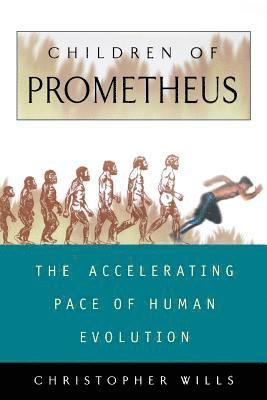
Are we still evolving? Scientists have grappled with this question since the time of Darwin. Now, in this provocative book, biologist Christopher Wills argues that we are not only continuing to evolve but that our pace of change is accelerating. He examines the rapid, short-term evolutionary change taking place in people living at the earth's extremes (even as babies, Tibetans can draw in more oxygen than lowlanders), and the new physiology of those who participate in extreme sports. But the more we shape our environment, the more it seems to shape us: Whether the future has us wiring our brains into vast electronic databases, or popping smart drugs" that alter the brain's very biochemical structure, new environmental pressures are speeding up our evolution in ways that we cannot now predict but that will help us to survive the future.
Häftad, Engelska, 2001
281 kr
Skickas inom 3-6 vardagar
Inbunden, Engelska, 2013
369 kr
Tillfälligt slut
In Green Equilibrium, Christopher Wills explains the rules by which ecosystems maintain a diversity of interdependent species, in particular the balance of predators and prey. Wills is both an eminent academic and a hugely experienced field-biologist. In presenting the concept of 'green equilibrium', he draws on a fascinating range of examples, including coral reefs off the densely populated Philippines, the isolated and densely forested valleys of Papua New Guinea, the changing Himalayan kingdom of Bhutan, and a Californian ranch being allowed to return to a wild state. In each case he assesses the impact of modern changes and attempts at conservation on these delicately balanced ecosystems. Wills shows how human populations, too, are an integral part of the picture. We now know from genetic evidence that over the course of history, as humans spread out of Africa, populations adapted as a result of environmental conditions. Striking new evidence indicates that some human populations carry genes from past encounters with other hominids (Neanderthals and Denisovans), as well as genetic adaptations to local hazards such as malaria.Wills argues that the most effective approaches to conserving green equilibria come out of evolutionary insights, and from close involvement of the local communities who have lived and adapted to them.