Chuang Zhang – författare
Visar alla böcker från författaren . Handla med fri frakt och snabb leverans.
2 produkter
2 produkter
Inbunden, Engelska, 2026
2 222 kr
Kommande
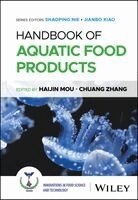
Scientific, nutritional, and market knowledge across aquatic food categories Aquatic food products demand integrated knowledge spanning biology, nutrition, processing, and market dynamics. Handbook of Aquatic Food Products, edited by Haijin Mou and Chuang Zhang, delivers systematic coverage of seafood categories including fish, shrimp, shellfish, algae, and sea cucumbers. The handbook examines habitats, nutritional profiles, flavor characteristics, and market presence for each category, connecting scientific and processing knowledge into a unified industry reference. The Handbook blends nutritional analysis with processing science, detailing omega-3 fatty acid content, protein quality, and vitamin and mineral profiles across aquatic product types. Coverage extends to sustainability considerations, exploring how aquatic food production relates to food security, environmental impact, and dietary diversity. Each seafood category receives dedicated treatment of its specific characteristics, industry applications, and role in global nutrition. Readers will also find: Detailed habitat and biological information for each aquatic food category, from finfish and crustaceans to algae and sea cucumbersNutritional benefit profiles including omega-3 fatty acids, high-quality proteins, vitamins, and minerals relevant to chronic disease preventionMarket presence data and industry context for aquatic food products across global supply chains and distribution networksProcessing knowledge that connects production methods to product quality, bioactive compound stability, and controlled-release delivery functionsAnalysis of sustainable aquatic food production practices and their lower environmental impact compared to terrestrial meat production systemsDesigned for food scientists, technologists, processors, and distributors working with aquatic products, this handbook also serves food science societies, aquatic food industry companies, and public health organizations. It provides the scientific depth and market context required to navigate the aquatic food products industry with confidence.
Inbunden, Engelska, 2002
3 183 kr
Tillfälligt slut
The first Asian Accelerator School (AAS) was organised to show the rapid development of accelerator sciences based on electron storage rings in Asia. At present seven electron-positron colliders are operational in the world, and two of them are located in Asia: KEKB (the KEK B-Factory) at KEK in Japan, and BEPC at IHEP in China. It is also notable that one-third of the operating synchrotron light sources are Asian machines.To further improve the performance of electron storage rings, the use of superconducting magnets and cavities is of vital importance; therefore the curriculum of AAS was arranged not only to teach the basic physics of storage rings but also to give students a basic knowledge of superconducting technology.