
CHUEV G N – författare
Visar alla böcker från författaren CHUEV G N. Handla med fri frakt och snabb leverans.
2 produkter
2 produkter
Inbunden, Engelska, 1996
1 458 kr
Tillfälligt slut
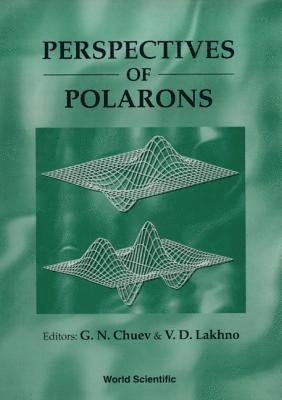
The book presents the development of the polaron theory and its applications in various fields of physics. Nowadays, methods of the polaron theory are widely used in such sciences as solid state and nuclear physics, chemistry, etc. The monograph includes selected articles, based on the talks, given at the Workshops held in Pushchino in 1993 and 1994. These articles cover different aspects of polaron physics and quantum field theory ranging from nuclear physics to solid state physics and chemistry, they involve both the fundamental research such as bipolarons and the polaron applications to study the self-trapped electron state in various liquids. We hope our book will be of interest to a broad range of readers, which can be able to sense the excitement of the articles.
Inbunden, Engelska, 1999
2 817 kr
Tillfälligt slut
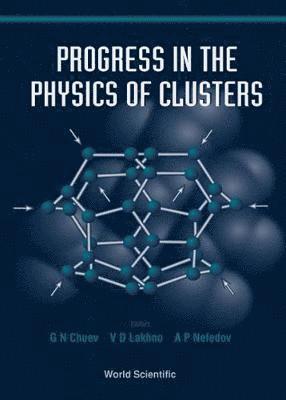
The physics of clusters is a new and rapidly developing area. It is a frontier in the field of atomic and molecular physics, and condensed matter physics.One of the biggest concerns in the study of the physics of clusters is the methods of cluster measurements. The findings reported in this book on the methods of cluster measurements will lead to new avenues using nondestructive mass spectrometry and dipole mass isomers.Much attention is given to the physics and chemistry of fullerenes and nanotubes, including the problems surrounding the formation and growth of nanotubes, electron characteristics of fullerenes, the influence of solvents, simulation of the properties of carbon clusters, etc. Some unique experimental data on the conversion of aerosols into aerogels with the formation of fractal structures is provided. In addition, the book covers one of the most interesting subjects of modern physics — fractal clusters.Quantitative information on the thermodynamic properties of transition metal clusters, their binding energies to various ligands, and their reactions is obtained using a metal cluster guided ion beam mass spectrometer. Measurement of the thermodynamic stability of transition metal clusters is reported. The thermodynamic data given is unique, in that no comparable information has been obtained from any other method.Other topics of interest include atomic collision processes (including studies of electron attachment); oxidation; fundamental physical and chemical properties of clusters in the gas phase and in plasma (such as their geometrical and electron structure, magnetic, optical, chemical characteristics, etc.), and the wide range of their potential applications (including nucleation and growth of small particles such as aerosols, development of new materials with predetermined properties (cluster ensembles and nanophase materials), growing of thin films, cluster nanowire contacts, cluster lamps, dusty plasma, etc.