Chul Ahn – författare
Visar alla böcker från författaren Chul Ahn. Handla med fri frakt och snabb leverans.
7 produkter
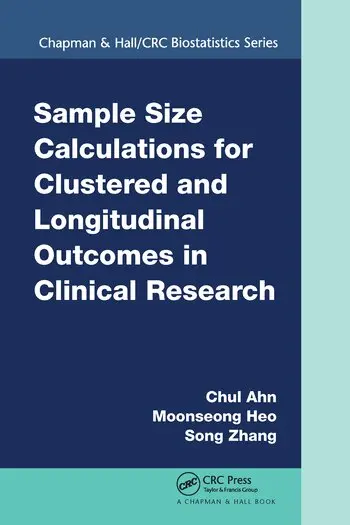
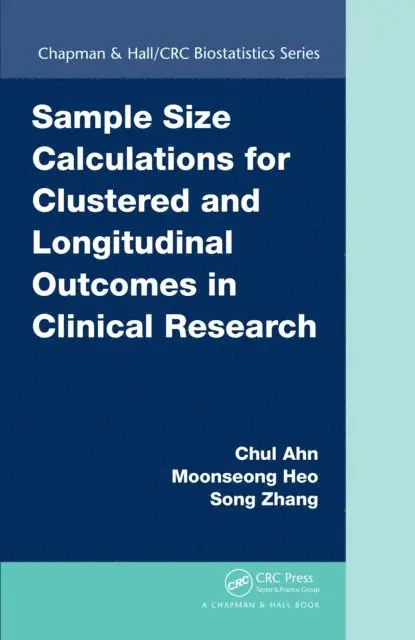
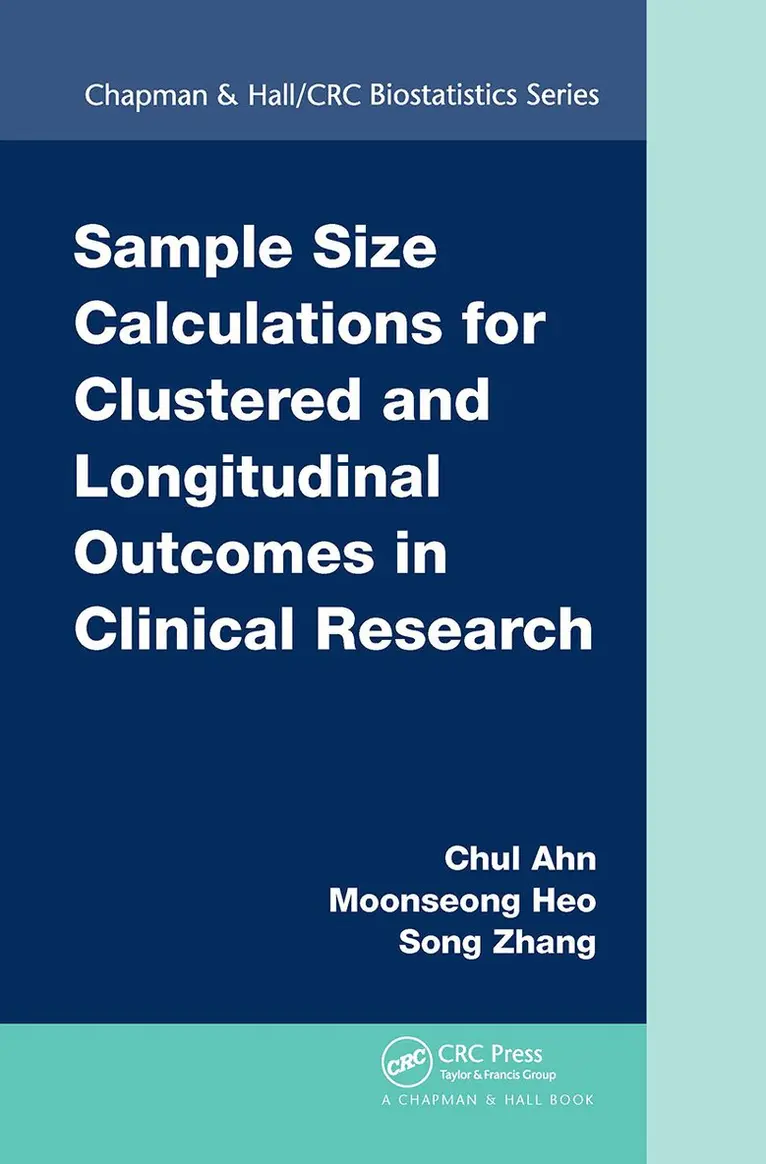
Sample Size Calculations for Clustered and Longitudinal Outcomes in Clinical Research
Av Chul Ahn, Moonseoung Heo m. fl.
Häftad, 2020
814 kr
Lägg i varukorg
Accurate sample size calculation ensures that clinical studies have adequate power to detect clinically meaningful effects. This results in the efficient use of resources and avoids exposing a disproportionate number of patients to experimental treatments caused by an overpowered study. Sample Size …
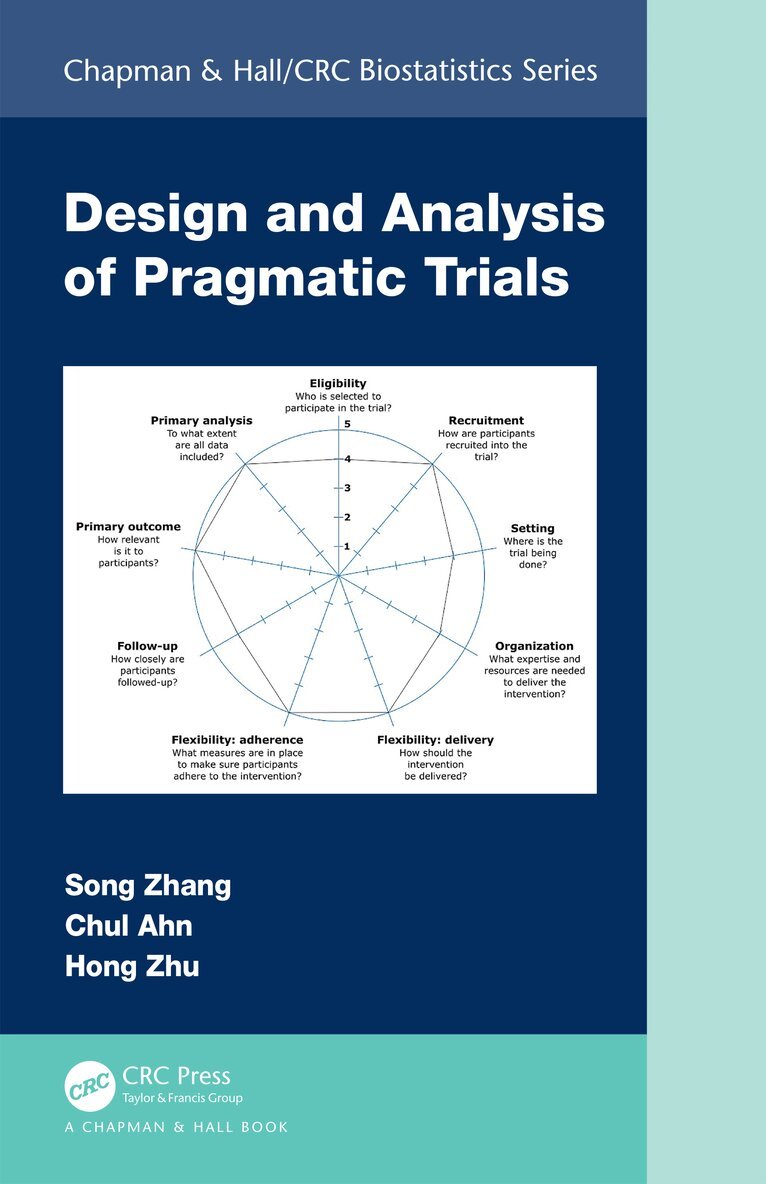
Design and Analysis of Pragmatic Trials
Av Song Zhang, Chul Ahn m. fl.
Inbunden, 2023
1562 kr
Lägg i varukorg
This book begins with an introduction of pragmatic cluster randomized trials (PCTs) and reviews various pragmatic issues that need to be addressed by statisticians at the design stage. It discusses the advantages and disadvantages of each type of PCT, and provides sample size formulas, sensitivity …
Design and Analysis of Pragmatic Trials
E-bok, 2023
1052 kr
Lägg i varukorg
This book begins with an introduction of pragmatic cluster randomized trials (PCTs) and reviews various pragmatic issues that need to be addressed by statisticians at the design stage. It discusses the advantages and disadvantages of each type of PCT, and provides sample size formulas, sensitivity …
Design and Analysis of Pragmatic Trials
E-bok, 2023
1030 kr
Lägg i varukorg
This book begins with an introduction of pragmatic cluster randomized trials (PCTs) and reviews various pragmatic issues that need to be addressed by statisticians at the design stage. It discusses the advantages and disadvantages of each type of PCT, and provides sample size formulas, sensitivity …
Sample Size Calculations for Clustered and Longitudinal Outcomes in Clinical Research
Av Song Zhang, Moonseoung Heo m. fl.
E-bok, 2014
963 kr
Lägg i varukorg
This book explains how to determine sample size for studies with correlated outcomes, which are widely implemented in medical, epidemiological, and behavioral studies. For clustered studies, the authors provide sample size formulas that account for variable cluster sizes and within-cluster …
Sample Size Calculations for Clustered and Longitudinal Outcomes in Clinical Research
Av Chul Ahn, Moonseoung Heo m. fl.
Inbunden, 2014
1562 kr
Lägg i varukorg
Accurate sample size calculation ensures that clinical studies have adequate power to detect clinically meaningful effects. This results in the efficient use of resources and avoids exposing a disproportionate number of patients to experimental treatments caused by an overpowered study. Sample Size …
Sample Size Calculations for Clustered and Longitudinal Outcomes in Clinical Research
Av Song Zhang, Moonseoung Heo m. fl.
E-bok, 2014
942 kr
Lägg i varukorg
This book explains how to determine sample size for studies with correlated outcomes, which are widely implemented in medical, epidemiological, and behavioral studies. For clustered studies, the authors provide sample size formulas that account for variable cluster sizes and within-cluster …