Chung Moon Sung – författare
Visar alla böcker från författaren Chung Moon Sung. Handla med fri frakt och snabb leverans.
4 produkter
4 produkter
Inbunden, Engelska, 2024
2 350 kr
Skickas inom 5-8 vardagar
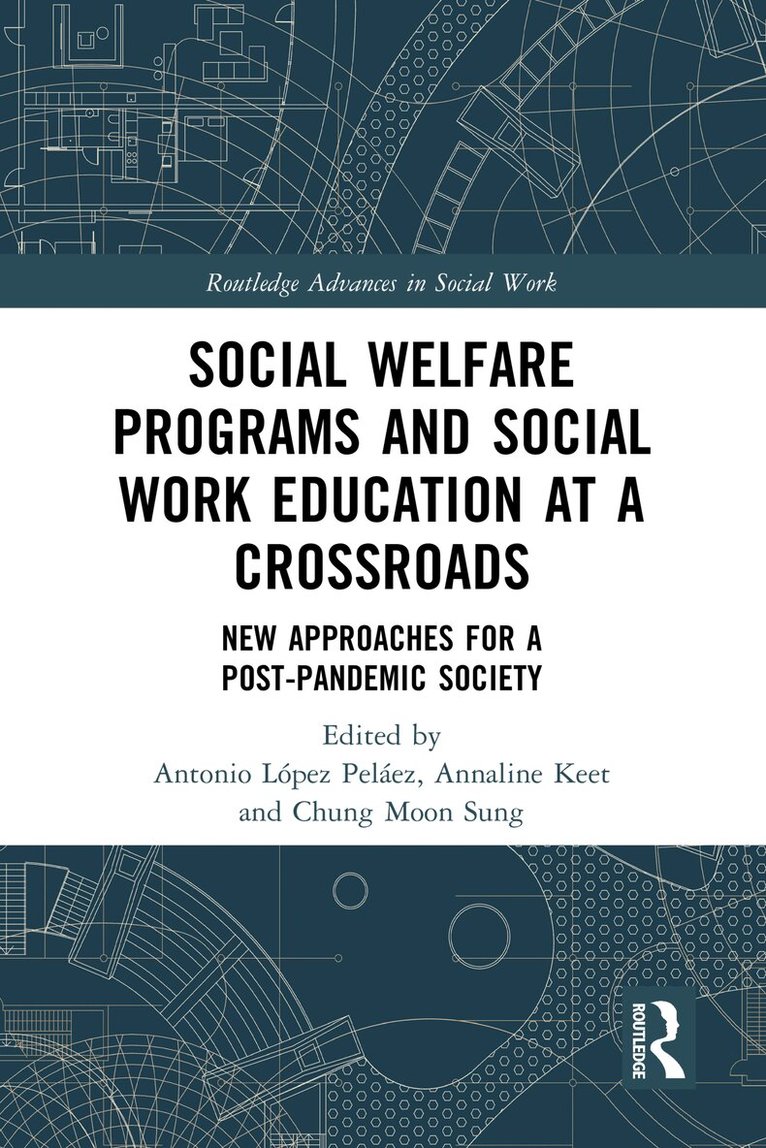
This book explores a key phenomenon that has been accelerated by the COVID-19 crisis, namely, the crossroads at which social welfare professionals find themselves. This is a crossroads where, on the one hand, there is an accelerated digitalization process and a reorganization of social programs, while on the other hand, we are confronted by the basic challenge of designing social policies and their methods of evaluation, that is, the generation of robust data that will allow better evaluation of social projects and programs.Rigorously analyzing the crossroads at which social welfare programs find themselves and the new demands for the education of professionals involved in social welfare programs, several key issues can be discerned;• the theoretical debate surrounding the changes brought about by the COVID-19 pandemic and the process of redefining globalization in which we are immersed.• the challenges to be met by welfare programs, and the good practices that are being implemented.• the key issue of how to generate more robust data in the field of social services and social protection.• how to increase the competencies of professionals through education in schools of social work.Providing 15 newly written chapters drawn from both the global north and the global south, it offers a set of recommendations to address the challenges of inequality and social inclusion in the coming years.It will be of interest to all academics, students and practitioners working in the fields of social work, social welfare and social development.
Häftad, Engelska, 2025
666 kr
Skickas inom 10-15 vardagar
This book explores a key phenomenon that has been accelerated by the COVID-19 crisis, namely, the crossroads at which social welfare professionals find themselves. This is a crossroads where, on the one hand, there is an accelerated digitalization process and a reorganization of social programs, while on the other hand, we are confronted by the basic challenge of designing social policies and their methods of evaluation, that is, the generation of robust data that will allow better evaluation of social projects and programs.Rigorously analyzing the crossroads at which social welfare programs find themselves and the new demands for the education of professionals involved in social welfare programs, several key issues can be discerned;• the theoretical debate surrounding the changes brought about by the COVID-19 pandemic and the process of redefining globalization in which we are immersed.• the challenges to be met by welfare programs, and the good practices that are being implemented.• the key issue of how to generate more robust data in the field of social services and social protection.• how to increase the competencies of professionals through education in schools of social work.Providing 15 newly written chapters drawn from both the global north and the global south, it offers a set of recommendations to address the challenges of inequality and social inclusion in the coming years.It will be of interest to all academics, students and practitioners working in the fields of social work, social welfare and social development.
E-bok
PDF, Engelska, 2024774 kr
Läs direkt efter köp
This book explores a key phenomenon that has been accelerated by the COVID-19 crisis, namely, the crossroads at which social welfare professionals find themselves. This is a crossroads where, on the one hand, there is an accelerated digitalization process and a reorganization of social programs, while on the other hand, we are confronted by the basic challenge of designing social policies and their methods of evaluation, that is, the generation of robust data that will allow better evaluation of social projects and programs.Rigorously analyzing the crossroads at which social welfare programs find themselves and the new demands for the education of professionals involved in social welfare programs, several key issues can be discerned;a the theoretical debate surrounding the changes brought about by the COVID-19 pandemic and the process of redefining globalization in which we are immersed.a the challenges to be met by welfare programs, and the good practices that are being implemented.a the key issue of how to generate more robust data in the field of social services and social protection.a how to increase the competencies of professionals through education in schools of social work.Providing 15 newly written chapters drawn from both the global north and the global south, it offers a set of recommendations to address the challenges of inequality and social inclusion in the coming years.It will be of interest to all academics, students and practitioners working in the fields of social work, social welfare and social development.
E-bok
Engelska, 2024774 kr
Läs direkt efter köp
This book explores a key phenomenon that has been accelerated by the COVID-19 crisis, namely, the crossroads at which social welfare professionals find themselves. This is a crossroads where, on the one hand, there is an accelerated digitalization process and a reorganization of social programs, while on the other hand, we are confronted by the basic challenge of designing social policies and their methods of evaluation, that is, the generation of robust data that will allow better evaluation of social projects and programs.Rigorously analyzing the crossroads at which social welfare programs find themselves and the new demands for the education of professionals involved in social welfare programs, several key issues can be discerned;a the theoretical debate surrounding the changes brought about by the COVID-19 pandemic and the process of redefining globalization in which we are immersed.a the challenges to be met by welfare programs, and the good practices that are being implemented.a the key issue of how to generate more robust data in the field of social services and social protection.a how to increase the competencies of professionals through education in schools of social work.Providing 15 newly written chapters drawn from both the global north and the global south, it offers a set of recommendations to address the challenges of inequality and social inclusion in the coming years.It will be of interest to all academics, students and practitioners working in the fields of social work, social welfare and social development.