1 004 kr
Skickas inom 10-15 vardagar
1 004 kr
Skickas inom 10-15 vardagar
436 kr
Läs direkt efter köp
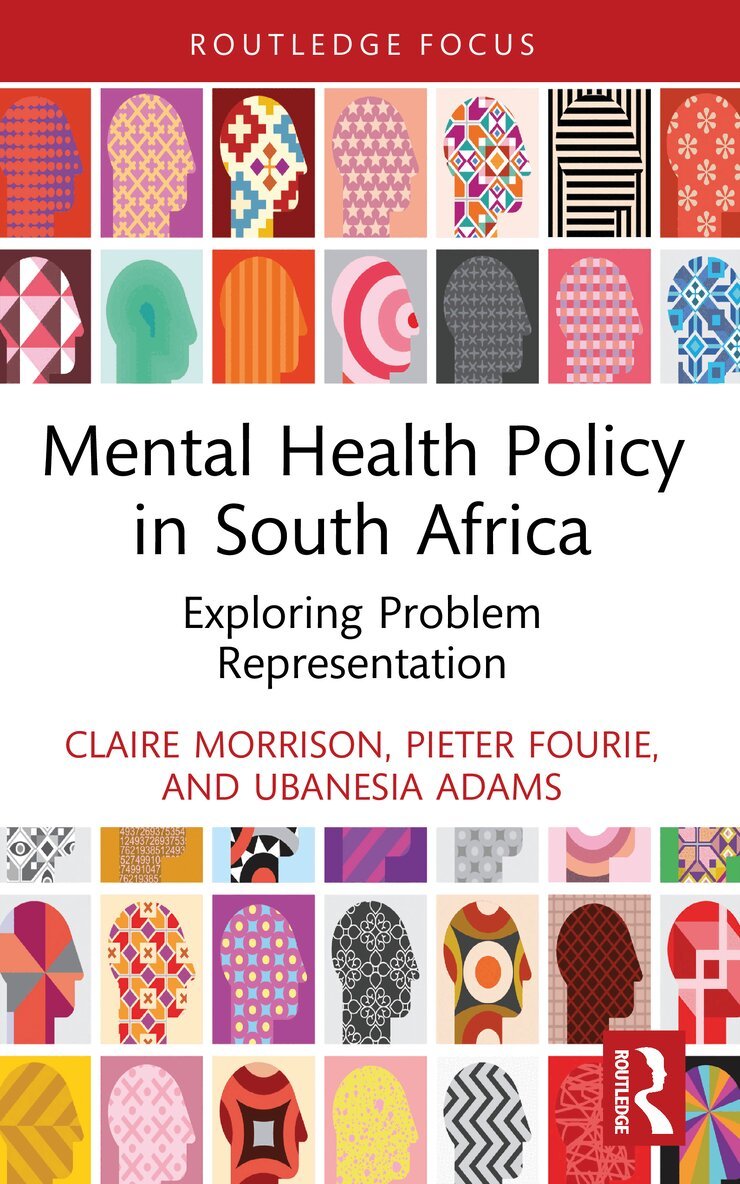
This book investigates how mental health in South Africa is conceptualised and constructed in public policy. Critiquing embedded assumptions within existing policy documentation, the book advocates for policy solutions centred on poverty alleviation and economic development.
Mental health in South Africa has historically been neglected within the healthcare system, a stark reality underscored by the Life Esidimeni tragedy, which exposed widespread mismanagement, negligence, and insufficient resources in mental health care services. While South Africa has enacted progressive mental health policies, their effective implementation remains hindered by systemic challenges. This book investigates the dominant problems represented in mental health policies, including the segregation of mental health from general health services, inadequate intersectoral collaboration in mental health care, community disconnection from mental health services, the association between poverty and mental health issues, and infringements upon the rights of individuals with mental health problems. Overall, the book underscores mental health as a socio-economic issue, requiring new policy solutions.
This book will be an essential read for mental health professionals and policy makers in South Africa, as well as for researchers working on the good governance of mental health, both within the country and at global and multilateral levels.
433 kr
Läs direkt efter köp
This book investigates how mental health in South Africa is conceptualised and constructed in public policy. Critiquing embedded assumptions within existing policy documentation, the book advocates for policy solutions centred on poverty alleviation and economic development.
Mental health in South Africa has historically been neglected within the healthcare system, a stark reality underscored by the Life Esidimeni tragedy, which exposed widespread mismanagement, negligence, and insufficient resources in mental health care services. While South Africa has enacted progressive mental health policies, their effective implementation remains hindered by systemic challenges. This book investigates the dominant problems represented in mental health policies, including the segregation of mental health from general health services, inadequate intersectoral collaboration in mental health care, community disconnection from mental health services, the association between poverty and mental health issues, and infringements upon the rights of individuals with mental health problems. Overall, the book underscores mental health as a socio-economic issue, requiring new policy solutions.
This book will be an essential read for mental health professionals and policy makers in South Africa, as well as for researchers working on the good governance of mental health, both within the country and at global and multilateral levels.
161 kr
Läs direkt efter köp
What happens when grief doesn''t come alone — but arrives four times in fourteen months?
In a world that tells you to heal on a timeline, Burying Four is the raw, unflinching memoir nobody warned you about. This is not a book about moving on. This is a book about moving forward — carrying four devastating losses while somehow finding the courage to stay alive, rebuild, and choose life when everything inside you screams to stop.
Claire Morrison was thirty years old when she buried her grandmother, her father, her brother''s wife, and watched her family nearly destroy itself from the inside out — all within fourteen months. Four funerals. Four sets of goodbyes. One woman standing at the wreckage of everything she loved, asking the only question that mattered: How do you survive loss when loss becomes your entire life?
This is a book for anyone who has ever:
Felt completely alone in grief while surrounded by people offering casseroles and empty platitudes
Lost someone suddenly and without warning, and had the ground disappear beneath their feet
Wondered whether healing after loss was genuinely possible — or just something people said to make themselves feel better
Experienced multiple losses in a short period and felt completely abandoned by every standard grief framework
Struggled with survivor''s guilt, complicated grief, or the unbearable weight of carrying absent people forward
Burying Four moves through five unforgettable parts — from the architecture of a family before the cracks appeared, through the devastating descent into multiple bereavements, to the breaking point, the excavation, and ultimately the hard-won rebuilding of a self from ruins.
This is honest grief writing in the tradition of Cheryl Strayed''s Wild, Joan Didion''s The Year of Magical Thinking, and Nora McInerny''s It''s Okay to Laugh — but entirely its own story. A story about Sunday dinners that became sacred ritual. About black dresses worn too many times. About learning to talk to the dead when the living couldn''t hold the weight of your sadness. About medication and therapy and unexpected kindnesses from strangers who understood loss in ways that friends couldn''t.
About the decision — made daily, sometimes hourly — to stay.
Inside this powerful memoir, you will find:
The honest reality of what grief does to your body, your brain, your relationships, and your sense of self when loss compounds upon loss.
A message to readers who are currently drowning:
If you found this book, you are probably in pain. You are probably exhausted from pretending to be okay, from managing other people''s discomfort with your grief, from surviving days that feel impossibly long and years that somehow vanish. You are probably looking for proof that it gets better — or at least different — and that you are not alone in this particular kind of darkness.
Burying Four is that proof.
Not because the losses stopped hurting. They don''t — not completely. But because the person writing these words survived them. Built a life around the holes. Learned to breathe underwater. And wants you to know that you can too.
This memoir won''t fix your grief. Nothing does. But it will sit beside you in it, acknowledge how unbearable it actually is, and tell you the truth: survival is possible. Rebuilding is possible. And learning to carry the people you have lost — forward, always forward — is one of the most profound human experiences available to us.