Claire Preston - Böcker
Visar alla böcker från författaren Claire Preston. Handla med fri frakt och snabb leverans.
6 produkter
6 produkter
491 kr
Skickas inom 5-8 vardagar
How should science be written? It is a question that piqued natural philosophers of the seventeenth century as they experimented with the rhetorical figures, neologisms, verse-forms, and generic variety that characterise the literary texture of their work. Inspired laymen were quick to borrow from the new philosophy and from practising scientists in order to deploy ideas and images from astronomy, optics, chemistry, biology, and medicine. Between them, scientists, natural historians, poets, dramatists, and essayists produced new, adjusted, or hybrid literary forms. The Poetics of Scientific Investigation in Seventeenth-Century England examines those forms and that literary-scientific texture, as well as representations of the scientific--the laboratory, collaborative experimental retirement, and the canons of scientific conversation--and proposes that the writing of seventeenth-century science mirrors the intellectual and investigative processes of early modern science itself.
1 981 kr
Skickas inom 5-8 vardagar
The writing of science in the period 1580-1700 is artfully, diffidently, carelessly, boldly, and above all self-consciously literary. The Poetics of Scientific Investigation in Seventeenth-Century English Literature considers the literary textures of science writing -- its rhetorical figures, neologisms, its uses of parody, romance, and various kinds of verse. The experimental and social practices of science are examined through literary representations of the laboratory, of collaborative retirement, of virtual, epistolary conversation, and of an imagined paradise of investigative fellowship and learning. Claire Preston argues that the rhetorical, generic, and formal qualities of scientific writing are also the intellectual processes of early-modern science itself. How was science to be written in this period? That question, which piqued natural philosophers who were searching for apt conventions of scientific language and report, was initially resolved by the humanist rhetorical and generic skills in which they were already highly trained. At the same time non-scientific writers, enthralled by the developments of science, were quick to deploy ideas and images from astronomy, optics, chemistry, biology, and medical practices. Practising scientists and inspired laymen or quasi-scientists produced new, adjusted, or hybrid literary forms, often collapsing the distinction between the factual and the imaginative, between the rhetorically ornate and the plain. Early-modern science and its literary vehicles are frequently indistinguishable, scientific practice and scientific expression mutually involved. Among the major writers discussed are Montaigne, Bacon, Donne, Browne, Lovelace, Boyle, Sprat, Oldenburg, Evelyn, Cowley, and Dryden.
2 422 kr
Skickas inom 5-8 vardagar
Doctor, linguist, scientist, natural historian, and writer of what is probably the most remarkable prose in the English language, Sir Thomas Browne was a virtuoso in learning whose many interests form a representative portrait of his age. To understand the period which we more usually refer to as the Civil War, the Restoration, or the Scientific Revolution, we need to understand parts of the intellectual and spiritual background that are often neglected and which Browne magnificently figures forth.This collection of essays about all aspects of Thomas Browne's work and thought is the first such volume to appear in 25 years. It offers the specialist and the student a wide-ranging array of essays by an international team of leading scholars in seventeenth-century literary studies who extend our understanding of this extremely influential and representative early-modern polymath by embracing recent developments in the field, including literary-scientific relations, the development of Anglican spirituality, civil networks of intellectual exchange, the rise of antiquarianism, and Browne's own legacy in modern literature.
560 kr
Skickas inom 7-10 vardagar
Claire Preston argues that Thomas Browne's work can be fully understood only within the range of disciplines and practices associated with natural philosophy and early modern empiricism. Early modern methods of cataloguing, collecting, experimentation and observation organised his writing on many subjects from medicine and botany to archaeology and antiquarianism. Browne framed philosophical concerns in the terms of civil behaviour, with collaborative networks of intellectual exchange, investigative selflessness, courtesy, modesty and ultimately the generosity of the natural world itself, all characterising the return to 'innocent' knowledge, which, for Browne, is the proper end of human enquiry. In this major evaluation of Browne's oeuvre, Preston examines how the developing essay form, the discourse of scientific experiment, and above all Bacon's model of intellectual progress and cooperation determined the unique character of Browne's contributions to early modern literature, science and philosophy.
823 kr
Skickas inom 7-10 vardagar
Claire Preston argues that Thomas Browne's work can be fully understood only within the range of disciplines and practices associated with natural philosophy and early modern empiricism. Early modern methods of cataloguing, collecting, experimentation and observation organised his writing on many subjects from medicine and botany to archaeology and antiquarianism. Browne framed philosophical concerns in the terms of civil behaviour, with collaborative networks of intellectual exchange, investigative selflessness, courtesy, modesty and ultimately the generosity of the natural world itself, all characterising the return to 'innocent' knowledge, which, for Browne, is the proper end of human enquiry. In this major evaluation of Browne's oeuvre, Preston examines how the developing essay form, the discourse of scientific experiment, and above all Bacon's model of intellectual progress and cooperation determined the unique character of Browne's contributions to early modern literature, science and philosophy.
166 kr
Skickas inom 7-10 vardagar
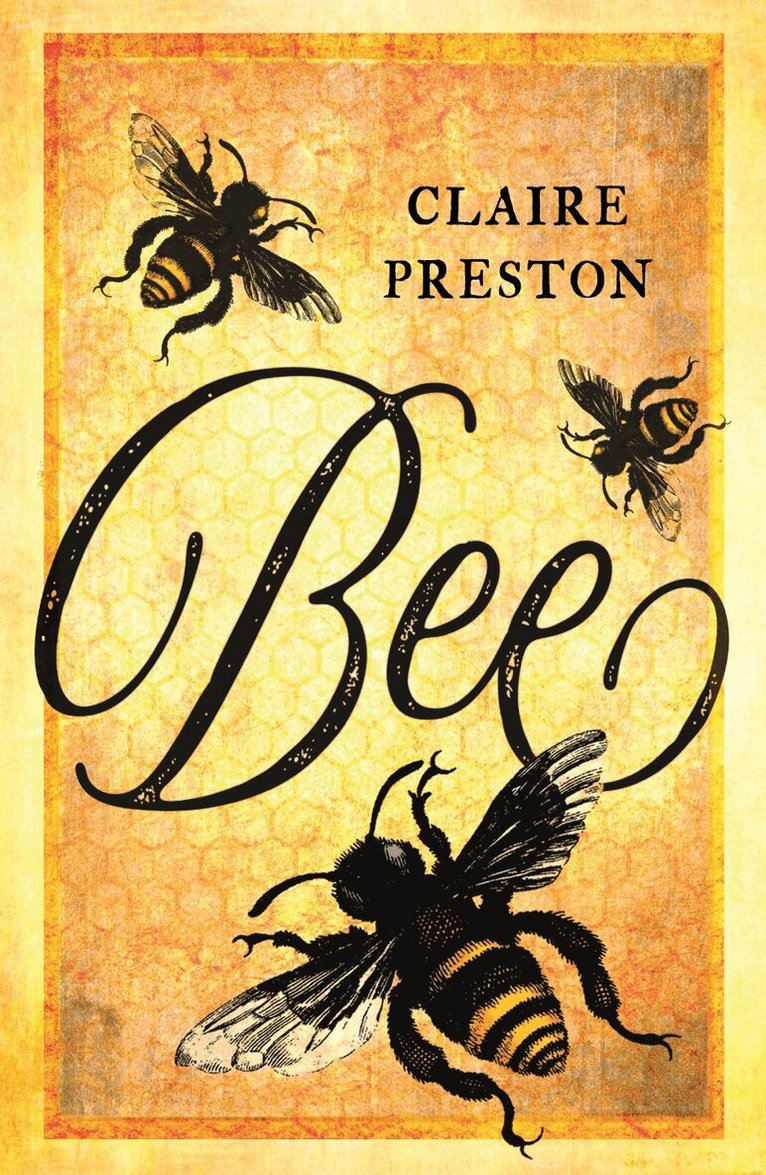
Claire Preston’s Bee is a history of our long, complex relationship with this industrious, much-admired insect. The book moves from ancient political descriptions to Renaissance debates about monarchy, to the conversion of the virtuous, civil bee into the dangerous swarm of the Hollywood horror flick, and finally to the melancholy recognition that the modern decline of the bee is due to our use of harmful pesticides and destruction of the bee’s habitat.Written in a lively, engaging style, and containing many fascinating bee facts, anecdotes, fables and images, Bee is a wide-ranging, highly-illustrated natural and cultural history of this familiar visitor to our gardens and parks. The book appeals to a wide audience: those who work with bees and honey; those who appreciate this hard-working, humble creature and its intricate, miniature society; and those too who have an interest in the way the bee has woven itself into the fabric of our culture.