Clara Dijkstra – författare
Visar alla böcker från författaren . Handla med fri frakt och snabb leverans.
5 produkter
5 produkter
Häftad, Engelska, 2026
649 kr
Kommande
Building upon growing research on the persecution and genocide perpetrated by the Nazis and their collaborators against Europe’s Roma and Sinti populations between 1940 and 1945, this edited volume reveals new findings relating to the genocide, its operation, and the reactions of Romani communities.The case studies span a wide range of Western, Central and Eastern European countries, covering the period in which the genocide of Roma and Sinti took place, the memory of the genocide and its representation since then. The authors uncover and examine new sources that provide previously undocumented details of the unfolding of genocide and responses to it, notably in the context of Poland and France. They also highlight individual stories in other areas such as Czechoslovakia that are illustrative of the broader context of persecution of Roma. With original analysis of Romani memoirs and testimonies, the volume represents a sustained reflection on the importance of including Romani voices when documenting the history of the genocide.This book will be of interest to undergraduates, postgraduates and specialist researchers working in Romani studies, Holocaust and genocide studies, the Nazi era, memory studies, museum studies and oral history.
Inbunden, Engelska, 2026
2 375 kr
Kommande
Building upon growing research on the persecution and genocide perpetrated by the Nazis and their collaborators against Europe’s Roma and Sinti populations between 1940 and 1945, this edited volume reveals new findings relating to the genocide, its operation, and the reactions of Romani communities.The case studies span a wide range of Western, Central and Eastern European countries, covering the period in which the genocide of Roma and Sinti took place, the memory of the genocide and its representation since then. The authors uncover and examine new sources that provide previously undocumented details of the unfolding of genocide and responses to it, notably in the context of Poland and France. They also highlight individual stories in other areas such as Czechoslovakia that are illustrative of the broader context of persecution of Roma. With original analysis of Romani memoirs and testimonies, the volume represents a sustained reflection on the importance of including Romani voices when documenting the history of the genocide.This book will be of interest to undergraduates, postgraduates and specialist researchers working in Romani studies, Holocaust and genocide studies, the Nazi era, memory studies, museum studies and oral history.
Inbunden, Engelska, 2026
1 268 kr
Skickas inom 10-15 vardagar
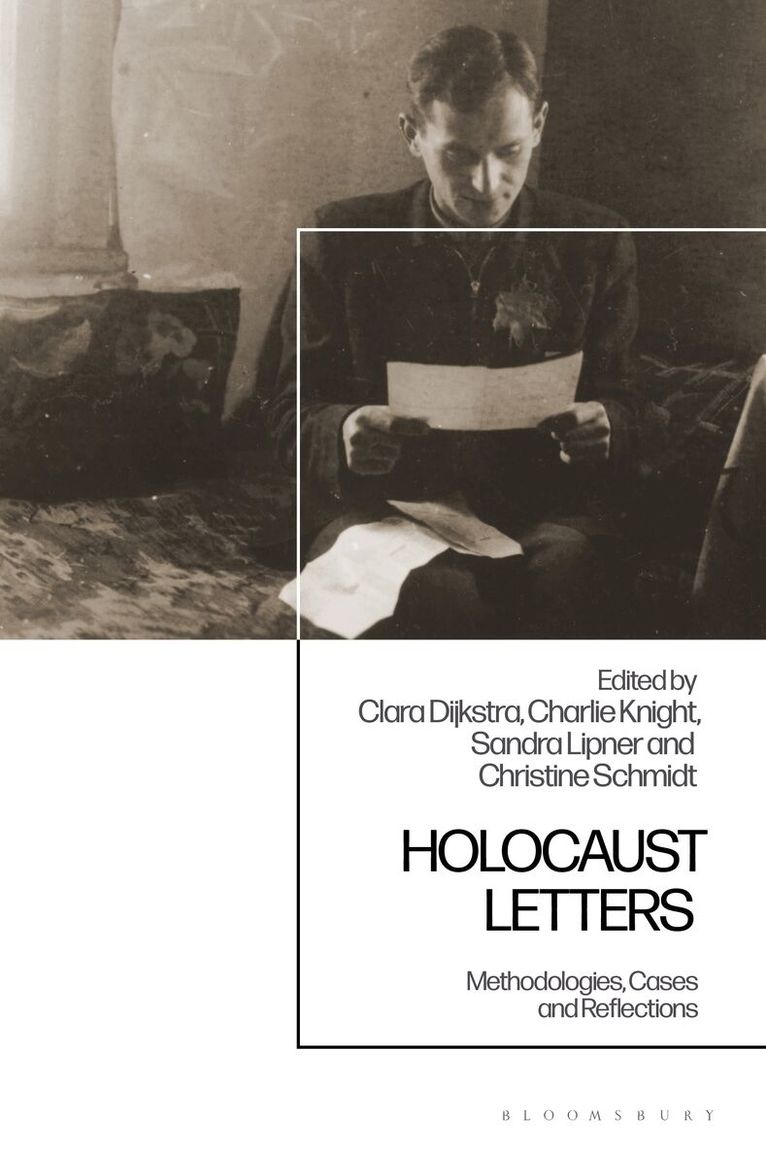
Throughout the Holocaust, letters were sent in their millions, in a variety of different contexts and for a range of differing purposes. Holocaust Letters marks the first volume of its kind to examine collectively letter writing during this period. The book presents different methodological approaches to letters as texts, material objects and markers of memory, and outlines a range of different case studies using letters as sources in practice. Emerging from the exhibition of the same name held at The Wiener Holocaust Library (UK), the authors in this volume use letters to gain a deeper understanding of the Holocaust and the post-war period in Western and Central Europe, and transnational humanitarian efforts in the UK and North Africa.Holocaust Letters also presents a series of short source critiques of individual letters and small collections of letters, with insightful analysis of a variety of different types of letters to be found throughout. In whatever form they occur, Holocaust-era letters are witness not only to what happened and to whom but contain valuable evidence of how and, crucially, why the events that came to be known as the Holocaust occurred.
E-bok
PDF, Engelska, 20261 205 kr
Läs direkt efter köp
Throughout the Holocaust, letters were sent in their millions, in a variety of different contexts and for a range of differing purposes. Holocaust Letters marks the first volume of its kind to examine collectively letter writing during this period. The book presents different methodological approaches to letters as texts, material objects and markers of memory, and outlines a range of different case studies using letters as sources in practice. Emerging from the exhibition of the same name held at The Wiener Holocaust Library (UK), the authors in this volume use letters to gain a deeper understanding of the Holocaust and the post-war period in Western and Central Europe, and transnational humanitarian efforts in the UK and North Africa. Holocaust Letters also presents a series of short source critiques of individual letters and small collections of letters, with insightful analysis of a variety of different types of letters to be found throughout. In whatever form they occur, Holocaust-era letters are witness not only to what happened and to whom but contain valuable evidence of how and, crucially, why the events that came to be known as the Holocaust occurred.
E-bok
Engelska, 20261 163 kr
Läs direkt efter köp
Throughout the Holocaust, letters were sent in their millions, in a variety of different contexts and for a range of differing purposes. Holocaust Letters marks the first volume of its kind to examine collectively letter writing during this period. The book presents different methodological approaches to letters as texts, material objects and markers of memory, and outlines a range of different case studies using letters as sources in practice. Emerging from the exhibition of the same name held at The Wiener Holocaust Library (UK), the authors in this volume use letters to gain a deeper understanding of the Holocaust and the post-war period in Western and Central Europe, and transnational humanitarian efforts in the UK and North Africa. Holocaust Letters also presents a series of short source critiques of individual letters and small collections of letters, with insightful analysis of a variety of different types of letters to be found throughout. In whatever form they occur, Holocaust-era letters are witness not only to what happened and to whom but contain valuable evidence of how and, crucially, why the events that came to be known as the Holocaust occurred.