Claude H. Moog – författare
Visar alla böcker från författaren Claude H. Moog. Handla med fri frakt och snabb leverans.
5 produkter
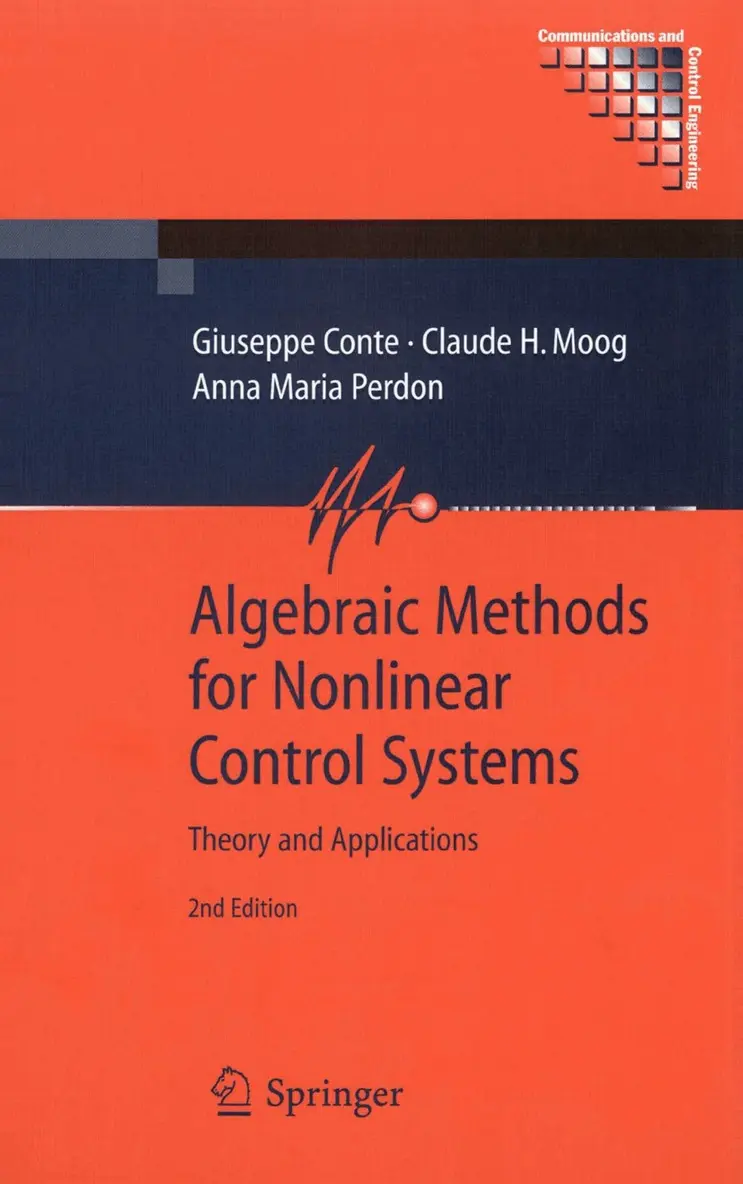
Algebraic Methods for Nonlinear Control Systems
Av Giuseppe Conte, Claude H. Moog m. fl.
Inbunden, 2006
1094 kr
Lägg i varukorg
A self-contained introduction to algebraic control for nonlinear systems suitable for researchers and graduate students. "Algebraic Methods for Nonlinear Control Systems" develops a linear-algebraic alternative to the usual differential-geometric approach to nonlinear control, using vector spaces …
Algebraic Methods for Nonlinear Control Systems
Av Anna Maria Perdon, Claude H. Moog m. fl.
E-bok, 2007
1459 kr
Lägg i varukorg
A self-contained introduction to algebraic control for nonlinear systems suitable for researchers and graduate students. "Algebraic Methods for Nonlinear Control Systems" develops a linear-algebraic alternative to the usual differential-geometric approach to nonlinear control, using vector spaces …
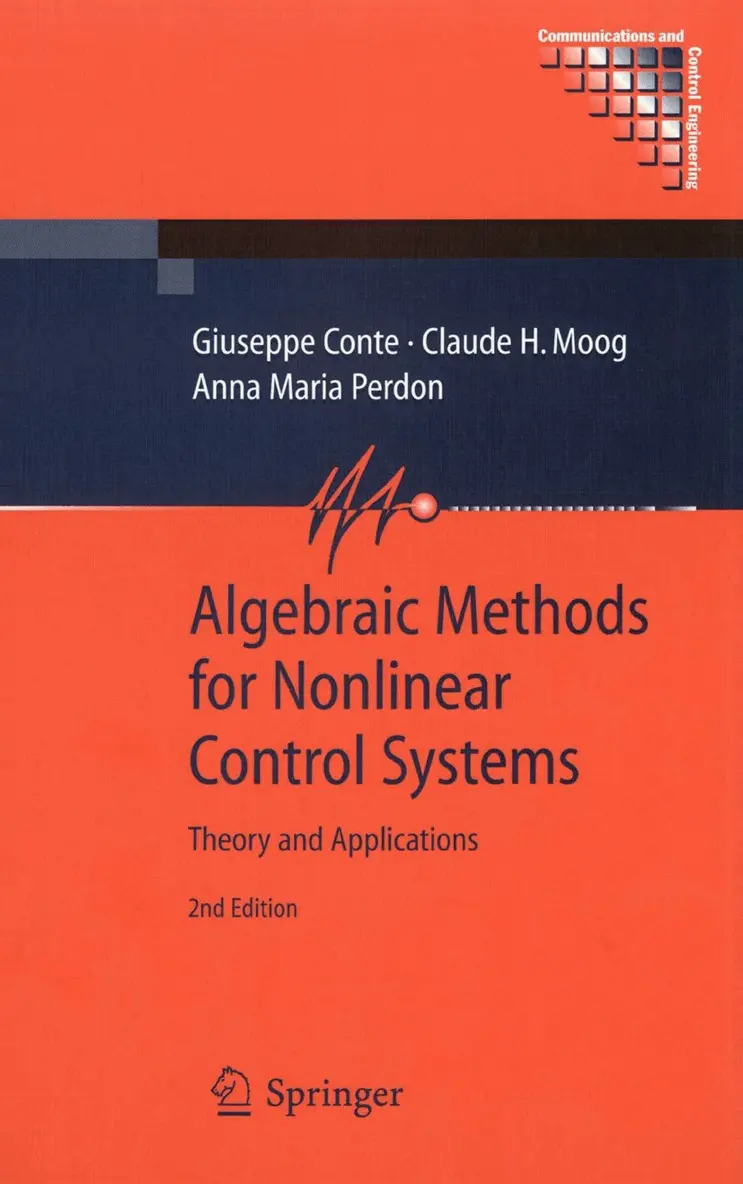
Algebraic Methods for Nonlinear Control Systems
Av Giuseppe Conte, Claude H. Moog m. fl.
Häftad, 2010
1094 kr
Lägg i varukorg
A self-contained introduction to algebraic control for nonlinear systems suitable for researchers and graduate students. "Algebraic Methods for Nonlinear Control Systems" develops a linear-algebraic alternative to the usual differential-geometric approach to nonlinear control, using vector spaces …
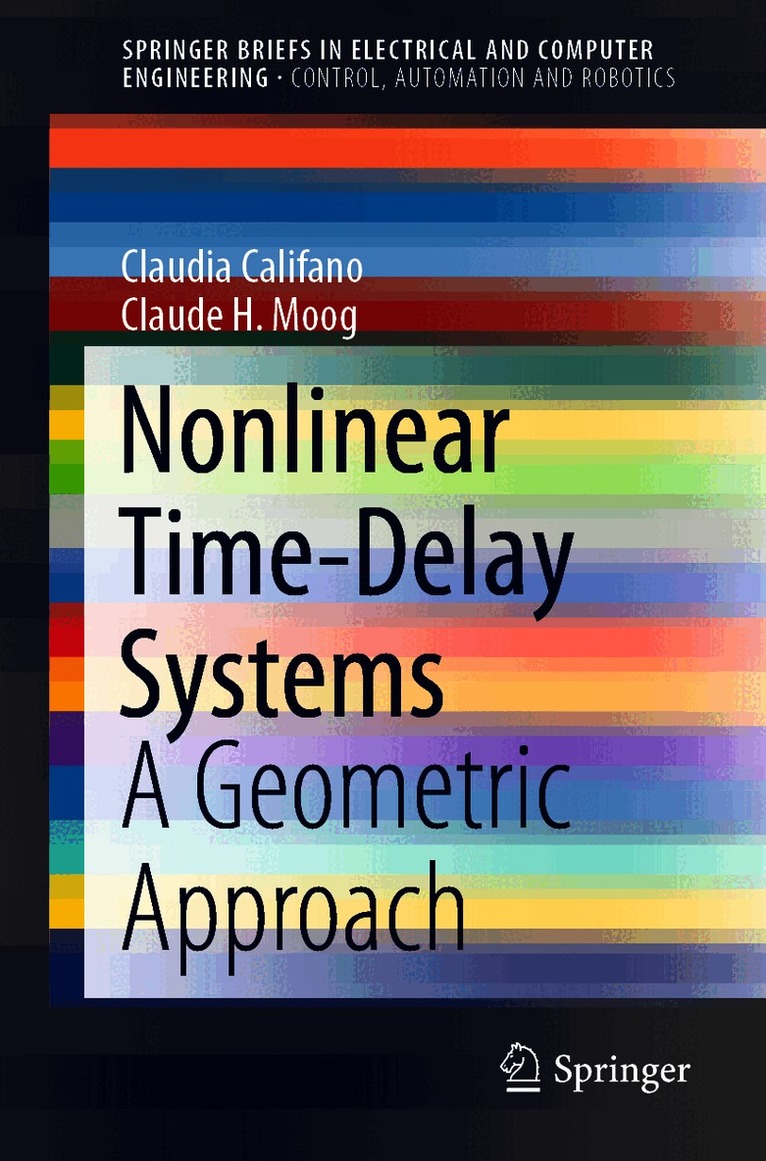
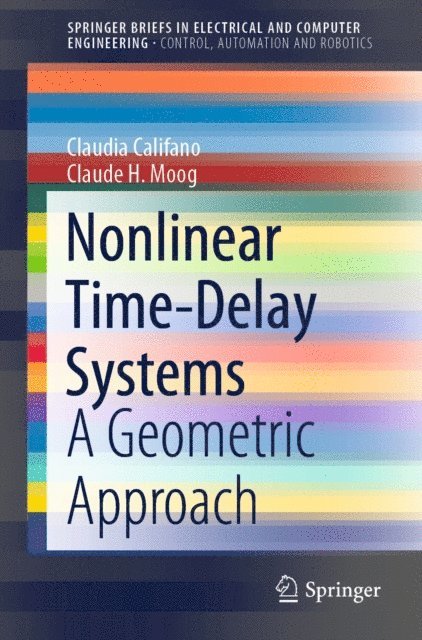
Nonlinear Time-Delay Systems
A Geometric Approach
Av Claudia Califano, Claude H. Moog
Häftad, 2021
550 kr
Lägg i varukorg
This brief focuses on the structural properties of nonlinear time-delay systems. It provides a link between coverage of fundamental theoretical properties and advanced control algorithms, as well as suggesting a path for the generalization of the differential geometric approach to time-delay …
Nonlinear Time-Delay Systems
A Geometric Approach
Av Claude H. Moog, Claudia Califano
E-bok, 2021
734 kr
Lägg i varukorg
This brief focuses on the structural properties of nonlinear time-delay systems. It provides a link between coverage of fundamental theoretical properties and advanced control algorithms, as well as suggesting a path for the generalization of the differential geometric approach to time-delay …