Claudia Brosseder – författare
Visar alla böcker från författaren Claudia Brosseder. Handla med fri frakt och snabb leverans.
4 produkter
4 produkter
Inbunden, Engelska, 2014
719 kr
Skickas inom 5-8 vardagar
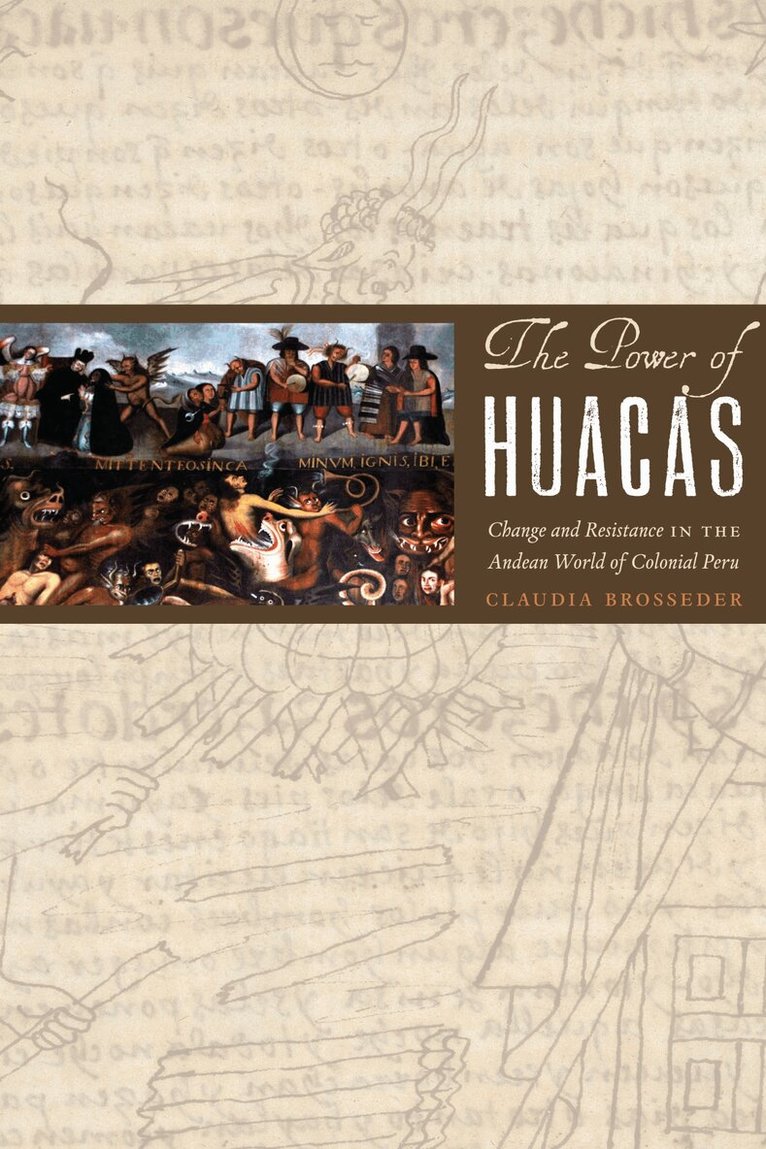
Based on extensive archival research, The Power of Huacas is the first book to take account of the reciprocal effects of religious colonization as they impacted Andean populations and, simultaneously, dramatically changed the culture and beliefs of Spanish Christians.Winner, Award for Excellence in the Study of Religion in the category of Historical Studies, American Academy of Religion, 2015The role of the religious specialist in Andean cultures of the sixteenth, seventeenth, and eighteenth centuries was a complicated one, balanced between local traditions and the culture of the Spanish. In The Power of Huacas, Claudia Brosseder reconstructs the dynamic interaction between religious specialists and the colonial world that unfolded around them, considering how the discourse about religion shifted on both sides of the Spanish and Andean relationship in complex and unexpected ways. In The Power of Huacas, Brosseder examines evidence of transcultural exchange through religious history, anthropology, and cultural studies. Taking Andean religious specialists-or hechizeros (sorcerers) in colonial Spanish terminology-as a starting point, she considers the different ways in which Andeans and Spaniards thought about key cultural and religious concepts. Unlike previous studies, this important book fully outlines both sides of the colonial relationship; Brosseder uses extensive archival research in Bolivia, Chile, Ecuador, Peru, Spain, Italy, and the United States, as well as careful analysis of archaeological and art historical objects, to present the Andean religious worldview of the period on equal footing with that of the Spanish. Throughout the colonial period, she argues, Andean religious specialists retained their own unique logic, which encompassed specific ideas about holiness, nature, sickness, and social harmony. The Power of Huacas deepens our understanding of the complexities of assimilation, showing that, within the maelstrom of transcultural exchange in the Spanish Americas, European paradigms ultimately changed more than Andean ones.
Inbunden, Engelska, 2023
899 kr
Skickas inom 5-8 vardagar
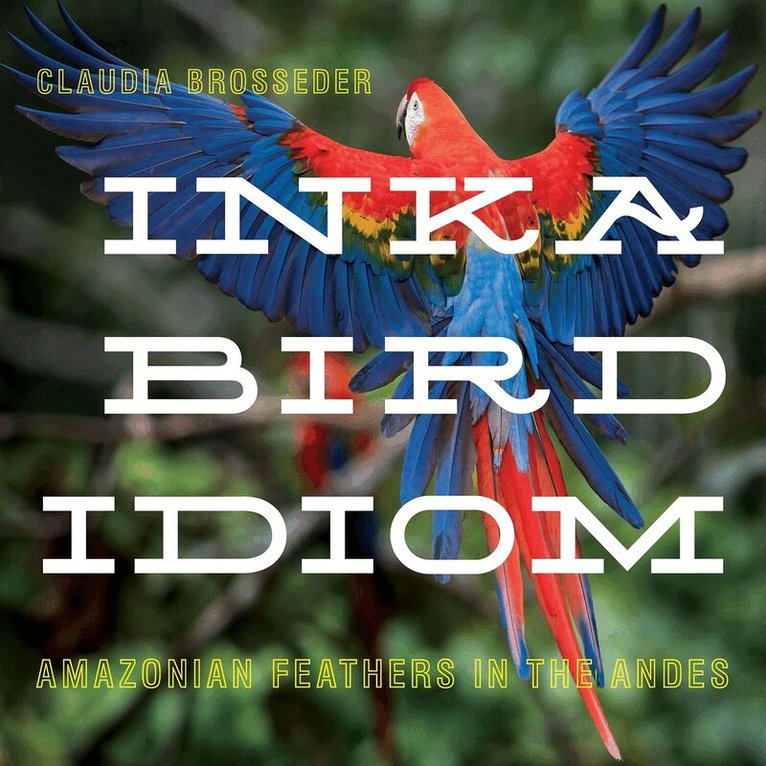
From majestic Amazonian macaws and highland Andean hawks to tiny colorful tanagers and tall flamingos, birds and their feathers played an important role in the Inka empire. Claudia Brosseder uncovers the many meanings that Inkas attached to the diverse fowl of the Amazon, the eastern Andean foothills, and the highlands. She shows how birds and feathers shaped Inka politics, launched wars, and initiated peace. Feathers provided protection against unpredictable enemies, made possible communication with deities, and brought an imagined Inka past into a political present. Richly textured contexts of feathered objects recovered from Late Horizon archaeological records and from sixteenth- and seventeenth-century accounts written by Spanish interlocutors enable new insights into Inka visions of interspecies relationships, an Inka ontology, and Inka views of the place of the human in their ecology. Inka Bird Idiom invites reconsideration of the deep intellectual ties that connected the Amazon and the mountain forests with the Andean highlands and the Pacific coast.
Inbunden, Tyska, 2004
1 256 kr
Skickas inom 5-8 vardagar
E-bok
PDF, Tyska, 20141 397 kr
Läs direkt efter köp
Die Astrologie spielte unter den europäischen Gelehrten des 15. und 16. Jahrhunderts eine herausragende Rolle. Dank grundlegender Studien hat die Astrologie im Italien der Renaissance klare Konturen erhalten. Ein vergleichbares Bild für Deutschland fehlte bislang. Unklar war, wie viele deutsche Astrologen dieser Zeit den Blick zum nächtlichen Himmel richteten und vor allem, was sie dort sahen, welche Erkenntnisse sie gewannen, mit welchen Kategorien sie diese bewerteten und für welche Zwecke sie sie verwendeten. Nicht minder unklar waren der wissenschaftliche Diskurs über Astrologie, ihre Anthropologische und naturphilosophische Legitimierung, ihr universalhermeneutischer Anspruch, ihre Präsenz in der Politik und in den Universitäten, ihr Gebrauch in der ärztlichen Praxis, ihr Konflikt mit der Theologie. Das Buch von Claudia Brosseder geht neben anderen diesen Fragen nach und rekonstruiert, ausgehend vom Wittenberger Kreis, das Phänomen der deutschen Astrologie im 16. Jahrhundert in seiner Komplexität.