Claudia Glatz – författare
Visar alla böcker från författaren Claudia Glatz. Handla med fri frakt och snabb leverans.
8 produkter
8 produkter
Inbunden, Engelska, 2020
1 170 kr
Skickas inom 7-10 vardagar
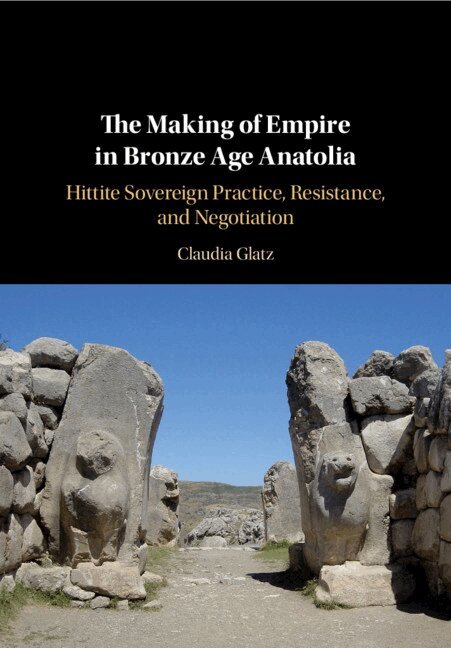
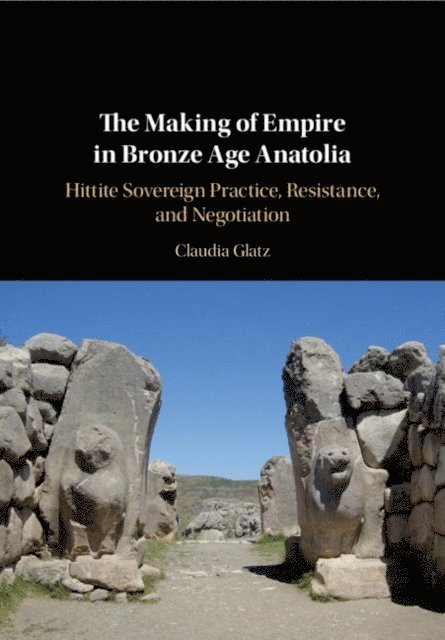
In this book, Claudia Glatz reconsiders the concept of empire and the processes of imperial making and undoing of the Hittite network in Late Bronze Age Anatolia. Using an array of archaeological, iconographic, and textual sources, she offers a fresh account of one of the earliest, well-attested imperialist polities of the ancient Near East. Glatz critically examines the complexity and ever - transforming nature of imperial relationships, and the practices through which Hittite elites and administrators aimed to bind disparate communities and achieve a measure of sovereignty in particular places and landscapes. She also tracks the ambiguities inherent in these practices -- what they did or did not achieve, how they were resisted, and how they were subtly negotiated in different regional and cultural contexts.
E-bok
PDF, Engelska, 20201 368 kr
Läs direkt efter köp
In this book, Claudia Glatz reconsiders the concept of empire and the processes of imperial making and undoing of the Hittite network in Late Bronze Age Anatolia. Using an array of archaeological, iconographic, and textual sources, she offers a fresh account of one of the earliest, well-attested imperialist polities of the ancient Near East. Glatz critically examines the complexity and ever – transforming nature of imperial relationships, and the practices through which Hittite elites and administrators aimed to bind disparate communities and achieve a measure of sovereignty in particular places and landscapes. She also tracks the ambiguities inherent in these practices -- what they did or did not achieve, how they were resisted, and how they were subtly negotiated in different regional and cultural contexts.
E-bok
Engelska, 20201 380 kr
Läs direkt efter köp
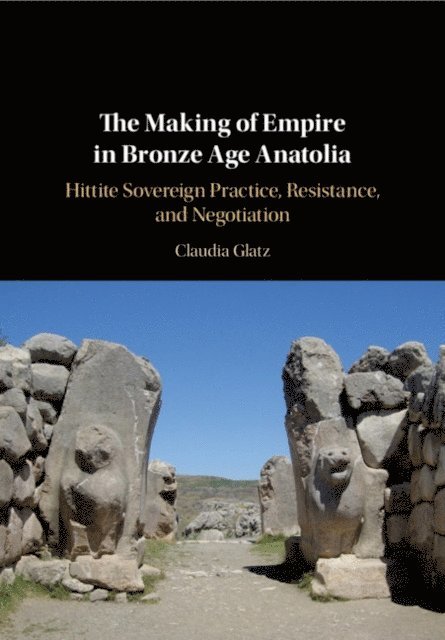
In this book, Claudia Glatz reconsiders the concept of empire and the processes of imperial making and undoing of the Hittite network in Late Bronze Age Anatolia. Using an array of archaeological, iconographic, and textual sources, she offers a fresh account of one of the earliest, well-attested imperialist polities of the ancient Near East. Glatz critically examines the complexity and ever – transforming nature of imperial relationships, and the practices through which Hittite elites and administrators aimed to bind disparate communities and achieve a measure of sovereignty in particular places and landscapes. She also tracks the ambiguities inherent in these practices -- what they did or did not achieve, how they were resisted, and how they were subtly negotiated in different regional and cultural contexts.
E-bok
Engelska, 2016652 kr
Läs direkt efter köp
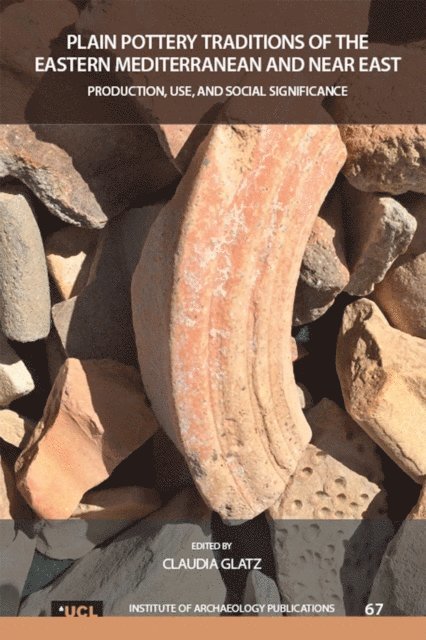
The evolution and proliferation of plain and predominantly wheel-made pottery presents a characteristic feature of the societies of the Near East and Eastern Mediterranean since the fourth millennium B.C. This plain pottery has received little detailed archaeological attention in comparison to aesthetically more pleasing and chronologically sensitive decorated traditions. Yet, their simplicity and standardization suggest they are products of craft specialists, the result of high-volume production, and therefore important in understanding the social systems in early complex societies. This volume-reevaluates the role and significance of plain pottery traditions from both historically specific perspectives and from a comparative point of view;-examines the uses and functions of this pottery in relation to social negotiation and group identity formation;-helps scholars understand cross-regional similarities in development and use.
E-bok
PDF, Engelska, 2016652 kr
Läs direkt efter köp
The evolution and proliferation of plain and predominantly wheel-made pottery presents a characteristic feature of the societies of the Near East and Eastern Mediterranean since the fourth millennium B.C. This plain pottery has received little detailed archaeological attention in comparison to aesthetically more pleasing and chronologically sensitive decorated traditions. Yet, their simplicity and standardization suggest they are products of craft specialists, the result of high-volume production, and therefore important in understanding the social systems in early complex societies. This volume-reevaluates the role and significance of plain pottery traditions from both historically specific perspectives and from a comparative point of view;-examines the uses and functions of this pottery in relation to social negotiation and group identity formation;-helps scholars understand cross-regional similarities in development and use.
Inbunden, Engelska, 2015
2 222 kr
Skickas inom 10-15 vardagar
The evolution and proliferation of plain and predominantly wheel-made pottery presents a characteristic feature of the societies of the Near East and Eastern Mediterranean since the fourth millennium B.C. This plain pottery has received little detailed archaeological attention in comparison to aesthetically more pleasing and chronologically sensitive decorated traditions. Yet, their simplicity and standardization suggest they are products of craft specialists, the result of high-volume production, and therefore important in understanding the social systems in early complex societies. This volume-reevaluates the role and significance of plain pottery traditions from both historically specific perspectives and from a comparative point of view;-examines the uses and functions of this pottery in relation to social negotiation and group identity formation;-helps scholars understand cross-regional similarities in development and use.
Häftad, Engelska, 2023
564 kr
Skickas inom 10-15 vardagar
The evolution and proliferation of plain and predominantly wheel-made pottery presents a characteristic feature of the societies of the Near East and Eastern Mediterranean since the fourth millennium B.C. This plain pottery has received little detailed archaeological attention in comparison to aesthetically more pleasing and chronologically sensitive decorated traditions. Yet, their simplicity and standardization suggest they are products of craft specialists, the result of high-volume production, and therefore important in understanding the social systems in early complex societies. This volume-reevaluates the role and significance of plain pottery traditions from both historically specific perspectives and from a comparative point of view;-examines the uses and functions of this pottery in relation to social negotiation and group identity formation;-helps scholars understand cross-regional similarities in development and use.
Inbunden, Engelska, 2015
2 588 kr
Skickas inom 5-8 vardagar
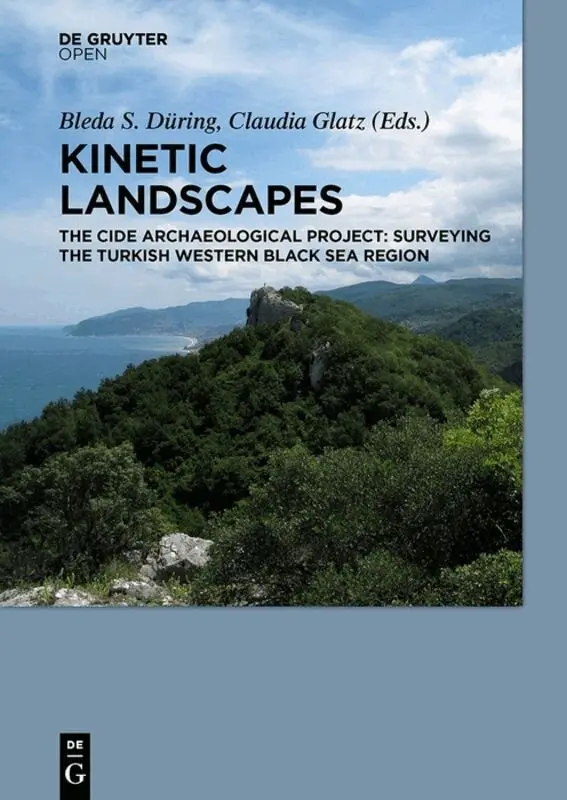
Turkey’s northern edge is a region of contrasts and diversity. From the rugged peaks of the Pontic mountains and hidden inland valleys to the plains and rocky alcoves of the Black Sea coast, this landscape shaped and was shaped by its inhabitants’ ways of life, their local cultural traditions, and the ebbs and flows of land-based and maritime networks of interaction. Between 2009 and 2011, an international team of specialists and students of the Cide Archaeological Project (CAP) investigated the challenging landscapes of the Cide and Şenpazar districts of Kastamonu province. CAP presents the first systematic archaeological survey of the western Turkish Black Sea region. The information gathered by the project extends its known human history by 10,000 years and offers an unprecedented insight into the region’s shifting cultural, social and political ties with Anatolia and the Circumpontic. This volume presents the project’s approach and methodologies, its results and their interpretation within period-specific contexts and through a long-term landscape perspective.