Claudio Bruno – författare
2 207 kr
Läs direkt efter köp
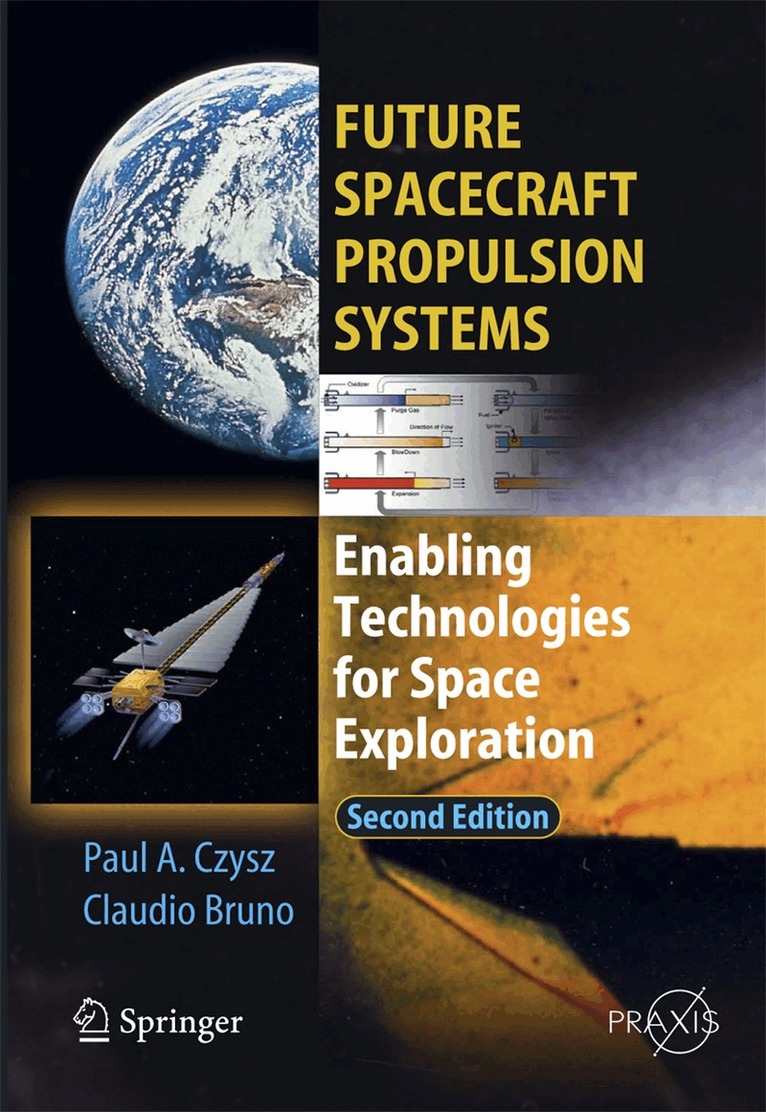
In Future Spacecraft Propulsion Systems the authors demonstrate the need to break free from the old established concepts of expendable rockets, using chemical propulsion, and to develop new breeds of launch vehicle capable of both launching payloads into orbit at dramatically reduced cost, and for sustained operations in low-Earth orbit. The next steps, they explain, to establishing a permanent "presence" in the solar system beyond Earth are the commercialisation of sustained operations on the Moon, and the development of advanced nuclear or high-energy space propulsion systems for solar system exploration out to the boundary of interstellar space. In the future, high-energy particle research facilities may one day yield a very high-energy propulsion system that will take us to the nearby stars, or even beyond. This is a timely and comprehensive book, putting spacecraft propulsion systems in perspective.
2 366 kr
Läs direkt efter köp
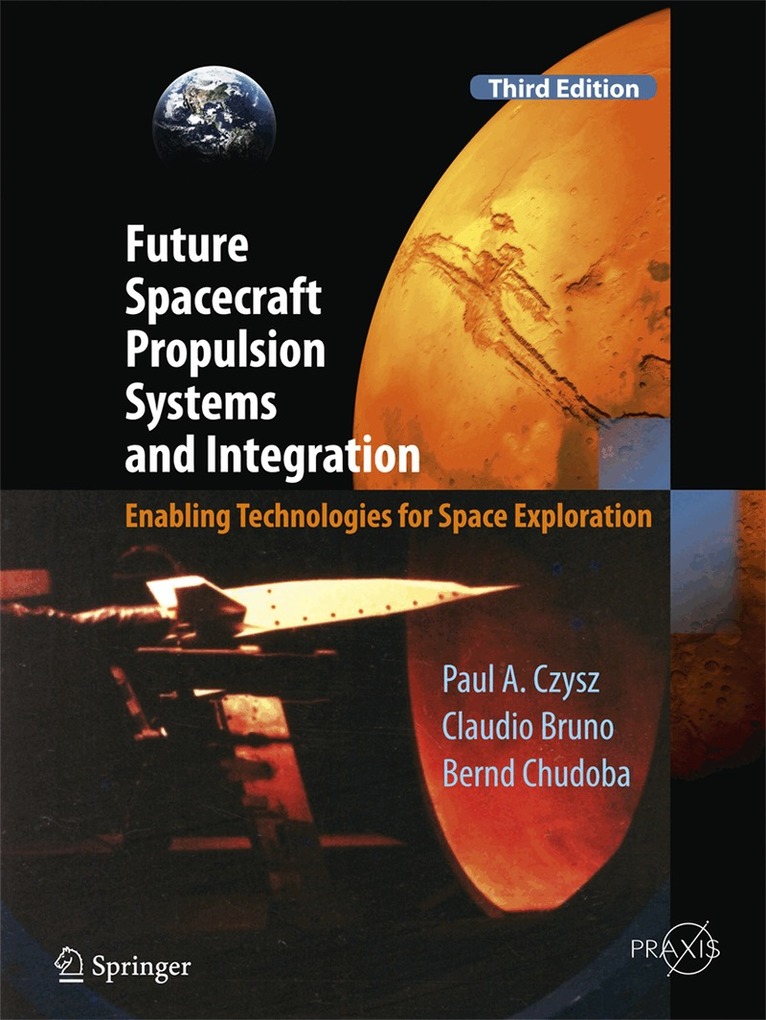
This third edition of Future Spacecraft Propulsion Systems and Integration – Enabling Technologies for Space Exploration, has been updated and expanded. The major addition addresses the multi-disciplinary integration between the spectrum of hypersonic vehicles to reach Earth orbit and that of their propulsion systems. A best-practice sizing approach is presented to define the solution spaces and facilitate the correct design of these integrated flight vehicles to mission. This pragmatic approach is the essential capability sought after by design teams, technology forecasters and strategic planners alike, and includes lesson learned and space launchers as examples from the past.
Among novel systems, the chapter on future combined engines includes now description and performance of pulsed detonation engines. All aspects of space flight discussed in the first two editions have been updated and augmented to account for the many changes in technology, policy and space objectives following the demise of the US Shuttle and the appearance of private space companies.
Accordingly, the chapters dealing with near-Earth, interplanetary, galactic and future breakthrough propulsion have been expanded to include new applications, such as nuclear magnetic pulses, recent concept powered by inertial fusion, and new issues as, for instance, space radiation, a major obstacle to space exploration and commercialization in the years to come.
This book can be useful to graduate students and teachers, as well as industrial organizations and planners.
2 239 kr
Skickas inom 5-8 vardagar
3 041 kr
Skickas inom 10-15 vardagar
2 741 kr
Läs direkt efter köp
The updated and expanded third edition of this book focuses on the multi-disciplinary coupling between flight-vehicle hardware alternatives and enabling propulsion systems. It discusses how to match near-term and far-term aerospace vehicles to missions and provides a comprehensive overview of the subject, directly contributing to the next-generation space infrastructure, from space tourism to space exploration. This holistic treatment defines a mission portfolio addressing near-term to long-term space transportation needs covering sub-orbital, orbital and escape flight profiles. In this context, a vehicle configuration classification is introduced covering alternatives starting from the dawn of space access. A best-practice parametric sizing approach is introduced to correctly design the flight vehicle for the mission. This technique balances required mission with the available vehicle solution space and is an essential capability sought after by technology forecasters and strategicplanners alike.
2 174 kr
Skickas inom 10-15 vardagar
1 849 kr
Skickas inom 10-15 vardagar
2 366 kr
Läs direkt efter köp
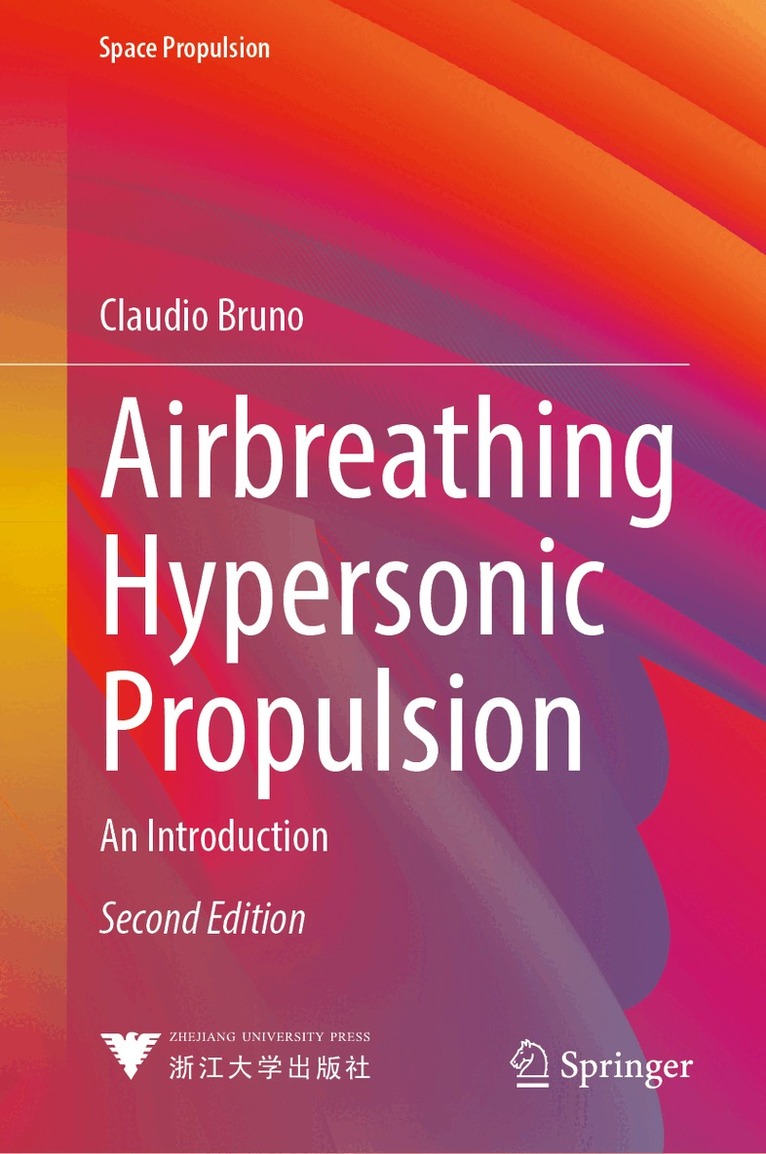
This book details science of hypersonics especially focusing on propulsion aspects such as supersonic combustion ramjets and their applications, and also includes lift and drag in hypersonic flight and their mathematical and physical explanation.
It provides charts and data from hypersonic testing and measurements from actual vehicles and engines built in the past. Criteria to dimension hypersonic powered and unpowered vehicles (gliders) based on fundamental fluid dynamics and backed by flight testing; criteria to preliminary sizing vehicles and preliminary dimensioning of supersonic combustors are introduced. The book will serve better theoretical understanding of drag, lift and how to apply them to the design of hypersonic vehicles, as well as data to size vehicles and supersonic combustion ramjet (SCRJ) systems.
This book will be a useful reference for researchers and designers in hypersonic vehicles but also second or third-year graduate students.
1 849 kr
Skickas inom 10-15 vardagar