Clayton/Payne - Böcker
Visar alla böcker från författaren Clayton/Payne. Handla med fri frakt och snabb leverans.
2 produkter
2 produkter
617 kr
Skickas inom 10-15 vardagar
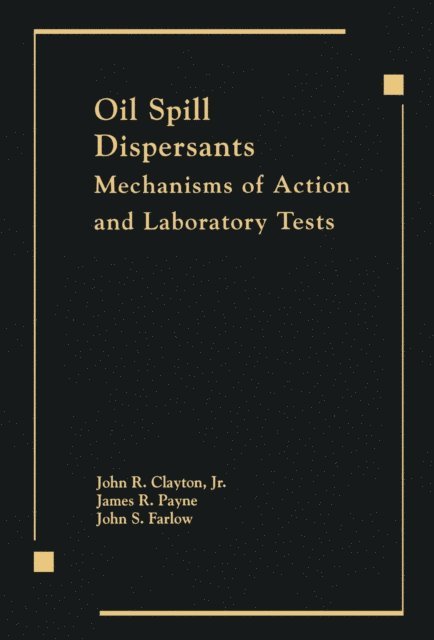
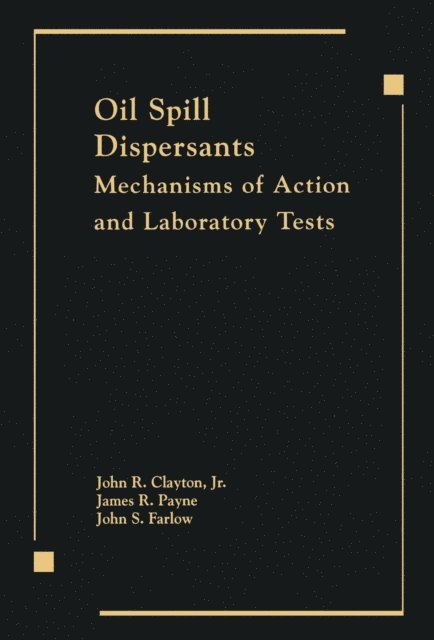
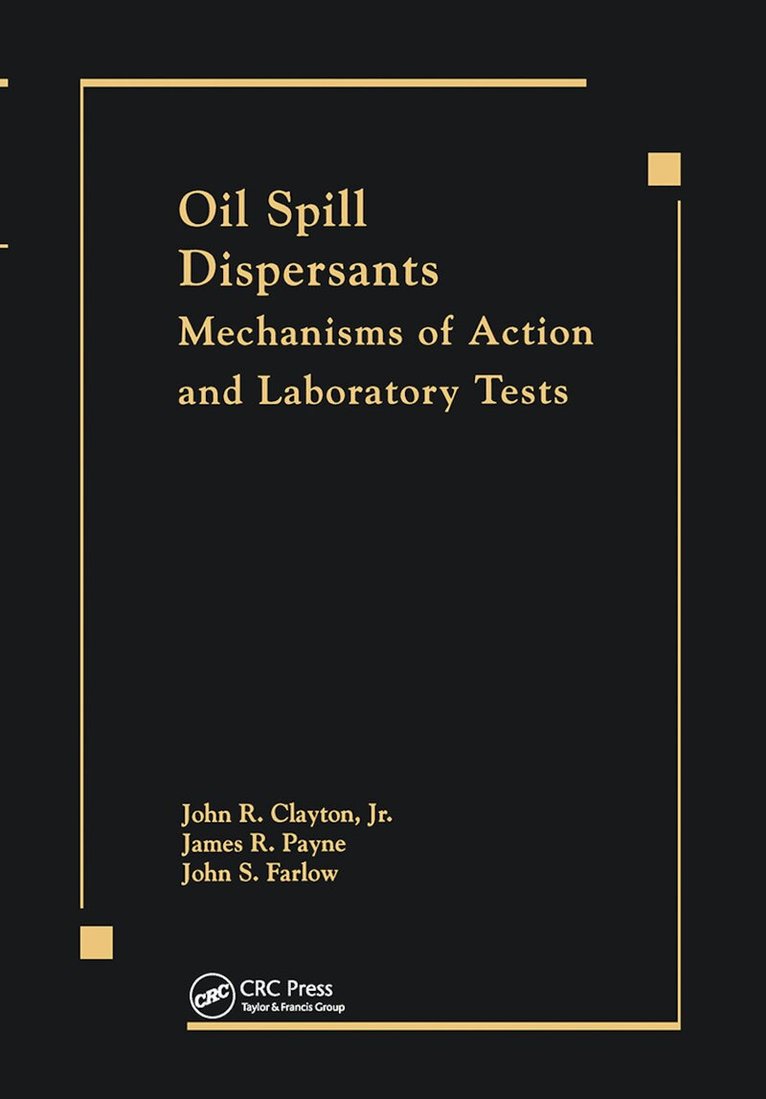
Oil Spill Dispersants: Mechanisms of Action and Laboratory Tests provides a comprehensive summary of current information available regarding the general formulation of commercial dispersants and their function to lower oil-water interfacial tension. The book considers how chemical dispersants work for oil spills, the properties and chemistry of oils (including weathering state), the variables that affect dispersant performance, and the relationships between laboratory methods and field situations.The book also considers the strengths and limitations of specific laboratory tests, including brief discussions of the applicability of results for estimating dispersant performance in field trials or conditions encountered during real spill events. Laboratory tests are separated into four groups: tank tests, shake/flask tests, interfacial surface tension tests, and flume tests. Rapid-screen field tests are considered as a separate group. Recommendations for improvements in future laboratory testing are offered as well. Oil Spill Dispersants will be useful for regulators evaluating dispersant agents, field personnel involved with using dispersants, laboratory scientists studying performance and behavior of oil and dispersants, and managers responsible for designing studies related to the treatment of oil slicks with dispersants.
1 752 kr
Skickas inom 10-15 vardagar
Oil Spill Dispersants: Mechanisms of Action and Laboratory Tests provides a comprehensive summary of current information available regarding the general formulation of commercial dispersants and their function to lower oil-water interfacial tension. The book considers how chemical dispersants work for oil spills, the properties and chemistry of oils (including weathering state), the variables that affect dispersant performance, and the relationships between laboratory methods and field situations.The book also considers the strengths and limitations of specific laboratory tests, including brief discussions of the applicability of results for estimating dispersant performance in field trials or conditions encountered during real spill events. Laboratory tests are separated into four groups: tank tests, shake/flask tests, interfacial surface tension tests, and flume tests. Rapid-screen field tests are considered as a separate group. Recommendations for improvements in future laboratory testing are offered as well. Oil Spill Dispersants will be useful for regulators evaluating dispersant agents, field personnel involved with using dispersants, laboratory scientists studying performance and behavior of oil and dispersants, and managers responsible for designing studies related to the treatment of oil slicks with dispersants.