Clement Dore – författare
Visar alla böcker från författaren Clement Dore. Handla med fri frakt och snabb leverans.
10 produkter
10 produkter
Inbunden, Engelska, 1995
1 091 kr
Skickas inom 10-15 vardagar
The main aims of this book are to establish that it is rational to believe that God exists; to show how God relates to morality; and to show how God is causally connected to his creation. Dore defends a version of the ontological argument and refutes the atheistic argument from suffering. He argues that only God can account for the overridingness of morality. He also treats ethical supernaturalism as a type of ethical attitude theory, showing how it is related to secular theories which base valid judgments of moral goodness and evil on pro and con attitudes. He illlustrates precisely how, given scientific explanation, theistic explanation of the empirical universe can get a foothold. His method is to adopt and defend a version of theistic (Berkeley-like) phenomenalism and, in that connection, a pragmatic-instrumentalist interpretation of scientific theories.
E-bok
PDF, Engelska, 1989489 kr
Läs direkt efter köp
Häftad, Engelska, 1989
440 kr
Skickas inom 10-15 vardagar
E-bok
PDF, Engelska, 1991535 kr
Läs direkt efter köp
Häftad, Engelska, 1991
440 kr
Skickas inom 10-15 vardagar
E-bok
PDF, Engelska, 20161 367 kr
Läs direkt efter köp
The main aims of this book are to establish that it is rational to believe that God exists; to show how God relates to morality; and to show how God is causally connected to his creation. Dore defends a version of the ontological argument and refutes the atheistic argument from suffering. He argues that only God can account for the overridingness of morality. He also treats ethical supernaturalism as a type of ethical attitude theory, showing how it is related to secular theories which base valid judgments of moral goodness and evil on pro and con attitudes. He illlustrates precisely how, given scientific explanation, theistic explanation of the empirical universe can get a foothold. His method is to adopt and defend a version of theistic (Berkeley-like) phenomenalism and, in that connection, a pragmatic-instrumentalist interpretation of scientific theories.
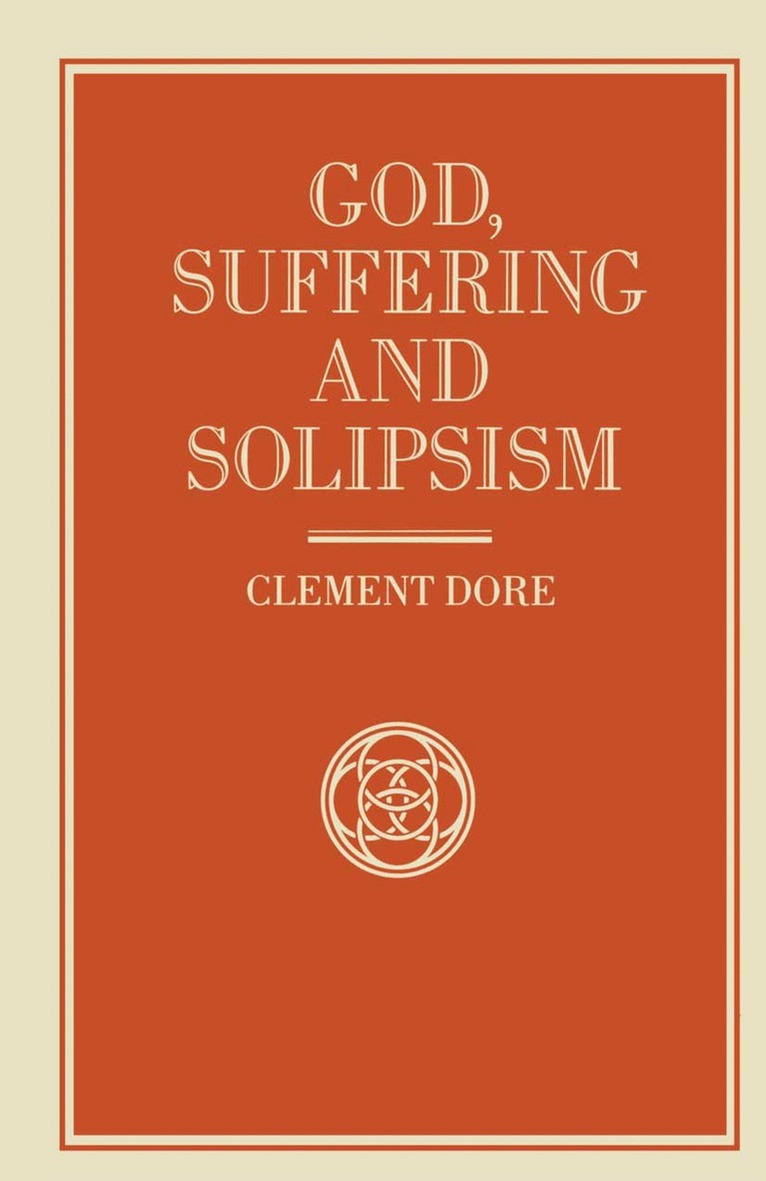
Häftad, Engelska, 1996
1 091 kr
Skickas inom 10-15 vardagar
The main aims of this book are to establish that it is rational to believe that God exists; to show how God relates to morality; and to show how God is causally connected to his creation. Dore defends a version of the ontological argument and refutes the atheistic argument from suffering. He argues that only God can account for the overridingness of morality. He also treats ethical supernaturalism as a type of ethical attitude theory, showing how it is related to secular theories which base valid judgments of moral goodness and evil on pro and con attitudes. He illlustrates precisely how, given scientific explanation, theistic explanation of the empirical universe can get a foothold. His method is to adopt and defend a version of theistic (Berkeley-like) phenomenalism and, in that connection, a pragmatic-instrumentalist interpretation of scientific theories.
Inbunden, Engelska, 1984
1 091 kr
Skickas inom 10-15 vardagar
In this book, I discuss the question whether God exists, not as a Tillichian religious symbol, but as an actual person, albeit a person who is very different from you and me. My procedure is to examine arguments bdth for and against God's existence qua person and to assess their relative merits. I shall try to show that there is more evidence that God exists than that he does not. This position is, of course, rejected nowadays, even by most religious thinkers, who hold, for one reason or another, that evidence has nothing to do with religious belief, properly understood. My reply to these thinkers is simply to ask them to examine what follows. A useful companion to Chapters 4, 5, 6, 7, and the Appendix of this book would be Alvin Plantinga's The Nature of Necessity.l Though I avoid technical terminology wherever possible, those chapters presuppose an elementary understanding of 'possible worlds' discourse; and a clear and concise explanation of that terminology can be found in Chapter IV of Plantinga's book. Also, I use 'logical' throughout to mean what Plantinga means by 'broadly logical' on page 2 of The Nature of Necessity.
E-bok
PDF, Engelska, 20121 367 kr
Läs direkt efter köp
In this book, I discuss the question whether God exists, not as a Tillichian religious symbol, but as an actual person, albeit a person who is very different from you and me. My procedure is to examine arguments bdth for and against God''s existence qua person and to assess their relative merits. I shall try to show that there is more evidence that God exists than that he does not. This position is, of course, rejected nowadays, even by most religious thinkers, who hold, for one reason or another, that evidence has nothing to do with religious belief, properly understood. My reply to these thinkers is simply to ask them to examine what follows. A useful companion to Chapters 4, 5, 6, 7, and the Appendix of this book would be Alvin Plantinga''s The Nature of Necessity.l Though I avoid technical terminology wherever possible, those chapters presuppose an elementary understanding of ''possible worlds'' discourse; and a clear and concise explanation of that terminology can be found in Chapter IV of Plantinga''s book. Also, I use ''logical'' throughout to mean what Plantinga means by ''broadly logical'' on page 2 of The Nature of Necessity.
Del 30 - Philosophical Studies Series
Theism
Häftad, Engelska, 2011
1 091 kr
Skickas inom 10-15 vardagar
In this book, I discuss the question whether God exists, not as a Tillichian religious symbol, but as an actual person, albeit a person who is very different from you and me. My procedure is to examine arguments bdth for and against God's existence qua person and to assess their relative merits. I shall try to show that there is more evidence that God exists than that he does not. This position is, of course, rejected nowadays, even by most religious thinkers, who hold, for one reason or another, that evidence has nothing to do with religious belief, properly understood. My reply to these thinkers is simply to ask them to examine what follows. A useful companion to Chapters 4, 5, 6, 7, and the Appendix of this book would be Alvin Plantinga's The Nature of Necessity.l Though I avoid technical terminology wherever possible, those chapters presuppose an elementary understanding of 'possible worlds' discourse; and a clear and concise explanation of that terminology can be found in Chapter IV of Plantinga's book. Also, I use 'logical' throughout to mean what Plantinga means by 'broadly logical' on page 2 of The Nature of Necessity.