Clifford S. Stagoll - Böcker
Visar alla böcker från författaren Clifford S. Stagoll. Handla med fri frakt och snabb leverans.
4 produkter
4 produkter
566 kr
Skickas inom 3-6 vardagar
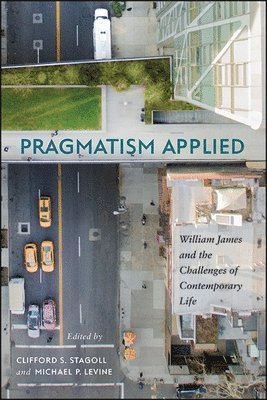
Illustrates how William James's philosophical pragmatism can help to resolve issues in everyday contemporary life.William James, one of America's most original philosophers and psychologists, was concerned above all with the manner in which philosophy might help people to cope with the vicissitudes of daily life. Writing around the turn of the twentieth century, James experienced firsthand, much as we do now, the impact upon individuals and communities of rapid changes in extant values, technologies, economic realities, and ways of understanding the world. He presented an enormous range of practical recommendations for coping and thriving in such circumstances, arguing consistently that prospects for richer lives and improved communities rested not upon trust in spiritual or material prescriptions, but rather on clear thinking in the cause of action. This volume seeks to demonstrate how James's astonishingly rich corpus can be used to address contemporary issues and to establish better ways for thinking about the moral and practical challenges of our time. In the first part, James's theories are applied directly to issues ranging from gun control to disability, and the ethics of livestock farming to the meaning of "progress" in race relations. The second part shows how James's theories of ethics, experience, and the self can be used to "clear away" theoretical matters that have inhibited philosophy's deployment to real-world issues. Finally, part three shows how individuals might apply ideas from James in their personal lives, whether at work, contemplating nature, or considering the implications of their own habits of thought and action.
1 057 kr
Tillfälligt slut
Illustrates how William James's philosophical pragmatism can help to resolve issues in everyday contemporary life.William James, one of America's most original philosophers and psychologists, was concerned above all with the manner in which philosophy might help people to cope with the vicissitudes of daily life. Writing around the turn of the twentieth century, James experienced firsthand, much as we do now, the impact upon individuals and communities of rapid changes in extant values, technologies, economic realities, and ways of understanding the world. He presented an enormous range of practical recommendations for coping and thriving in such circumstances, arguing consistently that prospects for richer lives and improved communities rested not upon trust in spiritual or material prescriptions, but rather on clear thinking in the cause of action. This volume seeks to demonstrate how James's astonishingly rich corpus can be used to address contemporary issues and to establish better ways for thinking about the moral and practical challenges of our time. In the first part, James's theories are applied directly to issues ranging from gun control to disability, and the ethics of livestock farming to the meaning of "progress" in race relations. The second part shows how James's theories of ethics, experience, and the self can be used to "clear away" theoretical matters that have inhibited philosophy's deployment to real-world issues. Finally, part three shows how individuals might apply ideas from James in their personal lives, whether at work, contemplating nature, or considering the implications of their own habits of thought and action.
1 456 kr
Skickas inom 3-6 vardagar
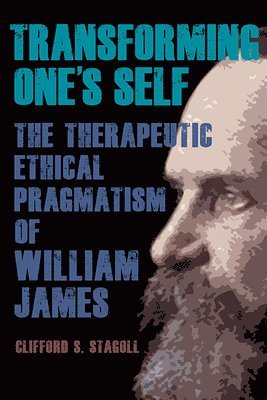
A fresh and rigorous interpretation of William James's ethical theory, showing how experimenting with life's opportunities can transform one's self and life.William James (1842–1910) authored some of America's most original and evocative philosophy and psychology. Until recently, however, his work in ethics attracted little interest, despite suggestions from such distinguished peers as John Dewey that ethical themes suffused his writings. Taking those suggestions seriously, Clifford S. Stagoll provides an original and rigorous interpretation of James's ethics as a response to the socio-economic circumstances of his day, derived from key themes in his metaphysics, philosophical psychology, philosophy of religion, and pedagogical theory. By considering these apparently disparate projects together, Stagoll shows how James's recommendations for pursuing a richer, more rewarding life-an ethics in the classical sense-are justified by intricate and sophisticated analyses of how we think, act, and conceive of ourselves. For James, making a habit of experimenting with life's myriad opportunities is not just a way to counter thinking that has grown too rigid, but a crucial precondition for making the most of one's life and self.
566 kr
Skickas inom 3-6 vardagar
A fresh and rigorous interpretation of William James's ethical theory, showing how experimenting with life's opportunities can transform one's self and life.William James (1842–1910) authored some of America's most original and evocative philosophy and psychology. Until recently, however, his work in ethics attracted little interest, despite suggestions from such distinguished peers as John Dewey that ethical themes suffused his writings. Taking those suggestions seriously, Clifford S. Stagoll provides an original and rigorous interpretation of James's ethics as a response to the socio-economic circumstances of his day, derived from key themes in his metaphysics, philosophical psychology, philosophy of religion, and pedagogical theory. By considering these apparently disparate projects together, Stagoll shows how James's recommendations for pursuing a richer, more rewarding life-an ethics in the classical sense-are justified by intricate and sophisticated analyses of how we think, act, and conceive of ourselves. For James, making a habit of experimenting with life's myriad opportunities is not just a way to counter thinking that has grown too rigid, but a crucial precondition for making the most of one's life and self.