Clive Gilson – författare
267 kr
Skickas inom 5-8 vardagar
205 kr
Skickas inom 5-8 vardagar
206 kr
Skickas inom 5-8 vardagar
Tales From The Forest Lands
329 kr
Skickas inom 3-6 vardagar
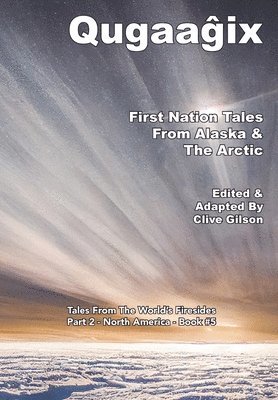
Qugaaĝix̂ - First Nation Tales From Alaska & The Arctic
330 kr
Skickas inom 5-8 vardagar
Qugaaĝix̂ - First Nation Tales From Alaska & The Arctic
459 kr
Skickas inom 5-8 vardagar
191 kr
Skickas inom 5-8 vardagar
167 kr
Skickas inom 5-8 vardagar
330 kr
Skickas inom 5-8 vardagar
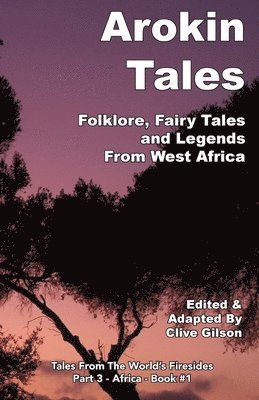
Arokin Tales
Folklore, Fairy Tales and Legends From West Africa
329 kr
Skickas inom 3-6 vardagar
Arokin Tales
Folklore, Fairy Tales and Legends From West Africa
424 kr
Skickas inom 3-6 vardagar
71 kr
Läs direkt efter köp
This is the very first book in Part 3 - Africa, following on from the titles in Parts 1 and 2 covering a host of nations and regions across Europe and North America.
Tales From The World''s Firesides is a grand project. I''ve collected thousands of traditional texts as part of other projects, and while many of the original texts are available through channels like Project Gutenberg, some of the narratives can be hard to read for modern audiences, and so the Fireside project was born. Put simply, I collect, collate and adapt traditional tales from around the world and publish them as a modern archive.
71 kr
Läs direkt efter köp
Folklore, fairy tales, myths and legends from East Africa
The seemingly simple art of storytelling is incredibly important in African societies. Storytelling helps all societies to understand core elements in their lives such as religion, morals, history, purpose social norms. The collective nature of oral storytelling also helps to cement bonds among generations and family groups, and is significant in the way that it helps people to share experiences and ideas. As with so many cultures the storytellers of Eastern Africa recount tales of heroes and ancestors. These heroes and forebears continue to influence the lives of the living in very real ways.
Oral traditions in East Africa cover both prose and verse forms, often portraying mythological or historical characters and can include tales of the trickster character. Storytellers in Africa sometimes use call-and-response techniques to tell their stories. Poetry, often sung, includes narrative epic, occupational verse, ritual verse, and praise poems of rulers and other prominent people. Praise singers, bards sometimes known as "griots", tell their stories with music.
In general terms Africa has a hugely rich storytelling heritage. From Timbuktu alone, there are an estimated 300,000 or more manuscripts tucked away in various libraries and private collections, mostly written in Arabic but some in native languages such as Fula and Songhai. Many were written at the famous University of Timbuktu. The material covers a wide array of topics, including astronomy, poetry, law, history, faith, politics, and philosophy.
The wonderous thing about such a rich heritage, and such a long history of finding compelling ways to interpret the world, is that it creates a massive melting pot of full of ideas. Just a few of those ideas are what we have here in this small collection. As ever it has been a delight to discover and work with these stories. I hope you enjoy them.
71 kr
Läs direkt efter köp
Tales From The World''s Firesides is a grand project. I''ve collected thousands of traditional texts as part of other projects, and while many of the original texts are available through channels like Project Gutenberg, some of the narratives can be hard to read for modern audiences, and so the Fireside project was born. Put simply, I collect, collate and adapt traditional tales from around the world and publish them as a modern archive.
This is the third book in Part 3 - Africa, following on from the titles in Parts 1 and 2 covering a host of nations and regions across Europe and North America.
Southern African Folklore is firmly rooted in an oral, historical tradition. It is tied to the region''s landscape and fauna, with fantastic creatures playing an important role in these stories. Music and song is often used to tell the story and the tales'' values are usually firmly African, with community and sharing being key.
The stories can, of course, be brutal and often contain death and disaster. In this, too, they reflect a certain African reality, although collectors and regular readers of folklore and fairy tales will recognise that brutality as a common theme in cautionary tales the world over.
As always, it is a delight to collect and adapt these stories, to discover new ways of thinking and to immerse yourself in the lore of such a fabulous land.
71 kr
Läs direkt efter köp
The Sahara runs from east to west across the widest part of Africa, a vast desert dividing the continent into two main regions. North Africa consists of the Mediterranean coast from Morocco to Egypt and includes the valley of the Nile River as far south as Ethiopia. With strong ties to the Mediterranean and Arab worlds, North Africans felt the influence of Christianity by the A.D. 300S, and in the 700s, much of the area came under the influence of Islam.
The people of the Maghreb and the Sahara speak various dialects of Berber and Arabic and almost exclusively follow Islam. The Arabic and Berber groups of languages are distantly related, both being members of the Afro-Asiatic family. The Sahara dialects are generally considered to be notably more conservative than those of coastal cities. Over the years, Berber peoples have been influenced by other cultures with which they came in contact: Nubians, Greeks, Phoenicians, Egyptians, Romans, Vandals, Arabs, and lately Europeans. The cultures of the Maghreb and the Sahara, therefore, combine elements from indigenous Berber, Arab and neighbouring parts of Africa and beyond. In the Sahara, the distinction between sedentary oasis inhabitants and nomadic Bedouin and Tuareg is particularly marked.
The diverse peoples of the Sahara are usually categorized along ethno-linguistic lines. In the Maghreb, where Arab and Berber identities are often integrated, these lines can be blurred. Some Berber-speaking North Africans may identify as "Arab" depending on the social and political circumstances, although substantial numbers of Berbers, or Imazighen have retained a distinct cultural identity which in recent times has been expressed as a clear ethnic identification with Berber history and language. Arabic-speaking Northwest Africans, regardless of ethnic background, often identify with Arab history and culture and may share a common vision with other Arabs. This, however, may or may not exclude pride in and identification with Berber or other parts of their heritage.
The Nile Valley through northern Sudan traces its origins to the ancient civilizations of Egypt and Kush. The Egyptians over the centuries have shifted their language from Egyptian to modern Egyptian Arabic, while retaining a sense of national identity that has historically set them apart from other people in the region. Most Egyptians are Sunni Muslim and a significant minority adheres to Coptic Christianity. In Nubia, straddling Egypt and Sudan, a significant population retains the ancient Nubian language but has adopted Islam. The northern part of the Sudan is home to a largely Arab Muslim population, but further down the Nile Valley you find the largely non-Muslim Nilotic and Nuba peoples.
As you will, no doubt, appreciate, this rich melange of migrations and contacts has profoundly influenced storytelling among the varied cultural, ethnic and religious groups across North Africa. There is the usual mix of magic and animism and a strong sense of duty and morality, even if those senses are a little different to some of the cultural norms of the early twenty-first century. There is also the usual mix of force and brutality in folklore and fairy tales, themes that we have seen writ large across all of the books in the Fireside series.
That said, and as ever, selecting and adapting these tales has been both a joy and a labour, but always a labour of love.
392 kr
Skickas inom 5-8 vardagar
392 kr
Skickas inom 5-8 vardagar
392 kr
Skickas inom 5-8 vardagar
Tales From The Forest Lands
455 kr
Skickas inom 5-8 vardagar
71 kr
Läs direkt efter köp
Folklore, fairy tales and legends from Central Africa. Like all human cultures, African folklore and religion represents a variety of social facets of the various cultures in Africa. These particular folktales are from Central African regions such as Uganda and the Congo, and they play an important role in many of these Central African cultures. Stories reflect a group''s cultural identity, and preserving the stories of Africa helps to preserve many aspects of diverse and intriguing cultural groupings. Storytelling affirms pride and identity.
Solitude Of Stars
205 kr
Tillfälligt slut
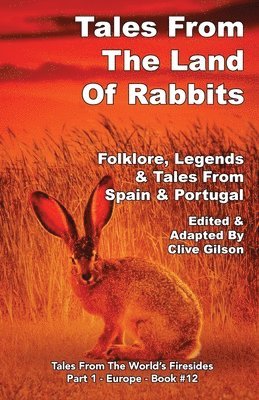
Tales From The Land Of Rabbits
330 kr
Tillfälligt slut
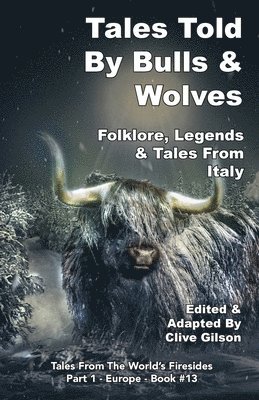
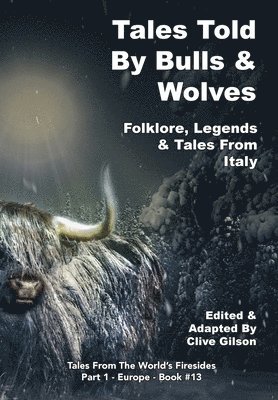
Tales Told By Bulls & Wolves
392 kr
Tillfälligt slut
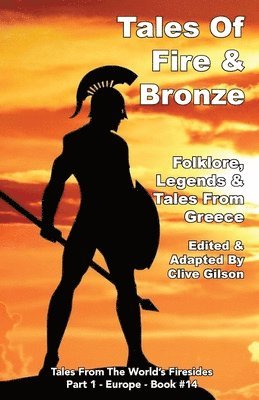
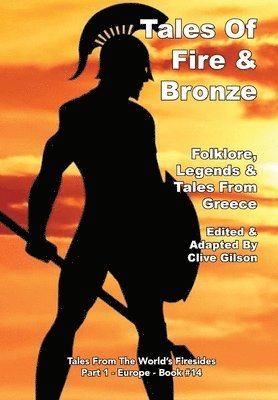
Tales Of Fire & Bronze
330 kr
Tillfälligt slut
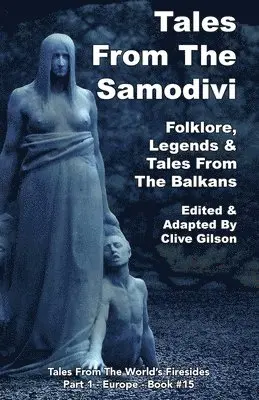
Tales From The Samodivi
330 kr
Tillfälligt slut
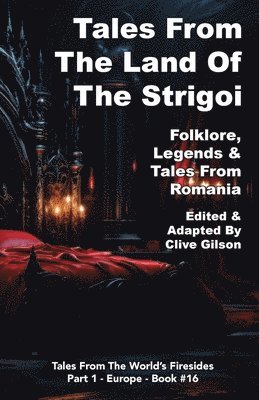
Tales From The Land Of The Strigoi
396 kr
Tillfälligt slut
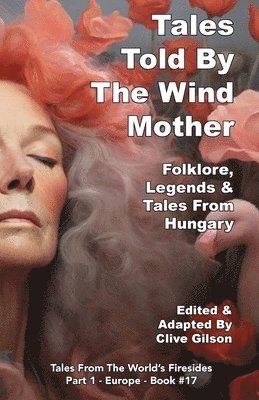
Tales Told By The Wind Mother
330 kr
Tillfälligt slut
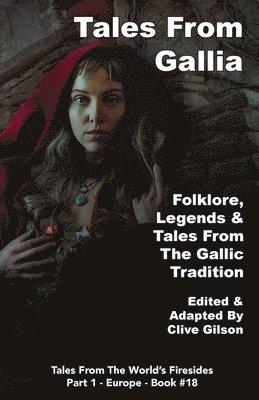
Tales From Gallia
333 kr
Tillfälligt slut
More Tales Of Snow & Ice
330 kr
Tillfälligt slut
Okaraxta - Tales from the Great Plains
330 kr
Tillfälligt slut