Clive L. Spash - Böcker
Visar alla böcker från författaren Clive L. Spash. Handla med fri frakt och snabb leverans.
10 produkter
10 produkter
748 kr
Skickas inom 10-15 vardagar
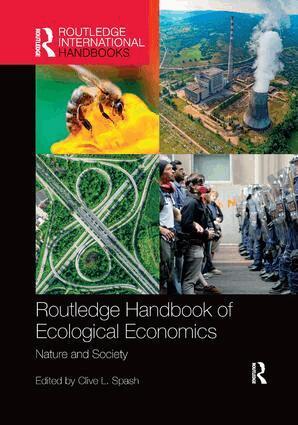
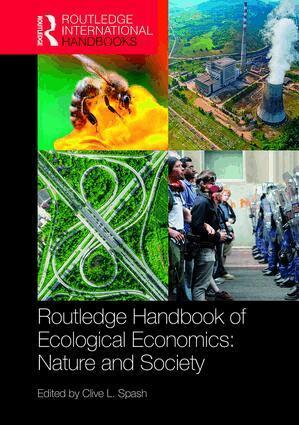
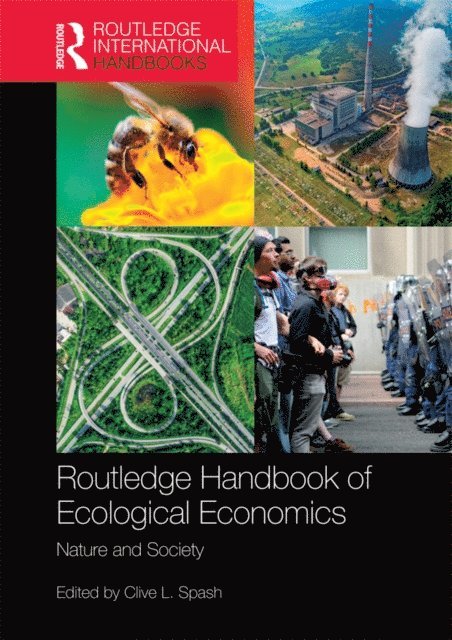
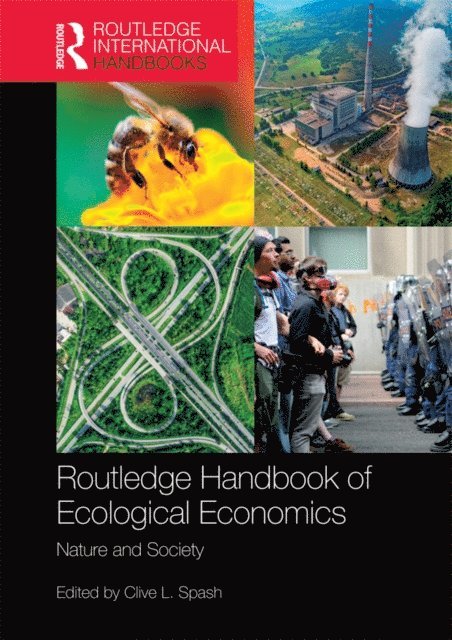
Since becoming formally established with an international academic society in the late 1980s, ecological economics has advanced understanding of the interactions between social and biophysical reality. It initially combined questioning of the basis of mainstream economics with a concern for environmental degradation and limits to growth, but has now advanced well beyond critique into theoretical, analytical and policy alternatives. Social ecological economics and transformation to an alternative future now form core ideas in an interdisciplinary approach combining insights from a range of disciplines including heterodox economics, political ecology, sociology, political science, social psychology, applied philosophy, environmental ethics and a range of natural sciences.This handbook, edited by a leading figure in the field, demonstrates the dynamism of ecological economics in a wide-ranging collection of state-of-the-art essays. Containing contributions from an array of international researchers who are pushing the boundaries of the field, the Routledge Handbook of Ecological Economics showcases the diversity of the field and points the way forward. A critical analytical perspective is combined with realism about how economic systems operate and their essential connection to the natural world and society. This provides a rich understanding of how biophysical reality relates to and integrates with social reality. Chapters provide succinct overviews of the literature covering a range of subject areas including: heterodox thought on the environment; society, power and politics, markets and consumption; value and ethics; science and society; methods for evaluation and policy analysis; policy challenges; and the future post-growth society. The rich contents dispel the myth of there being no alternatives to current economic thought and the political economy it supports.The Routledge Handbook of Ecological Economics provides a guide to the literature on ecological economics in an informative and easily accessible form. It is essential reading for those interested in exploring and understanding the interactions between the social, ecological and economic and is an important resource for those interested in fields such as: human ecology, political ecology, environmental politics, human geography, environmental management, environmental evaluation, future and transition studies, environmental policy, development studies and heterodox economics.
1 208 kr
Skickas inom 10-15 vardagar
3 280 kr
Skickas inom 10-15 vardagar
Since becoming formally established with an international academic society in the late 1980s, ecological economics has advanced understanding of the interactions between social and biophysical reality. It initially combined questioning of the basis of mainstream economics with a concern for environmental degradation and limits to growth, but has now advanced well beyond critique into theoretical, analytical and policy alternatives. Social ecological economics and transformation to an alternative future now form core ideas in an interdisciplinary approach combining insights from a range of disciplines including heterodox economics, political ecology, sociology, political science, social psychology, applied philosophy, environmental ethics and a range of natural sciences.This handbook, edited by a leading figure in the field, demonstrates the dynamism of ecological economics in a wide-ranging collection of state-of-the-art essays. Containing contributions from an array of international researchers who are pushing the boundaries of the field, the Routledge Handbook of Ecological Economics showcases the diversity of the field and points the way forward. A critical analytical perspective is combined with realism about how economic systems operate and their essential connection to the natural world and society. This provides a rich understanding of how biophysical reality relates to and integrates with social reality. Chapters provide succinct overviews of the literature covering a range of subject areas including: heterodox thought on the environment; society, power and politics, markets and consumption; value and ethics; science and society; methods for evaluation and policy analysis; policy challenges; and the future post-growth society. The rich contents dispel the myth of there being no alternatives to current economic thought and the political economy it supports.The Routledge Handbook of Ecological Economics provides a guide to the literature on ecological economics in an informative and easily accessible form. It is essential reading for those interested in exploring and understanding the interactions between the social, ecological and economic and is an important resource for those interested in fields such as: human ecology, political ecology, environmental politics, human geography, environmental management, environmental evaluation, future and transition studies, environmental policy, development studies and heterodox economics.
Foundations of Social Ecological Economics
The Fight for Revolutionary Change in Economic Thought
Inbunden, Engelska, 2024
1 194 kr
Skickas
This book explores radical dissent from orthodox mainstream economics, and sets out a theoretically grounded vision for the emerging paradigm of social ecological economics. At the heart of this paradigmatic shift lies an acknowledgement of the inextricable embeddedness of economies in biophysical reality and social structure. The struggle for this transformative vision unfolds through a critical examination of mainstream environmental thought, followed by a nuanced evaluation of contributions from Marxists, socialists, critical institutionalists, feminists and Post-Keynesians grappling with the urgent environmental crisis.Synthesising insights from these diverse and heterodox schools, the book navigates the philosophical underpinnings of science, embracing a critical realist approach that challenges not only mainstream economic thought but also eclectic pluralism, relativism and strong constructionism. The question of what constitutes revolutionary science is explored in light of works by Kuhn, Schumpeter and Neurath, emphasising the pivotal role of values and ideology in works from Marx to Gramsci.Building on these radical and philosophical foundations, the book articulates a preanalytic vision of social ecological economics, dismantling entrenched notions of growth and efficiency in favour of a framework centered on social provisioning and needs embedded in ethics. In a thought-provoking conclusion, the book applies its analytical lens to the multiple crises of modernity within industrialised capital-accumulating economies. An agenda for social ecological transformation toward diverse alternative economies emerges, providing a compelling call to action in the face of contemporary challenges.
Foundations of Social Ecological Economics
The Fight for Revolutionary Change in Economic Thought
Häftad, Engelska, 2025
356 kr
Skickas
This book explores radical dissent from orthodox mainstream economics, and sets out a theoretically grounded vision for the emerging paradigm of social ecological economics. At the heart of this paradigmatic shift lies an acknowledgement of the inextricable embeddedness of economies in biophysical reality and social structure. The struggle for this transformative vision unfolds through a critical examination of mainstream environmental thought, followed by a nuanced evaluation of contributions from Marxists, socialists, critical institutionalists, feminists and Post-Keynesians grappling with the urgent environmental crisis.Synthesising insights from these diverse and heterodox schools, the book navigates the philosophical underpinnings of science, embracing a critical realist approach that challenges not only mainstream economic thought but also eclectic pluralism, relativism and strong constructionism. The question of what constitutes revolutionary science is explored in light of works by Kuhn, Schumpeter and Neurath, emphasising the pivotal role of values and ideology in works from Marx to Gramsci.Building on these radical and philosophical foundations, the book articulates a preanalytic vision of social ecological economics, dismantling entrenched notions of growth and efficiency in favour of a framework centered on social provisioning and needs embedded in ethics. In a thought-provoking conclusion, the book applies its analytical lens to the multiple crises of modernity within industrialised capital-accumulating economies. An agenda for social ecological transformation toward diverse alternative economies emerges, providing a compelling call to action in the face of contemporary challenges.
1 718 kr
Skickas inom 7-10 vardagar
Economists are concerned by a wide range of environmental impacts from pollutants, as they affect human welfare and not just human health. This insightful book demonstrates how economic analysis can contribute to decision making in environmental policy and discusses the theoretical limitations of economic valuation.Through detailed case studies including land contamination and ecosystem damage, the expert contributors illustrate the range of methods economists currently employ to address and manage the impacts of pollutants, such as multiple criteria analysis, hedonic pricing and contingent valuation. They explore applications of the cost-benefit approach to the environment but also raise questions as to its continued role compared to alternative methods. By presenting the ongoing work of economists involved with environmental management the authors hope that understanding of typical economic practice can be enhanced and perhaps complemented by natural scientists working in the fields of ecotoxicology, epidemiology and ecology. The book also discusses how the sometimes difficult interaction between natural science and economic analysis can be managed.By adopting an international perspective and providing a critical overview of contemporary economic research into environmental pollution, this book will become essential reading for environmental economists, scientists and policymakers.
2 239 kr
Skickas inom 7-10 vardagar
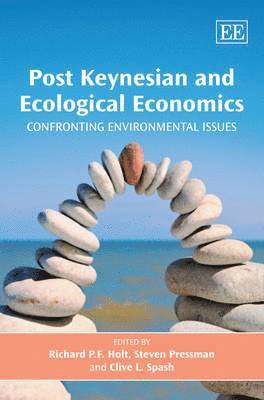
This book argues that mainstream economics, with its present methodological approach, is limited in its ability to analyze and develop adequate public policy to deal with environmental problems and sustainable development. Each chapter provides major insights into many of today's environmental problems such as global warming and sustainable growth.Building on the strengths and insights of Post Keynesian and ecological economics and incorporating cutting-edge work in economic complexity, bounded rationality and socio-economic dynamics, this book provides an interdisciplinary approach to deal with a broad range of environmental concerns. The contributors show how and where the two traditions share common ground concerning environmental problems and shed light on how the two schools can learn from one another. The book will be of great value to Post Keynesian and ecological economists as well as to those interested in new approaches to important global environmental issues.
1 821 kr
Skickas inom 7-10 vardagar
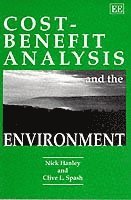
This lucid, up-to-date book takes a fresh look at the application of cost-benefit analysis (CBA) to environmental problems ranging from wildlife protection to global warming. Cost-Benefit Analysis and the Environment is structured into two parts. Part one provides a critical up-to-date account of the theory and practice of CBA as applied to the environment. Part two focuses on a number of specific case studies, in particular ozone damage to agricultural crops, wilderness land use, recreation and nitrate pollution. The application of CBA to the greenhouse effect is used to illustrate the limitations of the method. The book summarizes the major problems CBA faces in environmental application. This book will be highly relevant for the growing number of undergraduate and post-graduate courses in environmental economics and management, as well as being of interest both to academics researching in these areas, and to other professionals concerned with project appraisal and the environment.
531 kr
Skickas inom 7-10 vardagar
This lucid, up-to-date book takes a fresh look at the application of cost-benefit analysis (CBA) to environmental problems ranging from wildlife protection to global warming. Cost-Benefit Analysis and the Environment is structured into two parts. Part one provides a critical up-to-date account of the theory and practice of CBA as applied to the environment. Part two focuses on a number of specific case studies, in particular ozone damage to agricultural crops, wilderness land use, recreation and nitrate pollution. The application of CBA to the greenhouse effect is used to illustrate the limitations of the method. The book summarizes the major problems CBA faces in environmental application. This book will be highly relevant for the growing number of undergraduate and post-graduate courses in environmental economics and management, as well as being of interest both to academics researching in these areas, and to other professionals concerned with project appraisal and the environment.
2 174 kr
Skickas inom 7-10 vardagar
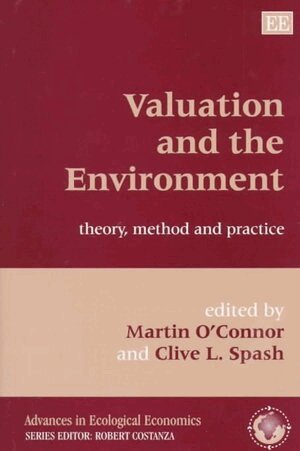
This major new book presents recent advances in the theory and practice of environmental valuation and resource management. Leading experts in the field present methodological and empirical evidence for applying valuation methods to ecological policy problems.The methodological contributions examine such themes as uncertainty, distributional conflict, positional analysis, weak comparability and the need for collective solutions to environmental problems. Case studies are incorporated to support these theoretical reflections. A number of empirical studies are used to demonstrate and evaluate valuation practices in a variety of institutional and policy settings. These range from international environmental issues such as climate change and transboundary atmospheric pollution, to species preservation and coastal ecosystem protection. The contributors conclude that effective approaches for the evaluation of environmental risks, degradation and benefits must be specifically designed as functions of institutional, social and ecological factors.Valuation and the Environment will be essential reading for students and scholars of environmental and ecological economics, environmental management and regulation, resource management and public policy.