Clive Spash - Böcker
Visar alla böcker från författaren Clive Spash. Handla med fri frakt och snabb leverans.
6 produkter
6 produkter
2 165 kr
Skickas inom 10-15 vardagar
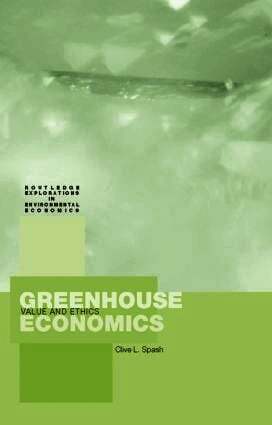
Examining one of the most crucial issues in the modern world: human induced climate change, here Clive Spash provides a refreshing interdisciplinary perspective, pulling together strands of natural science, economics and ethics. Described by John Gowdy as ‘the best exposition to date on the political economy of climate policy’, this remarkable volume poses serious questions and gives intelligent answers. The issues it addresses are relevant to a range of environmental problems, and it covers themes such as:How do we deal with uncertainty and ignorance?What roles do science and economics play in policy formation?To what extent should individuals take responsibility for the society in which they and their descendants live?By rigorously examining international and governmental sources, and key contemporary issues, Spash provides an up-to-date and informative analysis. A well-organized study (including a glossary and helpful acronym list), this book will be of strong interest to students and academics in the fields of ecological and environmental economics, and is essential reading for all those to whom climate change is a professional or personal concern.
2 647 kr
Skickas inom 10-15 vardagar
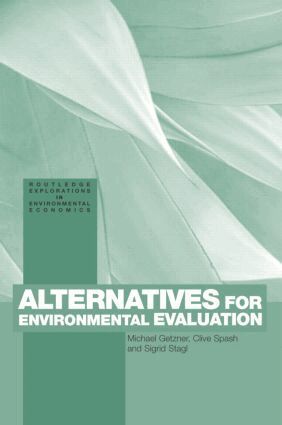
Methods for raising awareness of how human’s value the environment range from monetary valuation through to greater public participation in decisions. In this book a group of international experts explore innovative alternatives which are critically evaluated and compared. Lessons are drawn from both the successes and failures of different approaches. Case studies address a wide variety of cutting edge environmental problems from agro-forestry and wetlands to climate change, biodiversity and genetically modified organisms.
824 kr
Skickas inom 10-15 vardagar
Examining one of the most crucial issues in the modern world: human induced climate change, here Clive Spash provides a refreshing interdisciplinary perspective, pulling together strands of natural science, economics and ethics. Described by John Gowdy as ‘the best exposition to date on the political economy of climate policy’, this remarkable volume poses serious questions and gives intelligent answers. The issues it addresses are relevant to a range of environmental problems, and it covers themes such as:How do we deal with uncertainty and ignorance?What roles do science and economics play in policy formation?To what extent should individuals take responsibility for the society in which they and their descendants live?By rigorously examining international and governmental sources, and key contemporary issues, Spash provides an up-to-date and informative analysis. A well-organized study (including a glossary and helpful acronym list), this book will be of strong interest to students and academics in the fields of ecological and environmental economics, and is essential reading for all those to whom climate change is a professional or personal concern.
694 kr
Skickas inom 10-15 vardagar
Environmental cost-benefit analysis was developed by economists in the belief that monetary valuation of the environmental repercussions of economic activity is essential if the "environment " stands any chance of being included in government and business decisions.This volume examines the limitations of this monetary approach, and considers the alternatives. Three broad angles from which to view environmental values are presented: applying social psychology concepts which challenge standard approaches; introducing multidimensional and non-monetary techniques; and examining vested interest group and citizen participation in processes of environmental valuation. Combinations of these approaches are also covered.The contributions presented are a valuable resource for both environmental and ecological economists. This authoritative book will also prove useful for those with a general interest in the environment, including policy-makers and non-governmental organizations.
12 488 kr
Skickas inom 10-15 vardagar
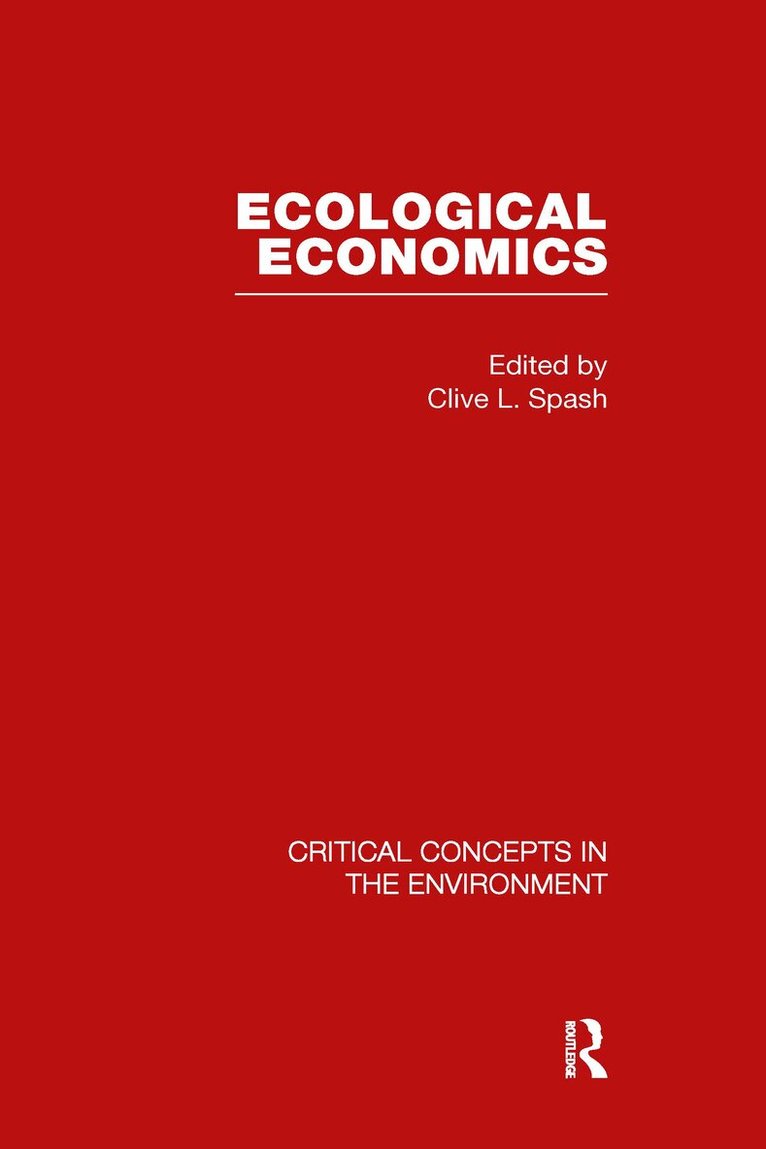
Edited by a leading scholar in the field, this new four-volume Routledge Major Work brings together canonical and cutting-edge research in ecological economics. In tracing both the development of thought in the field, as well as exploring the most recent scholarship, diverse elements of the rapidly expanding literature are brought together for the first time, providing an overview of—and vision for—ecological economics.While the roots of ecological economics can be traced back to the late 1800s the modern movement developed from diverse writings in the following century. The field became fully established and institutionalized in the late 1980s. This collection shows how research questioning the basis of mainstream economics combined with a concern for environmental degradation and limits to growth to produce ecological economics. There are also many academics who, while not calling themselves ecological economists, have ideas which are directly of relevance. The common interest, as shown especially in Parts 1–3 of the collection, has been to move beyond standard economic approaches and towards a new political economy which takes note of learning in other sciences.Besides identifying and collecting seminal works, the editor has also chosen pieces for their ability cogently to summarize and explain developments and ongoing thinking. Ecological economics is now a vibrant and dynamic field, but it has to date lacked a coherent guide to its rapidly expanding literature. Aided by the collection’s thematic organization and the editor’s newly written general and volume introductions, this Routledge Major Work will enable users to make sense of the wide range of approaches, theories, and concepts that have informed research in ecological economics to date. It is an essential collection destined to be valued as a vital research resource by all scholars and students of the subject.
1 069 kr
Skickas inom 10-15 vardagar
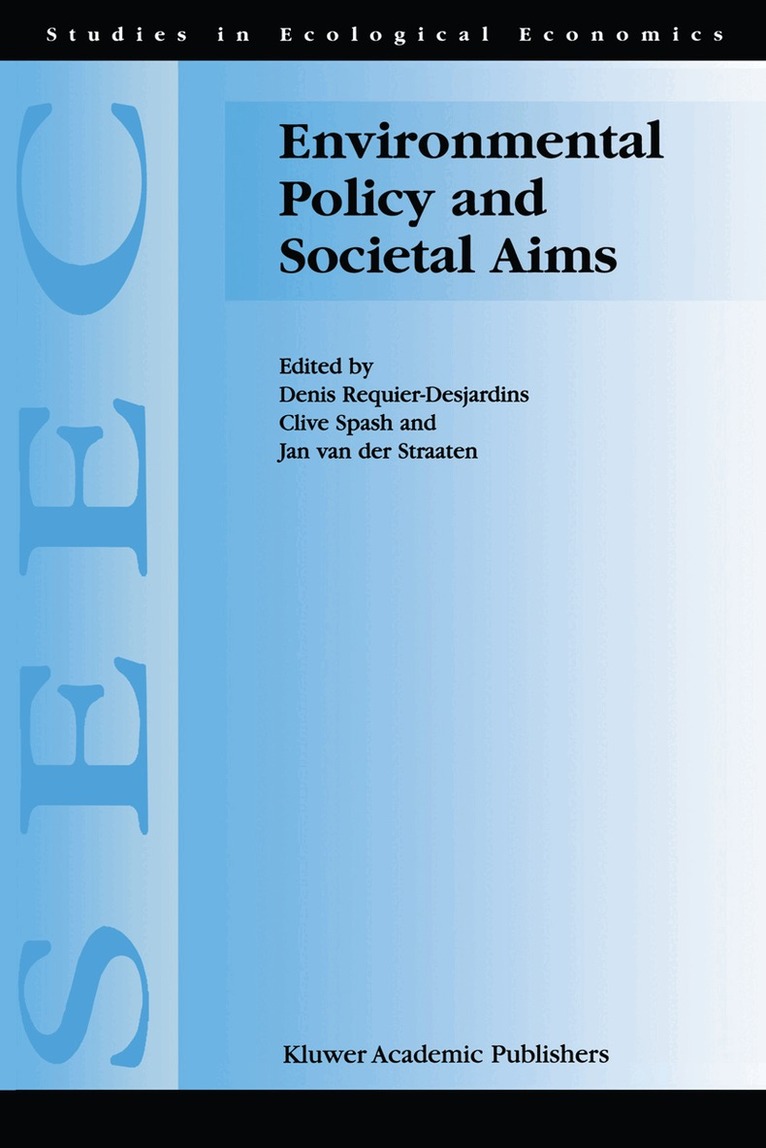
Sustainable development and environmental improvement are often regarded as intrinsically valuable a priori. As a result, the policies by which these goals are to be attained is often inadequately scrutinised. In this book, ecological economics addresses the institutional and policymaking aspects of environmental problems, thus covering a broad socioeconomic research agenda, in contradistinction to mainstream economic approaches. The approach advocated here is open to differing viewpoints on the same issue, sees conflict resolution as a social process, and accepts the need for research into political-economic issues, according a prominent position to the aims of society itself. An in-depth analysis of the policy process is followed in order to understand the pitfalls and barriers that will confront society on the road to sustainable development. Readership: The broad approach advocated will appeal to all involved in environmental problems - decision makers, NGO members, and academic scholars.