Colin McArthur – författare
Visar alla böcker från författaren Colin McArthur. Handla med fri frakt och snabb leverans.
7 produkter
7 produkter
E-bok
PDF, Engelska, 20032 015 kr
Läs direkt efter köp
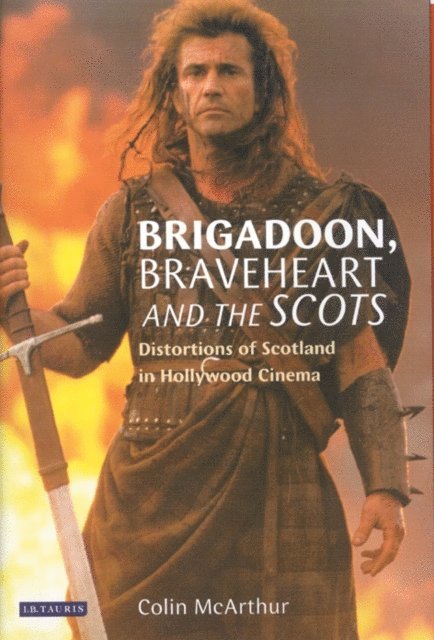
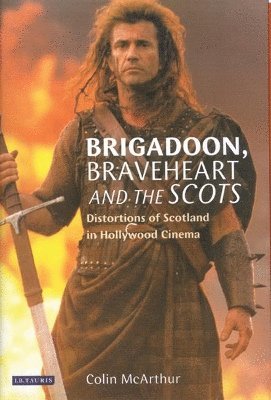
The films "Brigadoon" and "Braveheart" have an enormous resonance both for Scots throughout the world and the wide audience of non-Scots for whom such films provide general impressions of "Scottishness". This provocative book discusses the films' representations of Scotland and the Scots, looking at that cluster of images and stories whereby Scotland is (mis)recognized and yet often comes to be "known". Colin McArthur explores "Brigadoon" and documents the contempt the film has elicited, particularly from the Scots intelligentsia. He succumbs to "Brigadoon's" charm, but finds no such mitigating features in "Braveheart". Tracing the film's appropriation by political, touristic and sporting figures, he argues that, far from being "about" Scottish history, it is primarily "about" Hollywood and its cinematic traditions. He looks at the way film distorts history and examines "Braveheart's" sinister appeal to the proto-fascist psyche.
E-bok
PDF, Engelska, 2002357 kr
Läs direkt efter köp
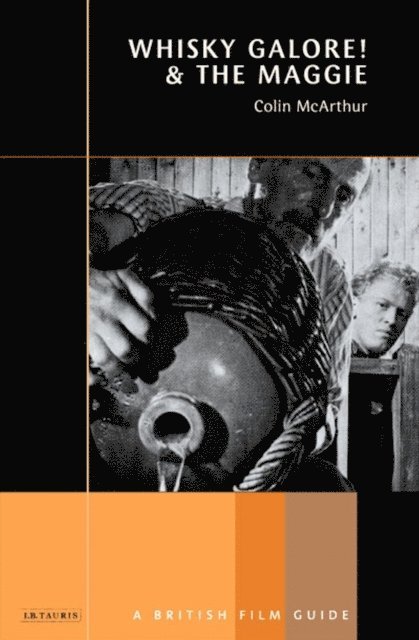
Alexander Mackendrick's first feature film "Whisky Galore!" (1949), based on the novel by Compton Mackenzie, pits the crafty islanders of Todday against the Customs and Excise men trying to halt their illegal consumption of whisky. His film "The Maggie", the adventures of a decrepit River Clyde cargo boat, was released in 1953. Both films offer distinctive representations of Scotland and the Scots, a theme that Colin McArthur pursues in this lively guide to the two films. He explores the wider context of a Britain experiencing and emerging from post-war austerity, as well as the role of Ealing Studios, for which Mackendrick made both films. McArthur examines the tastes and perceptions of reviewers and audiences, both British and American, at the time of the films' release, as well as changed contemporary perspectives. He pays particular attention to the career of Alexander Mackendrick and offers the controversial argument that while their representations of "Scottishness" may be suspect, the films themselves are of great artistic integrity and accomplishment.
Inbunden, Engelska, 2024
2 447 kr
Skickas inom 3-6 vardagar
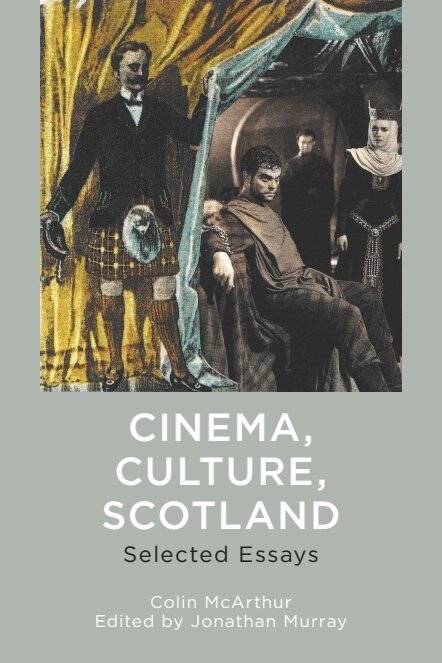
This book anthologises selected key works from the oeuvre of Colin McArthur, a pioneering figure within Anglophone Film and Scottish cultural studies since the 1960s.Collecting together thirty-seven essays written between 1966 and 2022, twenty-one of which were hitherto out-of-print, the book identifies and illustrates the central strands of scholarly interest that have defined one of British Film Studies and Scottish Cultural Studies' most influential careers: critical investigation and legitimisation of mid-twentieth-century Hollywood cinema and popular American film genres; the cinematic representation of Scotland and the gradual development of a Scottish film production sector; and Scotland's status as a distinctive visual and material cultural signifier within a diverse range of international popular cultures from the eighteenth century to the present.
Häftad, Engelska, 2025
620 kr
Skickas inom 3-6 vardagar
This book anthologises selected key works from the oeuvre of Colin McArthur, a pioneering figure within Anglophone Film and Scottish cultural studies since the 1960s.Collecting together thirty-seven essays written between 1966 and 2022, twenty-one of which were hitherto out-of-print, the book identifies and illustrates the central strands of scholarly interest that have defined one of British Film Studies and Scottish Cultural Studies' most influential careers: critical investigation and legitimisation of mid-twentieth-century Hollywood cinema and popular American film genres; the cinematic representation of Scotland and the gradual development of a Scottish film production sector; and Scotland's status as a distinctive visual and material cultural signifier within a diverse range of international popular cultures from the eighteenth century to the present.
E-bok
Engelska, 2019186 kr
Läs direkt efter köp
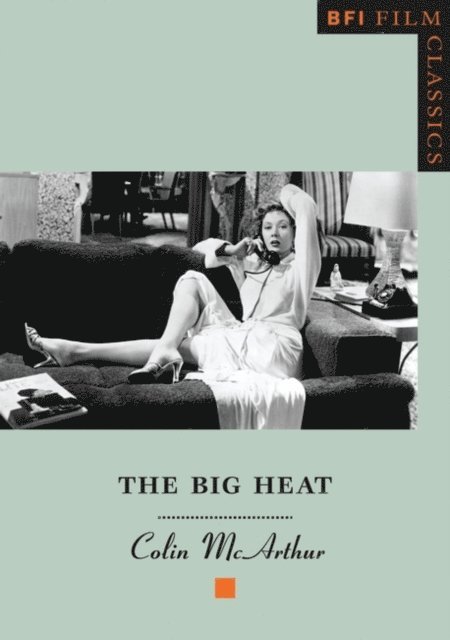
The Big Heat first appeared in 1953, towards the end of the film noir cycle that had begun in the early ''40s. It was greeted in the United States and Britain as a successful but modest product of the Hollywood system, ''slickly written and directed'' in the words of one critic. Only the extreme violence, as in the infamous scalding coffee scene, was singled out for special mention. Yet by the time the film was reissued in Britain in 1988 it had achieved undisputed classic status. How had this transformation come about? Colin McArthur takes ''The Big Heat ''as a case study in film criticism. He examines the film''s changing critical fortunes under the influence of the so called auteur theory, and shows how other intellectual currents led to a reassessment of Lang''s work in the 1970s. McArthur provides his own perceptive analysis of the film in the light of these revolutions in film criticism.
E-bok
PDF, Engelska, 2019189 kr
Läs direkt efter köp
The Big Heat first appeared in 1953, towards the end of the film noir cycle that had begun in the early ''40s. It was greeted in the United States and Britain as a successful but modest product of the Hollywood system, ''slickly written and directed'' in the words of one critic. Only the extreme violence, as in the infamous scalding coffee scene, was singled out for special mention. Yet by the time the film was reissued in Britain in 1988 it had achieved undisputed classic status. How had this transformation come about? Colin McArthur takes ''The Big Heat ''as a case study in film criticism. He examines the film''s changing critical fortunes under the influence of the so called auteur theory, and shows how other intellectual currents led to a reassessment of Lang''s work in the 1970s. McArthur provides his own perceptive analysis of the film in the light of these revolutions in film criticism.
Inbunden, Engelska, 2003
1 830 kr
Skickas inom 10-15 vardagar
The films "Brigadoon" and "Braveheart" have an enormous resonance both for Scots throughout the world and the wide audience of non-Scots for whom such films provide general impressions of "Scottishness". This provocative book discusses the films' representations of Scotland and the Scots, looking at that cluster of images and stories whereby Scotland is (mis)recognized and yet often comes to be "known". Colin McArthur explores "Brigadoon" and documents the contempt the film has elicited, particularly from the Scots intelligentsia. He succumbs to "Brigadoon's" charm, but finds no such mitigating features in "Braveheart". Tracing the film's appropriation by political, touristic and sporting figures, he argues that, far from being "about" Scottish history, it is primarily "about" Hollywood and its cinematic traditions. He looks at the way film distorts history and examines "Braveheart's" sinister appeal to the proto-fascist psyche.