Colin Murray Parkes - Böcker
Visar alla böcker från författaren Colin Murray Parkes. Handla med fri frakt och snabb leverans.
13 produkter
13 produkter
152 kr
Skickas
The loss of a loved one is one of the most painful experiences that most of us will ever have to face in our lives. This book recognises that there is no single solution to the problems of bereavement but that an understanding of grief can help the bereaved to realise that they are not alone in their experience. This new edition has been revised and extended to take into account recent research findings on both sides of the Atlantic. Parkes and Prigerson include additional information about the different circumstances of bereavement including traumatic loss, disasters, and complicated grief, as well as providing details on how social, religious, and cultural influences determine how we grieve.Bereavement provides guidance on preparing for the loss of a loved one, and coping after they've gone. It also discusses how to identify the minority in whom bereavement may lead to impairment of physical and/or mental health and how to ensure they get the help they need. This classic text will continue to be of value to the bereaved themselves, as well as the professionals and friends who seek to help and understand them.
599 kr
Skickas inom 10-15 vardagar
To explain and understand the patterns that attachment play in psychiatric and social problems a body of knowledge has sprung up which owes much to the pioneering work of the late John Bowlby. This book draws together recent theoretical contributions, research findings and clinical data from psychiatrists, psychologists, sociologists and ethologists from Britain, America and Europe.
984 kr
Skickas inom 10-15 vardagar
Loving and grieving are two sides of the same coin: we cannot have one without risking the other. Only by understanding the nature and pattern of loving can we begin to understand the problems of grieving. Conversely, the loss of a loved person can teach us much about the nature of love. Love and Loss, the result of a lifetime's work, has important implications for the study of attachment and bereavement. In this volume, Colin Murray Parkes reports his innovative research that enables us to bring together knowledge of childhood attachments and problems of bereavement, resulting in a new way of thinking about love, bereavement and other losses. Areas covered include:patterns of attachment and griefloss of a parent, child or spouse in adult lifesocial isolation and support.The book concludes by looking at disorders of attachment and considering bereavement in terms of its implications on love, loss, and change in a wider context.Illuminating the structure and focus of thinking about love and loss, this book sheds light on a wide range of psychological issues. It will be essential reading for professionals working with bereavement, as well as graduate students of psychology, psychiatry, and sociology.
1 115 kr
Skickas inom 10-15 vardagar
The loss of a loved one is one of the most painful experiences that most of us will ever have to face in our lives. This book recognises that there is no single solution to the problems of bereavement but that an understanding of grief can help the bereaved to realise that they are not alone in their experience.Long recognised as the most authoritative work of its kind, this new edition has been revised and extended to take into account recent research findings on both sides of the Atlantic. Parkes and Prigerson include additional information about the different circumstances of bereavement including traumatic losses, disasters, and complicated grief, as well as providing details on how social, religious, and cultural influences determine how we grieve.Bereavement provides guidance on preparing for the loss of a loved one, and coping after they have gone. It also discusses how to identify the minority in whom bereavement may lead to impairment of physical and/or mental health and how to ensure they get the help they need. This classic text will continue to be of value to the bereaved themselves, as well as the professionals and friends who seek to help and understand them.
551 kr
Skickas inom 10-15 vardagar
Loving and grieving are two sides of the same coin: we cannot have one without risking the other. Only by understanding the nature and pattern of loving can we begin to understand the problems of grieving. Conversely, the loss of a loved person can teach us much about the nature of love. Love and Loss, the result of a lifetime's work, has important implications for the study of attachment and bereavement. In this volume, Colin Murray Parkes reports his innovative research that enables us to bring together knowledge of childhood attachments and problems of bereavement, resulting in a new way of thinking about love, bereavement and other losses. Areas covered include:patterns of attachment and griefloss of a parent, child or spouse in adult lifesocial isolation and support.The book concludes by looking at disorders of attachment and considering bereavement in terms of its implications on love, loss, and change in a wider context.Illuminating the structure and focus of thinking about love and loss, this book sheds light on a wide range of psychological issues. It will be essential reading for professionals working with bereavement, as well as graduate students of psychology, psychiatry, and sociology.
1 953 kr
Skickas inom 10-15 vardagar
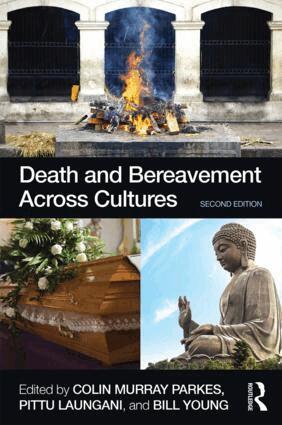
All societies have their own customs and beliefs surrounding death. In the West, traditional ways of mourning are disappearing, and although Western science has had a major impact on how people die, it has taught us little about the way to die or to grieve. Many whose work brings them into contact with the dying and the bereaved from Western and other cultures are at a loss to know how to offer appropriate and sensitive support.Death and Bereavement Across Cultures 2nd Edition is a handbook which meets the needs of doctors, nurses, social workers, hospital chaplains, counsellors and volunteers caring for patients with life-threatening illness and their families before and after bereavement. It is a practical guide explaining the religious and other differences commonly met with in multi-cultural societies when someone is dying or bereaved. In doing so readers may be surprised to find how much we can learn from other cultures about our own attitudes and assumptions about death. Written by international experts in the field the book:Describes the rituals and beliefs of major world religionsExplains their psychological and historical contextShows how customs are changed by contact with the WestConsiders the implications for the futureThe second edition includes new chapters that: explore how members of the health care professions perform roles formerly conducted by priests and shamans can cross the cultural gaps between different cultures and religions; consider the relevance of attitudes and assumptions about death for our understanding of religious and nationalist extremism and its consequences; discuss the Buddhist, Islamic and Christian ways of death.Death raises questions which science cannot answer. Whatever our personal beliefs we can all gain from learning how others view these ultimate problems. This book explores the richness of mourning traditions around the world with the aim of increasing the sensitivity and understanding which we all bring to the issue of death and bereavement.
617 kr
Skickas inom 10-15 vardagar
All societies have their own customs and beliefs surrounding death. In the West, traditional ways of mourning are disappearing, and although Western science has had a major impact on how people die, it has taught us little about the way to die or to grieve. Many whose work brings them into contact with the dying and the bereaved from Western and other cultures are at a loss to know how to offer appropriate and sensitive support.Death and Bereavement Across Cultures 2nd Edition is a handbook which meets the needs of doctors, nurses, social workers, hospital chaplains, counsellors and volunteers caring for patients with life-threatening illness and their families before and after bereavement. It is a practical guide explaining the religious and other differences commonly met with in multi-cultural societies when someone is dying or bereaved. In doing so readers may be surprised to find how much we can learn from other cultures about our own attitudes and assumptions about death. Written by international experts in the field the book:Describes the rituals and beliefs of major world religionsExplains their psychological and historical contextShows how customs are changed by contact with the WestConsiders the implications for the futureThe second edition includes new chapters that: explore how members of the health care professions perform roles formerly conducted by priests and shamans can cross the cultural gaps between different cultures and religions; consider the relevance of attitudes and assumptions about death for our understanding of religious and nationalist extremism and its consequences; discuss the Buddhist, Islamic and Christian ways of death.Death raises questions which science cannot answer. Whatever our personal beliefs we can all gain from learning how others view these ultimate problems. This book explores the richness of mourning traditions around the world with the aim of increasing the sensitivity and understanding which we all bring to the issue of death and bereavement.
1 953 kr
Skickas inom 10-15 vardagar
In the course of a long career Colin Murray Parkes, one of the most important and influential psychiatrists working in the field of bereavement and loss, has produced a body of work which can be considered truly ground-breaking. His early studies involved working alongside John Bowlby in the development of attachment theory and led to his pioneering work on the Harvard Bereavement Project in the USA and at the new St Christopher's Hospice in Britain. Parkes focussed on two psychological processes, grief, which is the painful search for a lost person or object of attachment, and transition, which is the process of changing the assumptive world in ways that ensure that nothing worthwhile need be completely lost. Out of the struggle to resolve the conflict between holding on and letting go of the old assumptions there gradually emerges a new and more mature model of the world. These ideas throw light on a wide range of life change events and have proved useful to people faced with bereavement, physical disabilities, dying, disasters and even terrorist attacks. In recent years he has supported humanitarian efforts in countries including Rwanda, India and Japan. Parkes’ career has spanned several decades and touched countless lives. In The Price of Love, Parkes presents papers which span the full extent of his career, covering and linking together our understanding of the five major areas of his work:- Love and grief;- Crisis, trauma and transition;- Death and dying;- Disasters;- War and terrorism: breaking the cycle.The papers included here have been carefully selected and annotated to show how Parkes’ thinking has developed during a career as researcher, practitioner and educator. In each section of the book psychological and social causes are paired with consequences and interventions (both preventive and therapeutic) and explored from Western and cross-cultural perspectives, all with Parkes’ customary clarity and compassion.This unique collection of papers will prove invaluable to psychologists, psychiatrists, palliative care staff, counsellors and students, as well as those studying international conflict and working with the bereaved.
Responses to Terrorism
Can psychosocial approaches break the cycle of violence?
Inbunden, Engelska, 2013
1 390 kr
Skickas inom 10-15 vardagar
Why do responses to terrorist attacks often perpetuate cycles of deadly violence?Can an understanding of the psychology of these cycles help us to break them?Drawing on clinical experience of the care of people and communities affected by violence and disasters and on advances in cognitive and dynamic psychology, attachment theory, group psychology and thanatology, this ground-breaking work by a prominent and varied array of contributors casts light on the causes of terrorism, the reasons why responses to deadly attacks easily give rise to or maintain cycles of violence and some ways to prevent and interrupt these cycles.Using the violence in Northern Ireland and Rwanda as case studies throughout, Part 1, The Context of Terrorism, looks at the psychological and social influences behind extremism, terrorism and conflict. Part 2, Reponses to a Terrorist Attack, examines the responses that can feed a cycle of violence and assesses a range of approaches for their success in ending violence. Part 3, Breaking the Cycle, looks in depth at specific environments, influences and changes that can affect how violence can be prevented or mitigated, including the role of schools and the media and an examination of how peace processes were carried out in Northern Ireland and Rwanda. The book works to demonstrate how psychological responses to a terror attack can trigger unstable emotional responses and override judgement and to identify the five key points in a cycle of violence where change, for better or for worse, is possible.Ideal for psychiatrists, thanatologists, palliative care and bereavement staff, politicians and journalists as well as anyone with an interest in terrorism and its causes, this is a thought-provoking and accessible work on a highly topical subject.
Responses to Terrorism
Can psychosocial approaches break the cycle of violence?
Häftad, Engelska, 2013
428 kr
Skickas inom 10-15 vardagar
Why do responses to terrorist attacks often perpetuate cycles of deadly violence?Can an understanding of the psychology of these cycles help us to break them?Drawing on clinical experience of the care of people and communities affected by violence and disasters and on advances in cognitive and dynamic psychology, attachment theory, group psychology and thanatology, this ground-breaking work by a prominent and varied array of contributors casts light on the causes of terrorism, the reasons why responses to deadly attacks easily give rise to or maintain cycles of violence and some ways to prevent and interrupt these cycles.Using the violence in Northern Ireland and Rwanda as case studies throughout, Part 1, The Context of Terrorism, looks at the psychological and social influences behind extremism, terrorism and conflict. Part 2, Reponses to a Terrorist Attack, examines the responses that can feed a cycle of violence and assesses a range of approaches for their success in ending violence. Part 3, Breaking the Cycle, looks in depth at specific environments, influences and changes that can affect how violence can be prevented or mitigated, including the role of schools and the media and an examination of how peace processes were carried out in Northern Ireland and Rwanda. The book works to demonstrate how psychological responses to a terror attack can trigger unstable emotional responses and override judgement and to identify the five key points in a cycle of violence where change, for better or for worse, is possible.Ideal for psychiatrists, thanatologists, palliative care and bereavement staff, politicians and journalists as well as anyone with an interest in terrorism and its causes, this is a thought-provoking and accessible work on a highly topical subject.
712 kr
Skickas inom 10-15 vardagar
In the course of a long career Colin Murray Parkes, one of the most important and influential psychiatrists working in the field of bereavement and loss, has produced a body of work which can be considered truly ground-breaking. His early studies involved working alongside John Bowlby in the development of attachment theory and led to his pioneering work on the Harvard Bereavement Project in the USA and at the new St Christopher's Hospice in Britain. Parkes focussed on two psychological processes, grief, which is the painful search for a lost person or object of attachment, and transition, which is the process of changing the assumptive world in ways that ensure that nothing worthwhile need be completely lost. Out of the struggle to resolve the conflict between holding on and letting go of the old assumptions there gradually emerges a new and more mature model of the world. These ideas throw light on a wide range of life change events and have proved useful to people faced with bereavement, physical disabilities, dying, disasters and even terrorist attacks. In recent years he has supported humanitarian efforts in countries including Rwanda, India and Japan. Parkes’ career has spanned several decades and touched countless lives. In The Price of Love, Parkes presents papers which span the full extent of his career, covering and linking together our understanding of the five major areas of his work:- Love and grief;- Crisis, trauma and transition;- Death and dying;- Disasters;- War and terrorism: breaking the cycle.The papers included here have been carefully selected and annotated to show how Parkes’ thinking has developed during a career as researcher, practitioner and educator. In each section of the book psychological and social causes are paired with consequences and interventions (both preventive and therapeutic) and explored from Western and cross-cultural perspectives, all with Parkes’ customary clarity and compassion.This unique collection of papers will prove invaluable to psychologists, psychiatrists, palliative care staff, counsellors and students, as well as those studying international conflict and working with the bereaved.
1 703 kr
Skickas inom 10-15 vardagar
To explain and understand the patterns that attachment play in psychiatric and social problems a body of knowledge has sprung up which owes much to the pioneering work of the late John Bowlby. This book draws together recent theoretical contributions, research findings and clinical data from psychiatrists, psychologists, sociologists and ethologists from Britain, America and Europe.
480 kr
Skickas inom 7-10 vardagar
The book covers both caring for the terminally ill and the 'actual' bereavement, thus providing guidance on the whole process of counselling patients and their families. Case studies include examples from cancer, AIDS, suicide , murder and fatal accidents. Problems counsellors may face in their work are discussed and a chapter is devoted to the needs of the counsellor themselves.