Colin Rennie – författare
1 710 kr
Skickas inom 10-15 vardagar
728 kr
Skickas inom 10-15 vardagar
4 542 kr
Läs direkt efter köp
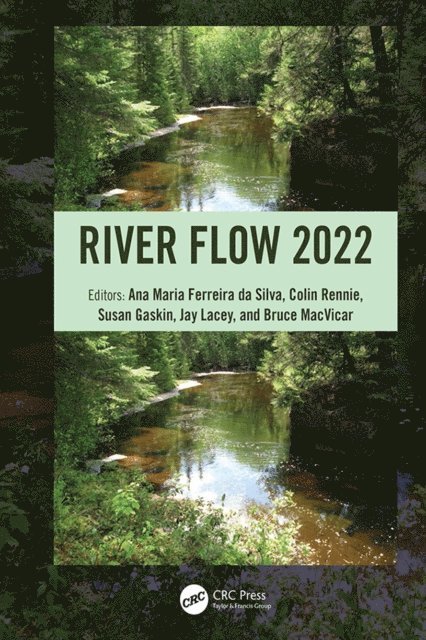
River Flow 2022 includes the keynote lecture and contributed papers presented at River Flow 2022, the 11th International Conference on Fluvial Hydraulics (8-10 November 2022, Kingston and Ottawa, Canada; held virtually).
River Flow 2022 provides an overview of the latest experimental, theoretical and computational findings on fundamental river flow and transport processes, river morphology and morphodynamics, while covering also issues related to the effects of hydraulic structures on flow regime, river morphology and ecology; sustainable river engineering practices (including stream restoration and re-naturalization); and effects of climate change including extreme flood events. The book presents the state-of-the-art in river research and engineering, and is aimed at academics and practitioners in hydraulics, hydrology and environmental engineering.
4 542 kr
Läs direkt efter köp
River Flow 2022 includes the keynote lecture and contributed papers presented at River Flow 2022, the 11th International Conference on Fluvial Hydraulics (8-10 November 2022, Kingston and Ottawa, Canada; held virtually).
River Flow 2022 provides an overview of the latest experimental, theoretical and computational findings on fundamental river flow and transport processes, river morphology and morphodynamics, while covering also issues related to the effects of hydraulic structures on flow regime, river morphology and ecology; sustainable river engineering practices (including stream restoration and re-naturalization); and effects of climate change including extreme flood events. The book presents the state-of-the-art in river research and engineering, and is aimed at academics and practitioners in hydraulics, hydrology and environmental engineering.
5 708 kr
Skickas inom 5-8 vardagar
2 435 kr
Skickas inom 10-15 vardagar
844 kr
Läs direkt efter köp
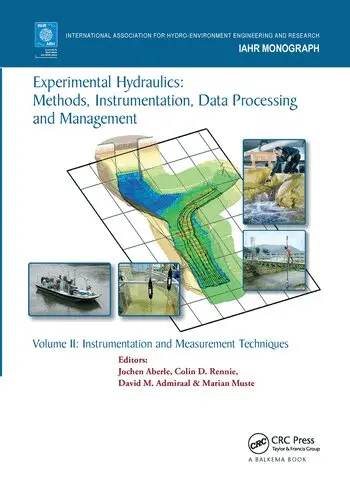
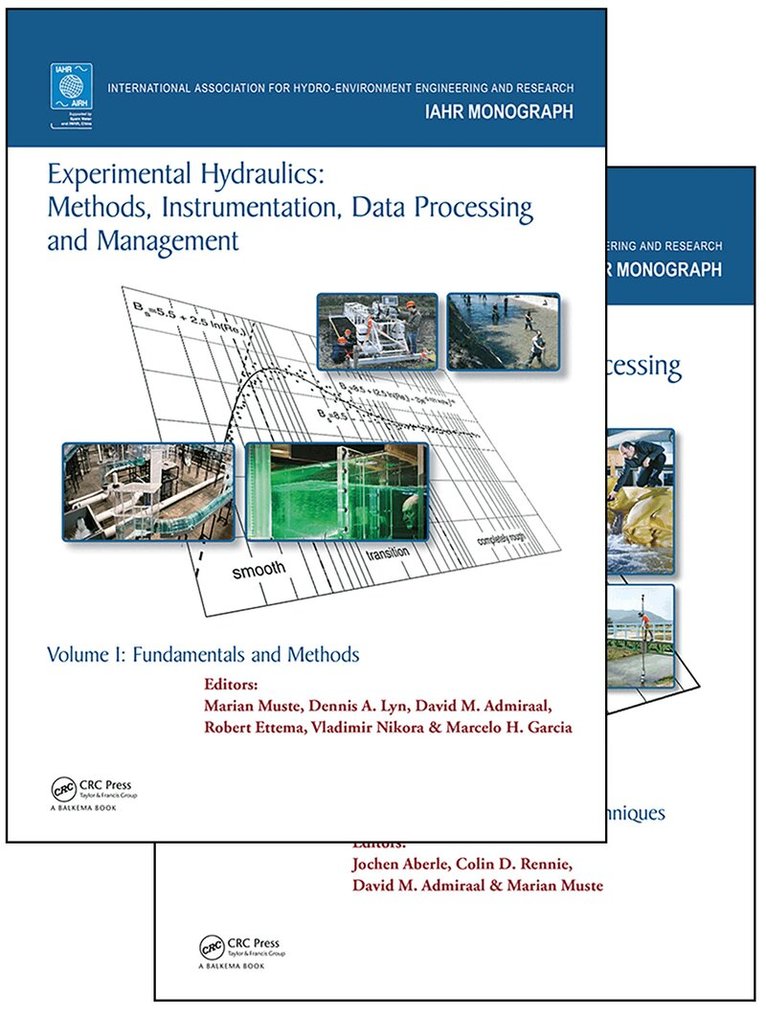
This is the second volume of a two-volume guide to designing, conducting and interpreting laboratory and field experiments in a broad range of topics associated with hydraulic engineering. Specific guidance is provided on methods and instruments currently used in experimental hydraulics, with emphasis on new and emerging measurement technologies and methods of analysis. Additionally, this book offers a concise outline of essential background theory, underscoring the intrinsic connection between theory and experiments. This book is much needed, as experimental hydraulicians have had to refer to guidance scattered in scientific papers or specialized monographs on essential aspects of laboratory and fieldwork practice. The book is the result of the first substantial effort in the community of hydraulic engineering to describe in one place all the components of experimental hydraulics. Included is the work of a team of more than 45 professional experimentalists, who explore innovative approaches to the vast array of experiments of differing complexity encountered by today’s hydraulic engineer, from laboratory to field, from simple but well-conceived to complex and well-instrumented. The style of this book is intentionally succinct, making frequent use of convenient summaries, tables and examples to present information. All researchers, practitioners, and students conducting or evaluating experiments in hydraulics will find this book useful.
844 kr
Läs direkt efter köp
This is the second volume of a two-volume guide to designing, conducting and interpreting laboratory and field experiments in a broad range of topics associated with hydraulic engineering. Specific guidance is provided on methods and instruments currently used in experimental hydraulics, with emphasis on new and emerging measurement technologies and methods of analysis. Additionally, this book offers a concise outline of essential background theory, underscoring the intrinsic connection between theory and experiments. This book is much needed, as experimental hydraulicians have had to refer to guidance scattered in scientific papers or specialized monographs on essential aspects of laboratory and fieldwork practice. The book is the result of the first substantial effort in the community of hydraulic engineering to describe in one place all the components of experimental hydraulics. Included is the work of a team of more than 45 professional experimentalists, who explore innovative approaches to the vast array of experiments of differing complexity encountered by today’s hydraulic engineer, from laboratory to field, from simple but well-conceived to complex and well-instrumented. The style of this book is intentionally succinct, making frequent use of convenient summaries, tables and examples to present information. All researchers, practitioners, and students conducting or evaluating experiments in hydraulics will find this book useful.