Committee on Geography – författare
617 kr
Läs direkt efter köp
698 kr
Läs direkt efter köp
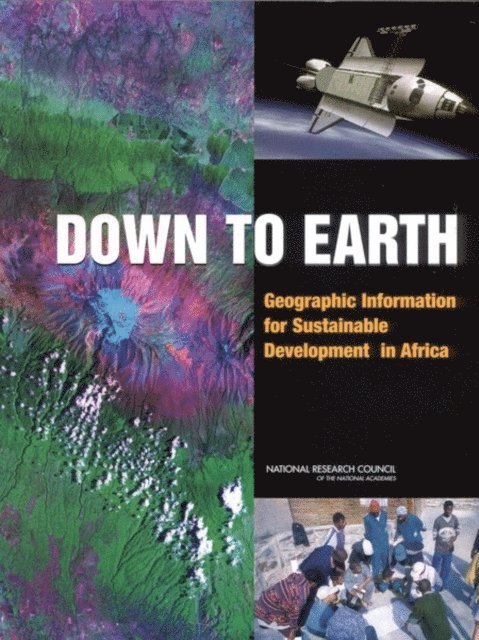
In 1992, world leaders adopted Agenda 21, the work program of the 1992 U.N. Conference on Environment and Development. This landmark event provided a political foundation and action items to facilitate the global transition toward sustainable development. The international community marked the tenth anniversary of this conference in Johannesburg, South Africa, in August 2002. Down to Earth, a component of the U.S. State Department''s "Geographic Information for Sustainable Development" project for the World Summit, focuses on sub-Saharan Africa with examples drawn from case-study regions where the U.S. Agency for International Development and other agencies have broad experience. Although African countries are the geographic focus of the study, the report has broader applicability. Down to Earth summarizes the importance and applicability of geographic data for sustainable development and draws on experiences in African countries to examine how future sources and applications of geographic data could provide reliable support to decision-makers as they work towards sustainable development. The committee emphasizes the potential of new technologies, such as satellite remote-sensing systems and geographic information systems, that have revolutionized data collection and analysis over the last decade.
795 kr
Läs direkt efter köp
"Quality of life"..."livability"..."sense of place." Communities across America are striving to define these terms and to bring them to life, as they make decisions about transportation systems and other aspects of planning and development.
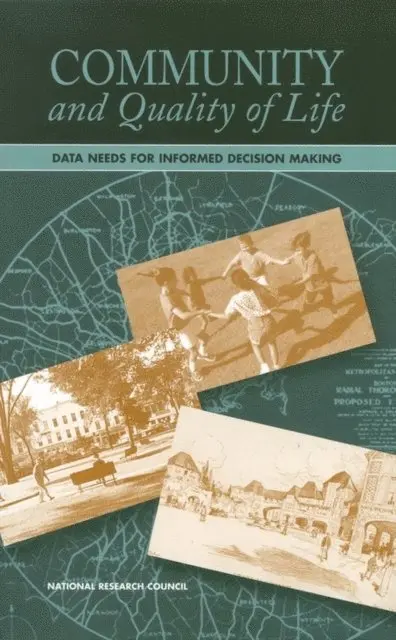
Community and Quality of Life discusses important concepts that undergird community life and offers recommendations for collaborative planning across space and time. The book explores:
Livability as an ensemble concept, embracing notions such as quality of place and sustainability. It discusses how to measure the "three legs" of livability (social, economic, ecological) while accounting for politics and personal values. And the book examines how to translate broad ideas about livability into guidelines for policymaking Place as more than location, including the natural, human-built, and social environments. The book discusses the impact of population changes over time, the links between regional and local identity, and other issues Tools for decision making in transportation and community planning. It reviews a variety of decision models and tools such as geographic information systems (GIS)—as well as public and private sources of relevant data.Including several case examples, this book will be important to planners, planning decision makers, planning educators and students, social scientists, community activists, and interested individuals.
487 kr
Läs direkt efter köp
In 1992, world leaders adopted Agenda 21, the work program of the 1992 U.N. Conference on Environment and Development. This landmark event provided a political foundation and action items to facilitate the global transition toward sustainable development. The international community marked the tenth anniversary of this conference in Johannesburg, South Africa, in August 2002. Down to Earth, a component of the U.S. State Department''s "Geographic Information for Sustainable Development" project for the World Summit, focuses on sub-Saharan Africa with examples drawn from case-study regions where the U.S. Agency for International Development and other agencies have broad experience. Although African countries are the geographic focus of the study, the report has broader applicability. Down to Earth summarizes the importance and applicability of geographic data for sustainable development and draws on experiences in African countries to examine how future sources and applications of geographic data could provide reliable support to decision-makers as they work towards sustainable development. The committee emphasizes the potential of new technologies, such as satellite remote-sensing systems and geographic information systems, that have revolutionized data collection and analysis over the last decade.
438 kr
Läs direkt efter köp
560 kr
Läs direkt efter köp
"Quality of life"..."livability"..."sense of place." Communities across America are striving to define these terms and to bring them to life, as they make decisions about transportation systems and other aspects of planning and development.
Community and Quality of Life discusses important concepts that undergird community life and offers recommendations for collaborative planning across space and time. The book explores:
Livability as an ensemble concept, embracing notions such as quality of place and sustainability. It discusses how to measure the "three legs" of livability (social, economic, ecological) while accounting for politics and personal values. And the book examines how to translate broad ideas about livability into guidelines for policymaking Place as more than location, including the natural, human-built, and social environments. The book discusses the impact of population changes over time, the links between regional and local identity, and other issues Tools for decision making in transportation and community planning. It reviews a variety of decision models and tools such as geographic information systems (GIS)—as well as public and private sources of relevant data.Including several case examples, this book will be important to planners, planning decision makers, planning educators and students, social scientists, community activists, and interested individuals.
751 kr
Tillfälligt slut
683 kr
Tillfälligt slut
643 kr
Tillfälligt slut