Congcong Liu – författare
1 991 kr
Skickas inom 10-15 vardagar
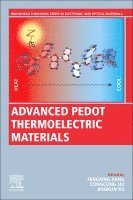
PEDOT is currently the most widely used polymeric material in research and development. Over the past 10 years, PEDOT has been investigated for potential organic thermoelectric applications because of its superior thermoelectric and mechanical properties compared with other conductive polymers. However, many challenges remain to be solved before it is translated into key technologies.
Advanced PEDOT Thermoelectric Materials summarizes current progress and the challenges of PEDOT thermoelectric materials, while clarifying directions for future development. This book provides a comprehensive overview of chemical, physical, and technical information about this organic thermoelectric polymer. The authors also give details about the theoretical basis of PEDOT, including preparation and characterization, and its development as a high-performance thermoelectric material.
Provides an overview of techniques to optimize the thermoelectric performance of PEDOT materials. Introduces the fundamentals of PEDOT, including material synthesis, characterization, preparation, thermal transport, and more. Discusses emerging applications in thermoelectric devices and future directions.2 859 kr
Läs direkt efter köp
1 712 kr
Skickas inom 10-15 vardagar
2 130 kr
Läs direkt efter köp
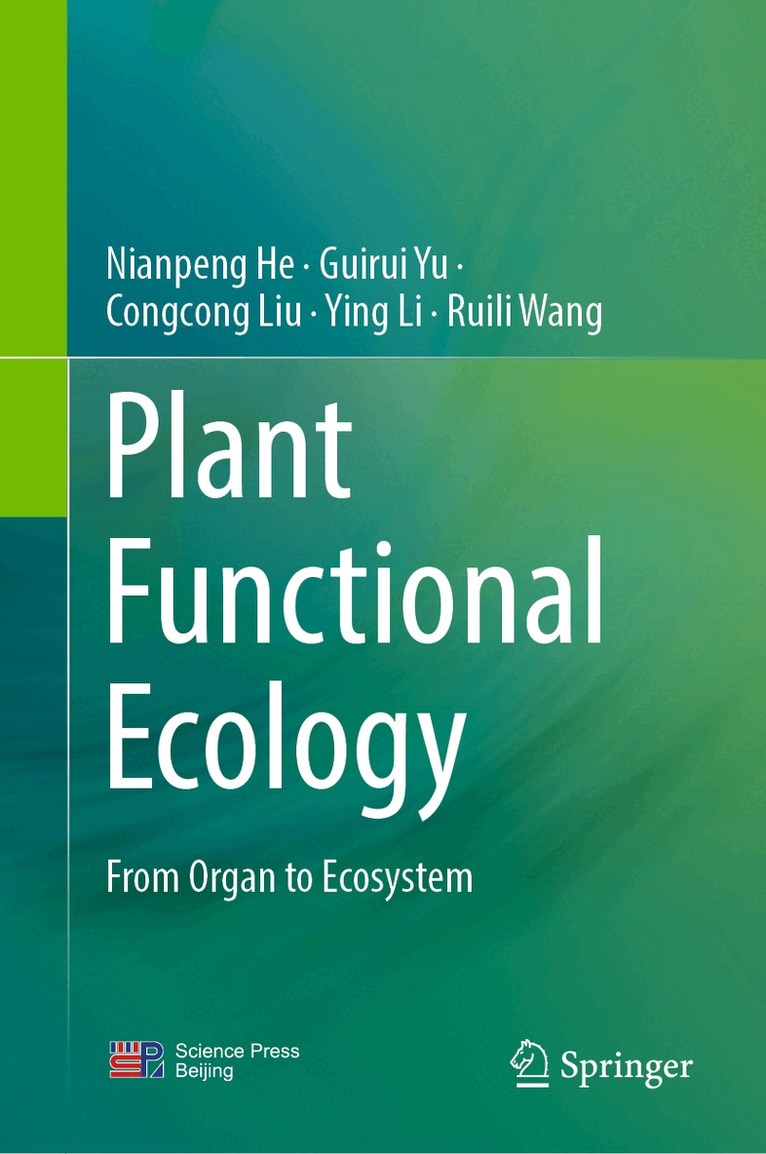
This book provides a comprehensive exploration of plant functional traits and their critical role in understanding and predicting ecosystem functions in response to environmental changes. By bridging the gap between traditional ecological research and emerging macro-ecological technologies, this book offers an in-depth understanding of how functional traits at various levels, from organs to entire ecosystems, can be utilized to address complex ecological challenges, including global change.
The chapters cover a wide range of topics essential to the field of ecology, including the development and application of plant functional traits, the scaling of traits from individual plants to communities, and the integration of these traits into advanced models and remote sensing technologies. Novel frameworks, such as plant community traits, ecosystem traits (ESTs), and plant trait networks (PTNs) are discussed, providing new ways to link species-level traits with ecosystem processes. These concepts are pivotal in expanding the application of trait-based ecology, allowing for more accurate predictions of ecosystem productivity, community assembly, and biodiversity patterns on a regional and global scale. The book also addresses the challenge of linking leaf and root traits to ecosystem functions, offering insights into how these traits can be scaled up and used to understand the adaptation strategies of plants in complex environments.
Targeted at undergraduate and graduate students and researchers in ecology, this book is ideal for those seeking both fundamental and advanced knowledge of trait-based research in ecology. Offering valuable insights and practical frameworks that are essential for tackling the ecological challenges, the book is a must-read for anyone interested in the integration of macroecology, geography, and remote sensing to solve current regional ecological problems and global change.