Constance Oliver – författare
Visar alla böcker från författaren Constance Oliver. Handla med fri frakt och snabb leverans.
6 produkter
6 produkter
Inbunden, Engelska, 1995
3 044 kr
Skickas inom 10-15 vardagar
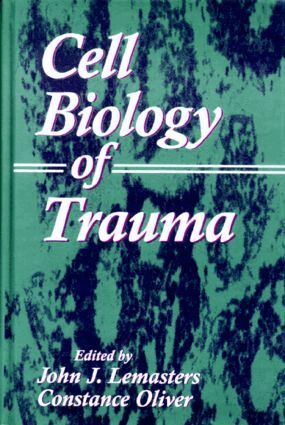
This unique book presents an approach to viewing trauma. It examines the cellular consequences of trauma at a molecular level and provides new insights into the treatment of traumatic injury, based on cellular responses. The current of trauma research is reviewed, previously unpublished information on the topic is presented, and research directions are included.
E-bok
PDF, Engelska, 20203 636 kr
Läs direkt efter köp
This unique book presents an approach to viewing trauma. It examines the cellular consequences of trauma at a molecular level and provides new insights into the treatment of traumatic injury, based on cellular responses. The current of trauma research is reviewed, previously unpublished information on the topic is presented, and research directions are included.
E-bok
Engelska, 20203 508 kr
Läs direkt efter köp
This unique book presents an approach to viewing trauma. It examines the cellular consequences of trauma at a molecular level and provides new insights into the treatment of traumatic injury, based on cellular responses. The current of trauma research is reviewed, previously unpublished information on the topic is presented, and research directions are included.
Inbunden, Engelska, 2009
1 079 kr
Skickas inom 10-15 vardagar
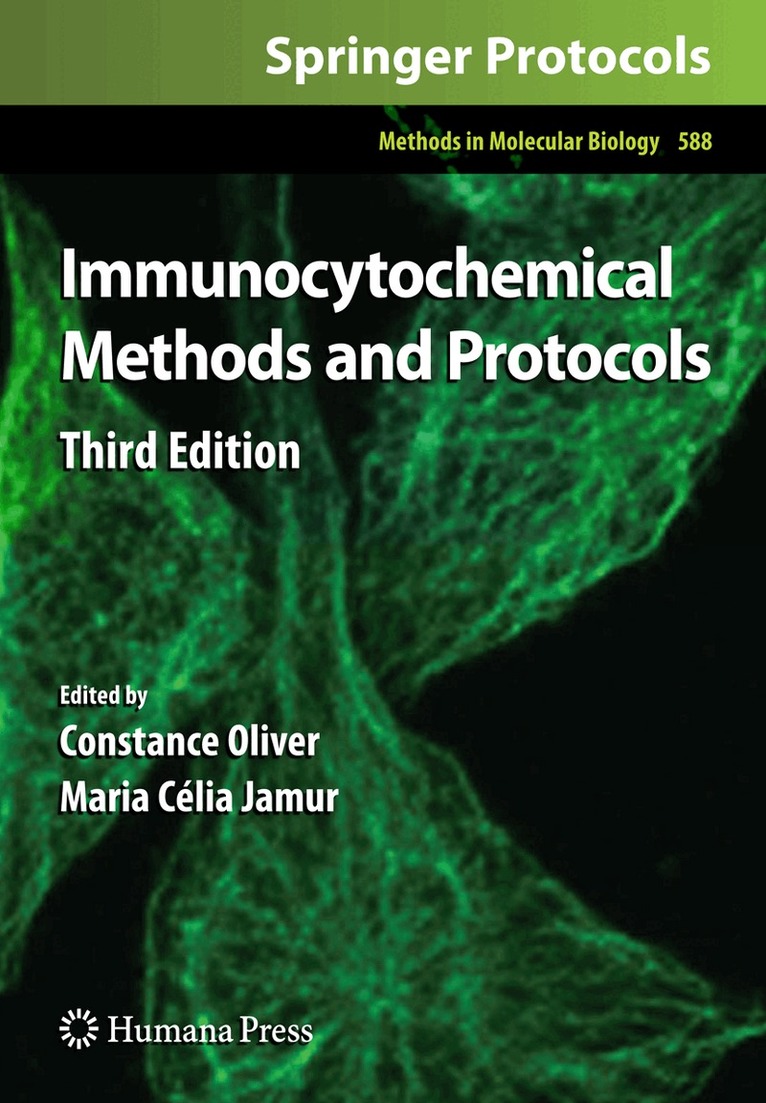
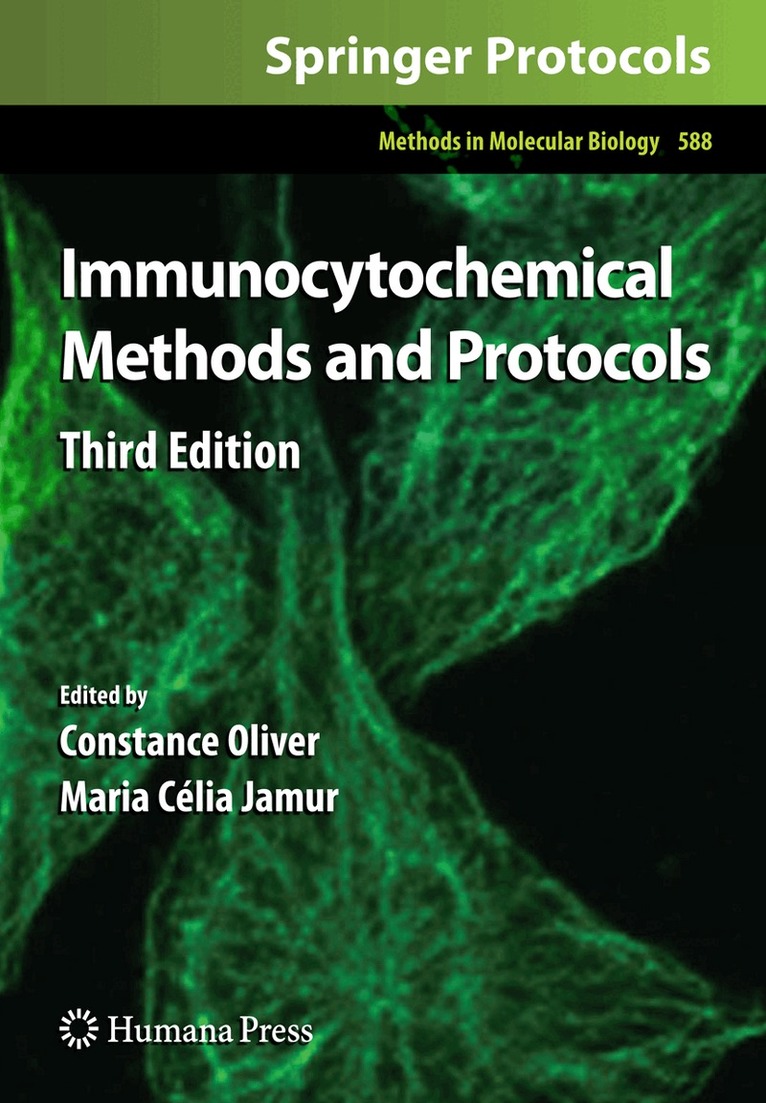
Antibodies tagged with fuorescent markers have been used in histochemistry for over 50 years. Although early applications were focused on the detection of microbial antigens in tissues, the use of immunocytochemical methods now has spread to include the det- tion of a wide array of antigens including proteins, carbohydrates, and lipids from virtually any organism. Today, immunohistochemistry is widely used to identify, in situ, various components of cells and tissues in both normal and pathological conditions. The method gains its strength from the extremely sensitive interaction of a specifc antibody with its antigen. For some scientifc areas, books have been published on applications of immu- cytochemical techniques specifc to that area. What distinguished Immunocytochemical Methods and Protocols from earlier books when it was frst published was its broad appeal to investigators across all disciplines, including those in both research and clinical settings. The methods and protocols p- sented in the frst edition were designed to be general in their application; the accompa- ing “Notes” provided the reader with invaluable assistance in adapting or troubleshooting the protocols. These strengths continued to hold true for the second edition and again for the third edition. Since the publication of the frst edition, the application of immuno- tochemical techniques in the clinical laboratory has continued to rise and this third edition provides methods that are applicable to basic research as well as to the clinical laboratory.
E-bok
Engelska, 20091 459 kr
Läs direkt efter köp
Antibodies tagged with fuorescent markers have been used in histochemistry for over 50 years. Although early applications were focused on the detection of microbial antigens in tissues, the use of immunocytochemical methods now has spread to include the det- tion of a wide array of antigens including proteins, carbohydrates, and lipids from virtually any organism. Today, immunohistochemistry is widely used to identify, in situ, various components of cells and tissues in both normal and pathological conditions. The method gains its strength from the extremely sensitive interaction of a specifc antibody with its antigen. For some scientifc areas, books have been published on applications of immu- cytochemical techniques specifc to that area. What distinguished Immunocytochemical Methods and Protocols from earlier books when it was frst published was its broad appeal to investigators across all disciplines, including those in both research and clinical settings. The methods and protocols p- sented in the frst edition were designed to be general in their application; the accompa- ing “Notes” provided the reader with invaluable assistance in adapting or troubleshooting the protocols. These strengths continued to hold true for the second edition and again for the third edition. Since the publication of the frst edition, the application of immuno- tochemical techniques in the clinical laboratory has continued to rise and this third edition provides methods that are applicable to basic research as well as to the clinical laboratory.
Häftad, Engelska, 2012
1 112 kr
Skickas inom 10-15 vardagar
Antibodies tagged with fuorescent markers have been used in histochemistry for over 50 years. Although early applications were focused on the detection of microbial antigens in tissues, the use of immunocytochemical methods now has spread to include the det- tion of a wide array of antigens including proteins, carbohydrates, and lipids from virtually any organism. Today, immunohistochemistry is widely used to identify, in situ, various components of cells and tissues in both normal and pathological conditions. The method gains its strength from the extremely sensitive interaction of a specifc antibody with its antigen. For some scientifc areas, books have been published on applications of immu- cytochemical techniques specifc to that area. What distinguished Immunocytochemical Methods and Protocols from earlier books when it was frst published was its broad appeal to investigators across all disciplines, including those in both research and clinical settings. The methods and protocols p- sented in the frst edition were designed to be general in their application; the accompa- ing “Notes” provided the reader with invaluable assistance in adapting or troubleshooting the protocols. These strengths continued to hold true for the second edition and again for the third edition. Since the publication of the frst edition, the application of immuno- tochemical techniques in the clinical laboratory has continued to rise and this third edition provides methods that are applicable to basic research as well as to the clinical laboratory.