Constantine Zervos - Böcker
Visar alla böcker från författaren Constantine Zervos. Handla med fri frakt och snabb leverans.
4 produkter
4 produkter
3 263 kr
Skickas inom 10-15 vardagar
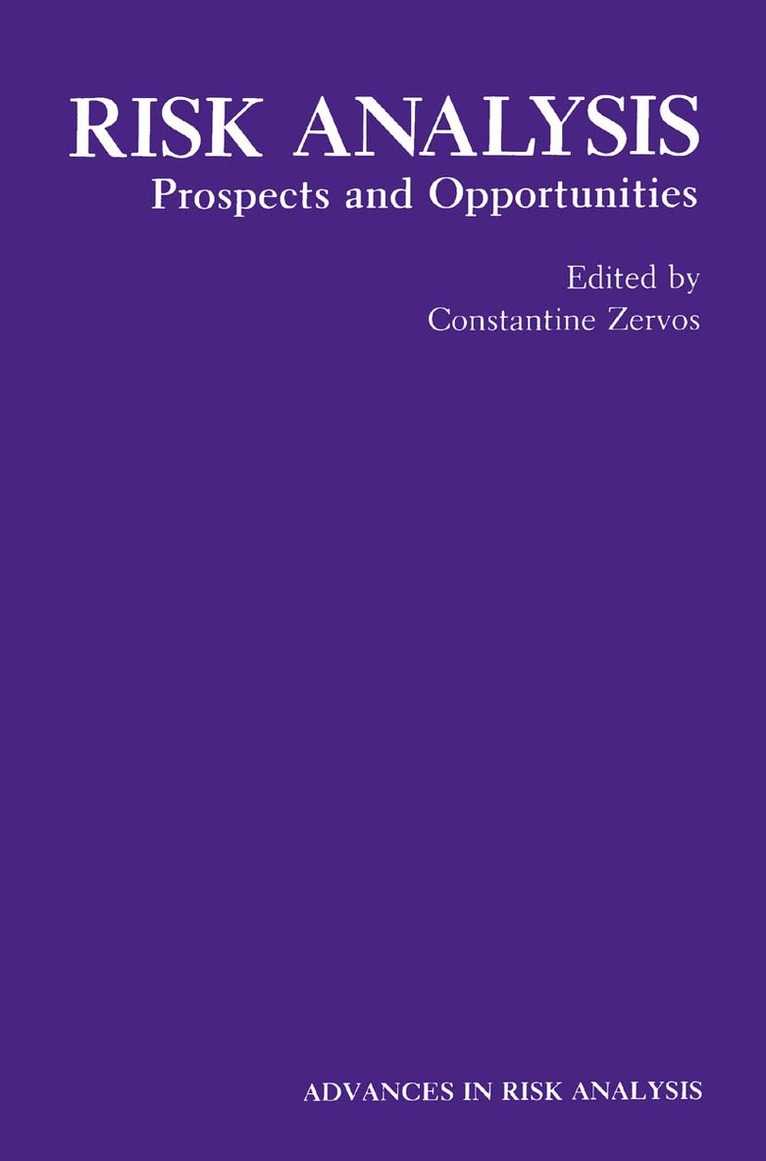
This volume of the series Advances in Risk Analysis consists of papers presented at the 1988 Annual Meeting of the Society for Risk Analysis, which was held October 30 through November 2 at the Mayflower Hotel in Washington, DC. The papers span the gamut of the increasing number of risk assessment topics addressed by the Society since it held its fIrst annual meeting in June 1981, also in Washington DC. Organized to promote interdisciplinary analyses, the Society approaches risks from three broad perspectives: (1) the impact of various risks on the health of the world's populations and on the environment; (2) the social and political implications of specifIc risks, and (3) the management and reduction of risks through the development of a risk analysis methodology and corresponding data bases. The papers included in this volume typify these three approaches and illustrate their interdependence. For example, both cancer and noncancer health risks are examined for a variety of situations that exist within society. The public's perception of risks and the correlation between that perception and the acceptance or nonacceptance of certain risks is also addressed. In addition, the progress to date on predicting and quantifying specifIc risks, including the risks associated with the construction and use of large engineered systems, is reported. Included among the papers are several dealing with recent current issues, such as the impact of California's Proposition 65, hazardous waste disposal, and chemical accidents.
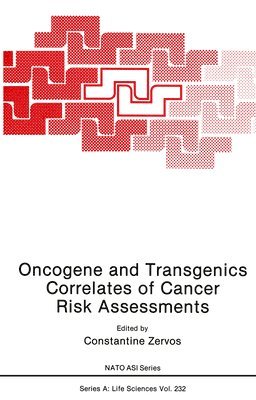
Oncogene and Transgenics Correlates of Cancer Risk Assessments
Proceedings of a NATO ARW Held in Vouliagmeni Beach, Attiki, Greece, October 7-11, 1991
Inbunden, Engelska, 1992
875 kr
Skickas inom 10-15 vardagar
550 kr
Skickas inom 10-15 vardagar
The data, the information, and even the overarching knowledge necessary for risk assessments of economically important environmental carcinogens come, for the most part, from the applied biological disciplines, e. g. , toxicology, epidemiology, biostatistics, etc. The more fundamental biological disciplines, e. g. , biochemistry, cell biology, molecular biology, molecular genetics of cancer, etc. , have enormous but unrealized potential to improve current cancer risk assessment methods. The objective of this advanced research workshop ARW was to advance the state of the art of cancer risk assessment methods by identifying potential short and long term contributions to such methods from the more fundamental disciplines. Attention was paid to short and long term contributions from research advances in the biochemistry and physiology of oncogenes (oncogenes research) and in the construction and utilization of transgenic animals (transgenics research). In the last 20 years, researchers in the fundamental biological disciplines, i. e. , biochemists, geneticists, molecular and cell biologists, etc. , have, inter alia, advanced spectacularly our understanding of the nature of neoplastic diseases. Their phenomenal progress is the combined result of both advances and refinements of the techniques available to them and of new fundamental discoveries. Among the latter the most significant are the discoveries of oncogenes and of the feasibility of creating transgenic animals, i. e. , of transferring well defined and expressible genes from the cells of one species of organisms to the embryonic cells of another.
3 263 kr
Skickas inom 10-15 vardagar
This volume of the series Advances in Risk Analysis consists of papers presented at the 1988 Annual Meeting of the Society for Risk Analysis, which was held October 30 through November 2 at the Mayflower Hotel in Washington, DC. The papers span the gamut of the increasing number of risk assessment topics addressed by the Society since it held its fIrst annual meeting in June 1981, also in Washington DC. Organized to promote interdisciplinary analyses, the Society approaches risks from three broad perspectives: (1) the impact of various risks on the health of the world's populations and on the environment; (2) the social and political implications of specifIc risks, and (3) the management and reduction of risks through the development of a risk analysis methodology and corresponding data bases. The papers included in this volume typify these three approaches and illustrate their interdependence. For example, both cancer and noncancer health risks are examined for a variety of situations that exist within society. The public's perception of risks and the correlation between that perception and the acceptance or nonacceptance of certain risks is also addressed. In addition, the progress to date on predicting and quantifying specifIc risks, including the risks associated with the construction and use of large engineered systems, is reported. Included among the papers are several dealing with recent current issues, such as the impact of California's Proposition 65, hazardous waste disposal, and chemical accidents.