Cordelia He – författare
Visar alla böcker från författaren Cordelia He. Handla med fri frakt och snabb leverans.
5 produkter
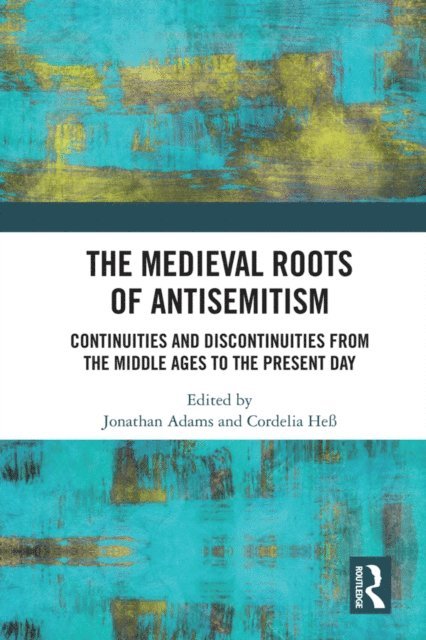
Medieval Roots of Antisemitism
Continuities and Discontinuities from the Middle Ages to the Present Day
Av Cordelia He, Jonathan Adams
E-bok, 2018
892 kr
Lägg i varukorg
This book presents a fresh approach to the question of the historical continuities and discontinuities of Jew-hatred, juxtaposing chapters dealing with the same phenomenon – one in the pre-modern, one in the modern period. How do the circumstances of interreligious violence differ in …
Medieval Roots of Antisemitism
Continuities and Discontinuities from the Middle Ages to the Present Day
Av Cordelia He, Jonathan Adams
E-bok, 2018
892 kr
Lägg i varukorg
This book presents a fresh approach to the question of the historical continuities and discontinuities of Jew-hatred, juxtaposing chapters dealing with the same phenomenon – one in the pre-modern, one in the modern period. How do the circumstances of interreligious violence differ in …
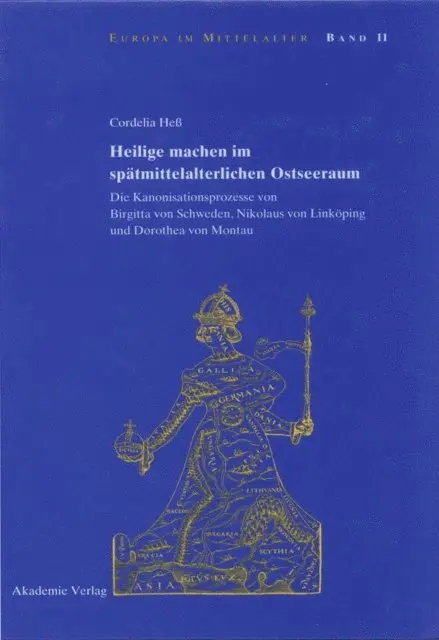
Heilige machen im spätmittelalterlichen Ostseeraum
Die Kanonisationsprozesse von Birgitta von Schweden, Nikolaus von Linköping und Dorothea von Montau
Av Cordelia He
E-bok, 2009
1448 kr
Lägg i varukorg
Eine adlige Witwe, die den Papst aus Avignon zurückholen will, ein tapferer Streiter für die Freiheit der Kirche und eine demütig fastende Rekluse - die Heiligen des spätmittelalterlichen Ostseeraums weisen die ganze Bandbreite möglicher Heiligkeitsideale auf, und dennoch ähneln sich ihre …
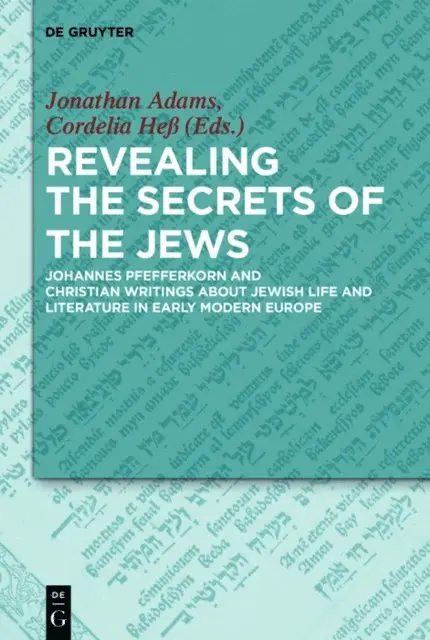
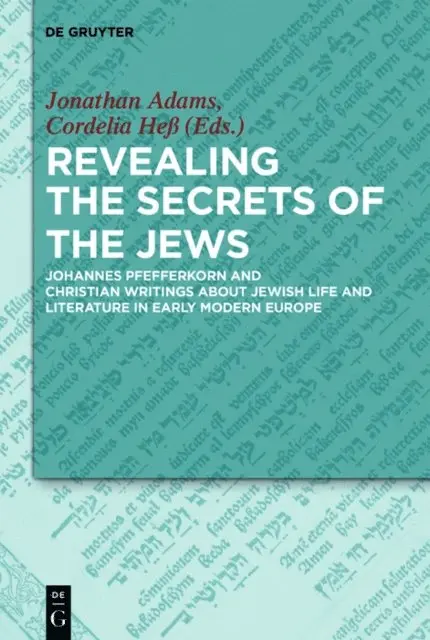
Revealing the Secrets of the Jews
Johannes Pfefferkorn and Christian Writings about Jewish Life and Literature in Early Modern Europe
Av Cordelia He, Jonathan Adams
E-bok, 2017
1585 kr
Lägg i varukorg
This book presents the most recent scholarship on the sixteenth-century convert Johannes Pfefferkorn and his context. Pfefferkorn is the most (in)famous of the converts from Judaism who wrote descriptions of Jewish ceremonial life and shaped both Christian ideas about Judaism and the course of …
Revealing the Secrets of the Jews
Johannes Pfefferkorn and Christian Writings about Jewish Life and Literature in Early Modern Europe
Av Cordelia He, Jonathan Adams
E-bok, 2017
1585 kr
Lägg i varukorg
This book presents the most recent scholarship on the sixteenth-century convert Johannes Pfefferkorn and his context. Pfefferkorn is the most (in)famous of the converts from Judaism who wrote descriptions of Jewish ceremonial life and shaped both Christian ideas about Judaism and the course of …