Costas Panayotakis - Böcker
Visar alla böcker från författaren Costas Panayotakis. Handla med fri frakt och snabb leverans.
5 produkter
5 produkter
Del 46 - Cambridge Classical Texts and Commentaries
Decimus Laberius
The Fragments
Inbunden, Engelska, 2010
2 003 kr
Skickas inom 7-10 vardagar
This is a newly revised, critical text of the fragments attributed to the Roman knight and mimographer Decimus Laberius, a witty and crudely satirical contemporary of Cicero and Caesar. Laberius is perhaps the most celebrated comic playwright of the late Republic, and the fragments of plays attributed to him comprise the overwhelming majority of the extant evidence for what we conventionally call 'the literary Roman mime'. The volume also includes a survey of the characteristics and development of the Roman mime, both as a literary genre and as a type of popular theatrical entertainment, as well as a re-evaluation of the place of Laberius' work within its historical and literary context. This is the first English translation of all the fragments, and the first detailed English commentary on them from a linguistic, metrical, and (wherever possible) theatrical perspective.
398 kr
Skickas inom 11-20 vardagar
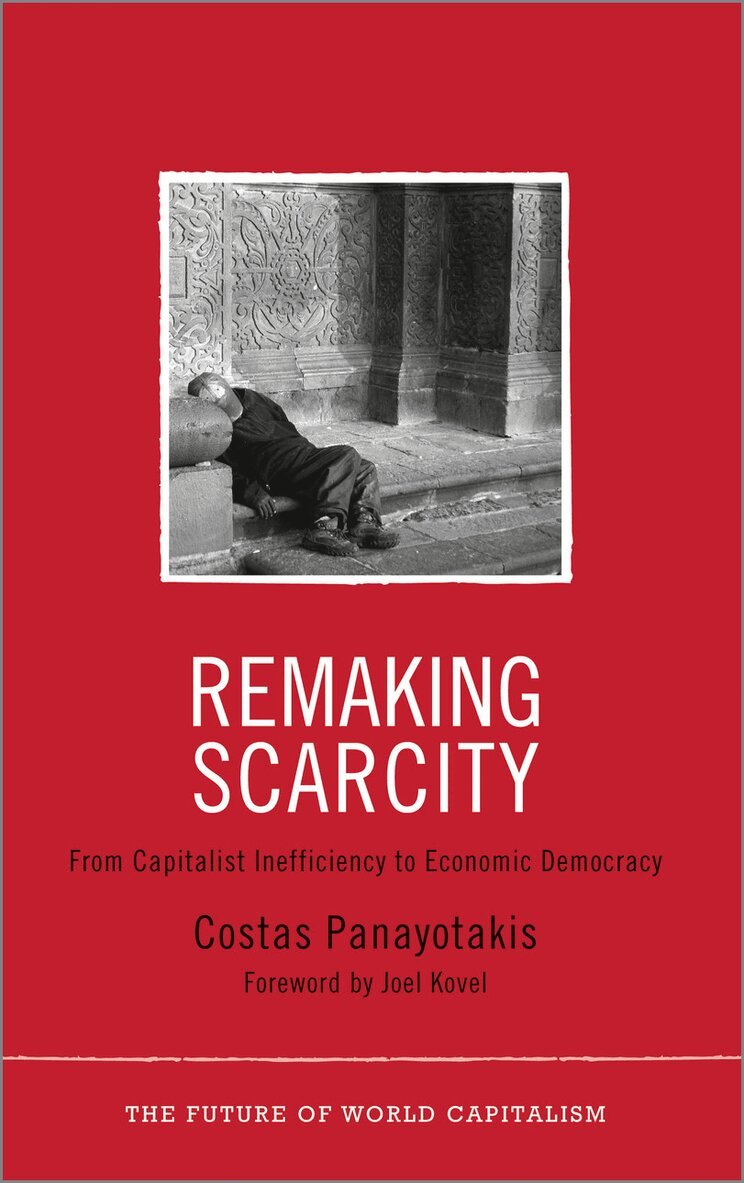
The dominant schools of neoclassical and neoliberal economics tell us that material scarcity is an inevitable product of an insatiable human nature. Against this, Costas Panayotakis argues that scarcity is in fact a result of the social and economic processes of the capitalist system.The overriding importance of the logic of capital accumulation accounts for the fact that capitalism is not able to make a rational use of scarce resources and the productive potential at the disposal of human society. Instead, capitalism produces grotesque inequalities and unnecessary human suffering, a toxic consumerist culture that fails to satisfy, and a deepening ecological crisis. Remaking Scarcity is a powerful challenge to the current economic orthodoxy. It asserts the core principle of economic democracy, that all human beings should have an equal say over the priorities of the economic system, as the ultimate solution to scarcity and ecological crisis.
Del 46 - Cambridge Classical Texts and Commentaries
Decimus Laberius
The Fragments
Häftad, Engelska, 2021
694 kr
Skickas inom 7-10 vardagar
This is a newly revised, critical text of the fragments attributed to the Roman knight and mimographer Decimus Laberius, a witty and crudely satirical contemporary of Cicero and Caesar. Laberius is perhaps the most celebrated comic playwright of the late Republic, and the fragments of plays attributed to him comprise the overwhelming majority of the extant evidence for what we conventionally call 'the literary Roman mime'. The volume also includes a survey of the characteristics and development of the Roman mime, both as a literary genre and as a type of popular theatrical entertainment, as well as a re-evaluation of the place of Laberius' work within its historical and literary context. This is the first English translation of all the fragments, and the first detailed English commentary on them from a linguistic, metrical, and (wherever possible) theatrical perspective.
Capitalist Mode of Destruction
Austerity, Ecological Crisis and the Hollowing out of Democracy
Inbunden, Engelska, 2021
1 167 kr
Skickas inom 5-8 vardagar
The capitalist mode of destruction traces contemporary capitalism’s economic, ecological and democratic crises. Combining insights from a range of disciplines, including psychology, sociology and political economy, Panayotakis interprets these crises as manifestations of a previously unrecognized contradiction: over time, the benefits of capitalism’s technological dynamism tend to decline even as its threats to humanity and the planet continue to mount.To explain this contradiction, the book analyzes the production and distribution of surplus in capitalist societies and rethinks the concept of surplus itself. Identifying the public sector and households as sites of production no less important than the workplace, this book attributes capitalism’s contradictions to working people’s lack of control over the surplus they produce. This lack of control is undemocratic and threatens the planet. Only a classless society, in which working people democratically determine the size and use of the surplus they produce, can effectively respond to our current predicament. Recognizing such a democratic classless society as the essence of the communist ideal, the book argues that, far from becoming obsolete, this ideal is ever more indispensable. But since the necessity of this ideal does not guarantee its realization, the book also investigates the conditions necessary for the formation of an anti-capitalist alliance for social justice, democracy and ecological sustainability.This book is relevant to United Nations Sustainable Development Goal 12, Responsible consumption and production
Capitalist Mode of Destruction
Austerity, Ecological Crisis and the Hollowing out of Democracy
Häftad, Engelska, 2021
225 kr
Skickas
The capitalist mode of destruction traces contemporary capitalism’s economic, ecological and democratic crises. Combining insights from a range of disciplines, including psychology, sociology and political economy, Panayotakis interprets these crises as manifestations of a previously unrecognized contradiction: over time, the benefits of capitalism’s technological dynamism tend to decline even as its threats to humanity and the planet continue to mount.To explain this contradiction, the book analyzes the production and distribution of surplus in capitalist societies and rethinks the concept of surplus itself. Identifying the public sector and households as sites of production no less important than the workplace, this book attributes capitalism’s contradictions to working people’s lack of control over the surplus they produce. This lack of control is undemocratic and threatens the planet. Only a classless society, in which working people democratically determine the size and use of the surplus they produce, can effectively respond to our current predicament. Recognizing such a democratic classless society as the essence of the communist ideal, the book argues that, far from becoming obsolete, this ideal is ever more indispensable. But since the necessity of this ideal does not guarantee its realization, the book also investigates the conditions necessary for the formation of an anti-capitalist alliance for social justice, democracy and ecological sustainability.