Courtland Lewis – författare
Visar alla böcker från författaren Courtland Lewis. Handla med fri frakt och snabb leverans.
12 produkter
12 produkter
Häftad, Engelska, 2020
189 kr
Skickas inom 5-8 vardagar
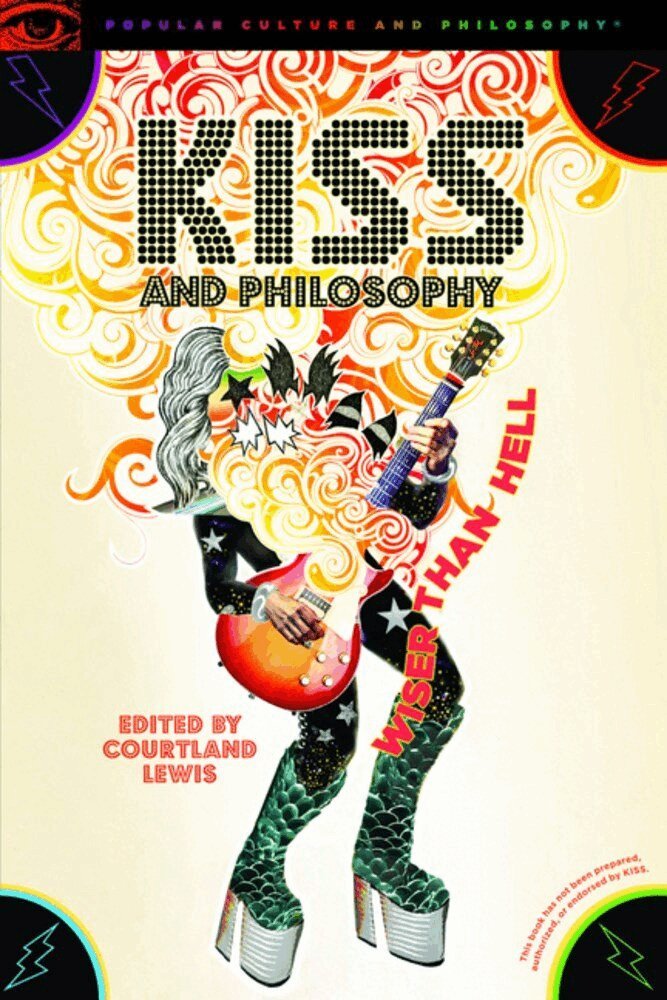
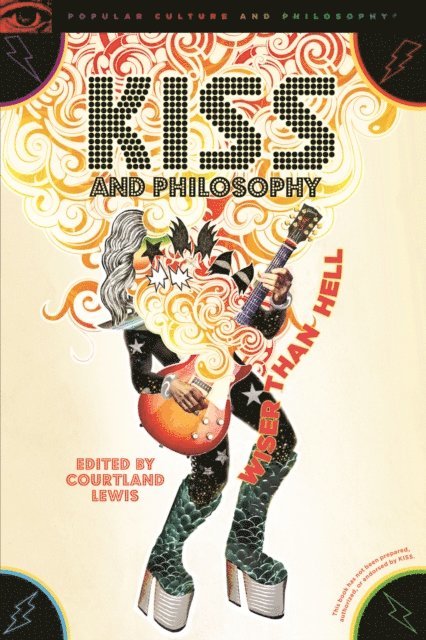
KISS is the most outrageous and yet the most enduring of rock bands, with an unparalleled, almost religious level of devotion from millions of die-hard fans. In KISS and Philosophy, professional thinkers of diverse outlooks provide much-needed insights into the motivating ideas and metaphysical foundations of the KISS take on life.According to some, the true message of KISS is self-actualization through the hard work of following your dreams. Others focus on the existential aspect of KISS thinking, drawing upon Camus and Sartre to show that KISS is preoccupied with empowering the individual to achieve self-greatness. By contrast, there is a view of KISS which identifies a “destroyer” attitude, leading some listeners to reject KISS outright, while encouraging others to become the most dedicated of followers. Yet another view sees KISS’s “letting loose” as essentially Dionysian.Some chapters gain access to KISS thinking by tracing the band’s cultural and historical impact, finding meaning in the way generations of fans make sense of KISS’s always evolving output, the changing line-up, and the archetypal characters represented by the band’s use of make-up and presentation. Other chapters look at the aesthetic quality of the band’s output, especially their most controversial album, Music from “The Elder.”Several chapters examine KISS’s orientation to bodily pleasures, notably sex, extracting the band’s philosophy of sex and love from different clues and indications. How does KISS’s unashamed indulgence relate to various pleasure-governed ethical systems throughout history? Is getting the most out of pleasure key to living the good life? And does a life of gratifying one’s body ultimately yield fulfillment? What are the limitations and hazards of a pleasure-oriented lifestyle?The biography of band members also provides material for reflection, looking at the nature of forgiveness through the lens of KISS’s notorious feuds, and determining how to reconcile the apparently conflicting accounts of some famous squabbles. The changing line-up of the band raises questions about the meaning of “KISS” and whether KISS could last forever
E-bok
Engelska, 2020259 kr
Läs direkt efter köp
KISS is the most outrageous and yet the most enduring of rock bands, with an unparalleled, almost religious level of devotion from millions of die-hard fans. In KISS and Philosophy, professional thinkers of diverse outlooks provide much-needed insights into the motivating ideas and metaphysical foundations of the KISS take on life. According to some, the true message of KISS is self-actualization through the hard work of following your dreams. Others focus on the existential aspect of KISS thinking, drawing upon Camus and Sartre to show that KISS is preoccupied with empowering the individual to achieve self-greatness. By contrast, there is a view of KISS which identifies a destroyer attitude, leading some listeners to reject KISS outright, while encouraging others to become the most dedicated of followers. Yet another view sees KISS s letting loose as essentially Dionysian. Some chapters gain access to KISS thinking by tracing the band s cultural and historical impact, finding meaning in the way generations of fans make sense of KISS s always evolving output, the changing line-up, and the archetypal characters represented by the band s use of make-up and presentation. Other chapters look at the aesthetic quality of the band s output, especially their most controversial album, Music from The Elder. Several chapters examine KISS s orientation to bodily pleasures, notably sex, extracting the band s philosophy of sex and love from different clues and indications. How does KISS s unashamed indulgence relate to various pleasure-governed ethical systems throughout history? Is getting the most out of pleasure key to living the good life? And does a life of gratifying one s body ultimately yield fulfillment? What are the limitations and hazards of a pleasure-oriented lifestyle? The biography of band members also provides material for reflection, looking at the nature of forgiveness through the lens of KISS s notorious feuds, and determining how to reconcile the apparently conflicting accounts of some famous squabbles. The changing line-up of the band raises questions about the meaning of KISS and whether KISS could last forever
Häftad, Engelska, 2010
190 kr
Skickas inom 3-6 vardagar
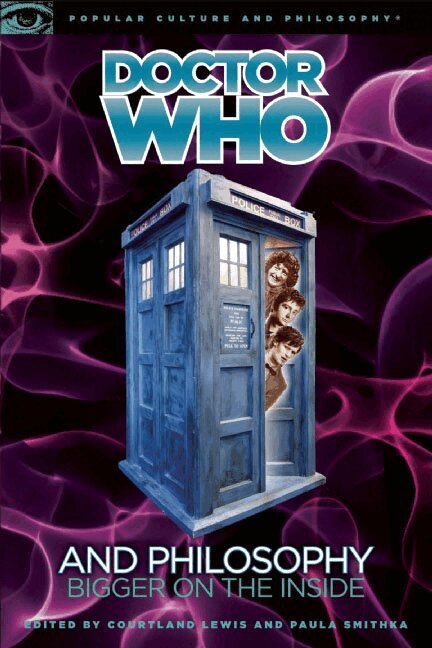
In Doctor Who and Philosophy, a team of mostly human philosophers (who are also fans) looks at the deeper issues raised by the Doctor's mind-blowing adventures. They discuss, among other topics, the Doctor's philosophy of science, the ethics of a universe with millions of intelligent species, what makes one life-form more important than another, whether time travelers can change history, and how the Doctor Who TV show is changing the world we live in. The chapters draw freely on both the classic series (1963--1989) and the new series. The book includes a collection of entertaining and insightful quotes from Doctor Who plus a complete list of episodes and companions.
E-bok
Engelska, 2010273 kr
Läs direkt efter köp
Not only is Doctor Who the longest-running science fiction television show in history, but it has also been translated into numerous languages, broadcast around the world, and referred to as the “way of the future” by some British political leaders. The old (or Classic) Doctor Who series built up a loyal American cult following, with regular conventions and other activities. The new series, relaunched in 2005, has emerged from culthood into mass awareness, with a steadily growing viewership and major sales of DVDs. The current series, featuring the Eleventh Doctor, Matt Smith, is breaking all earlier records, in both the UK and the US. Doctor Who is a continuing story about the adventures of a mysterious alien known as “the Doctor,” a traveller of both time and space whose spacecraft is the TARDIS (Time and Relative Dimensions in Space), which from the outside looks like a British police telephone box of the 1950s. The TARDIS is “bigger on the inside than on the outside”—actually the interior is immense. The Doctor looks human, but has two hearts, and a knowledge of all languages in the universe. Periodically, when the show changes the leading actor, the Doctor “regenerates,” changing his body and his personality quirks, but retaining all his memories. Regeneration causes the Doctor to be temporarily disoriented and weakened, both before and after. The Doctor usually has one or more companions, most often attractive young females, who also change from time to time, giving the Doctor the opportunity to explain some basic facts about himself to the new companion. The Doctor is a Time Lord from the planet Gallifrey and battles various evil forces in the universe, including the nasty robot Daleks and The Master, a renegade Time Lord.2010 will see the release of four other major books about Doctor Who, but they are addressed to academic readers whereas Doctor Who and Philosophy, like other volumes in the Popular Culture and Philosophy series, is aimed at thoughtful fans.For almost fifty years Doctor Who has brought both entertainment and philosophy into millions of households through television, comics, magazines, books, and the internet. Doctor Who’s cultural relevance and the deep conviction that it inspires in fans suggests that it successfully portrays philosophical themes that are important to individuals. Now, more than ever, the philosophical themes found in Doctor Who need to be explained and understood.Doctor Who and Philosophy contains contributions from some of the sharpest minds in philosophy. Everyone involved was dedicated to producing a work that would honor both Doctor Who and the art of philosophy, and it doesn’t take long for the reader to realize the quality of work contained within the volume. The book starts by examining issues of personal identity and how the Doctor provides valuable insights into how we should understand “who” we are. Next, the volume discusses Doctor Who’s representation of science, logic, speciesism, perception, physics, and causation. After discussing several fascinating issues from the philosophy of science, the volume moves on to a wonderful discussion of ethics. In this section, the reader receives both a nice introduction to ethics and some important insights into how the Doctor tells us to live the good life. The final two chapters deal with human existence and aesthetics. Both chapters complement each other by giving readers a discussion of how Doctor Who illuminates several philosophically important features of what it means to be human and how one should understand the beauty, the fear, and the excitement of existence. The end of the volume includes two bonuses. First, there is a collection of insightful quotes from the Classic and New serie
Häftad, Engelska, 2015
245 kr
Skickas inom 3-6 vardagar
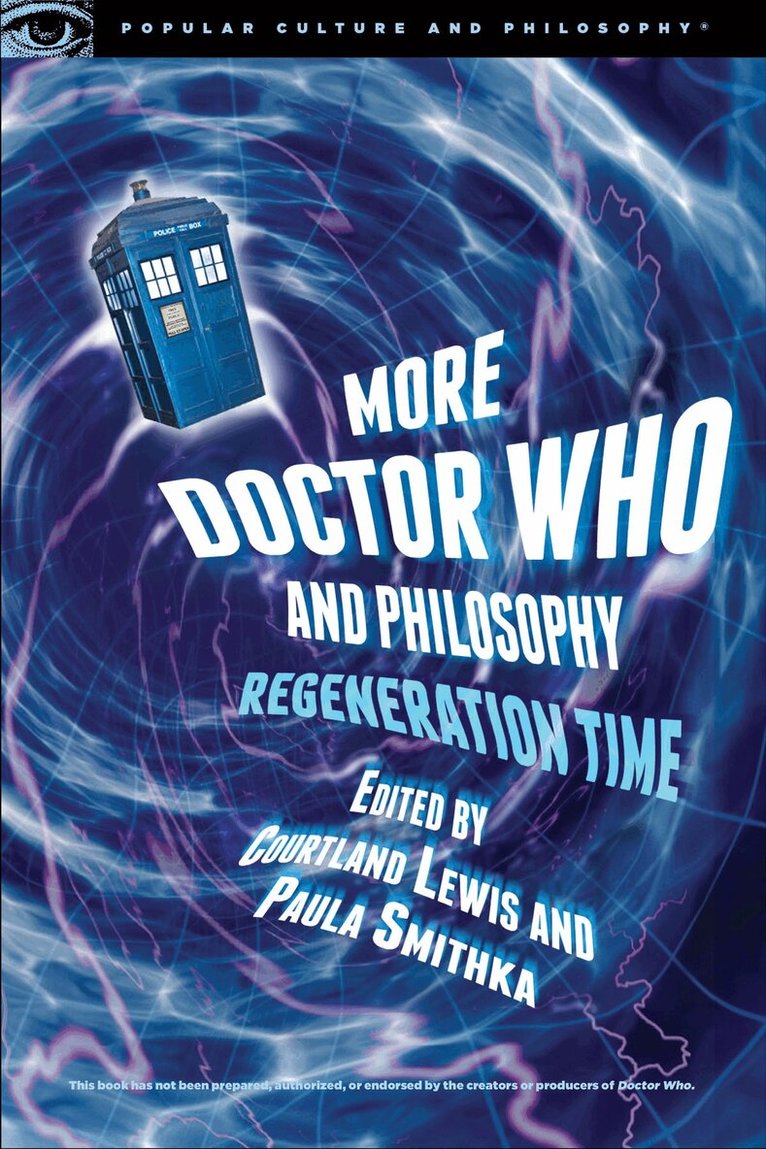
More Doctor Who and Philosophy is a completely new collection of chapters, additional to Doctor Who and Philosophy (2010), by the same editors. Since that first Doctor Who and Philosophy, much has happened in the Whoniverse: a new and controversial regeneration of the Doctor, multiple new companions, a few creepy new enemies of both the Doctor and planet Earth. New questions have been raised and new questioners have come along, so there are plenty of new topics for philosophical scrutiny. Is the "impossible" girl really impossible? Is there anything wrong with an inter-species lesbian relationship (the kids weren't quite ready for that in 1963, but no one blinks an eye in 2015)? Can it really be right for the Doctor to lie and to selectively forget? We even have two authors who have figured out how to build a TARDIS -- instructions included! An added feature of this awesome new volume is that the editors have reached out to insiders of Who fandom, people who run hugely successful Who conventions, play in Who-inspired bands, and run wildly popular podcasts and websites, to share their privileged insights into why the Doctor is so philosophically deep.
Häftad, Engelska, 2015
245 kr
Skickas inom 3-6 vardagar
Courtland Lewis has scoured the planet to bring together the most talented faction members, factionless, and even a few from the Bureau to discuss the philosophy of Divergent. Divergent and Philosophy begins by examining the personal struggles that all people face at some time: What sort of person should I be? What if I find out my life is a lie? What do I owe my parents? Am I normal? Once readers have finished answering these questions they're ready for the "choosing ceremony." Part two examines each faction, looking at its virtues, vices, and other features that will help readers pick the "right" faction. This part gives readers a glimpse into what it's like to be faced with the most important decision of our lives, the one that will forever determine who we are. Part three takes a step takes a step back, in order to question Chicago's ordering of society. Chicago is on the verge of revolution, but is this the result of the faction system itself, or is it the people within the factions that are behind the social discord? Part four shifts the focus individuals and those who hold power. Part five tells us how to recognize injustice.
E-bok
Engelska, 2015224 kr
Läs direkt efter köp
More Doctor Who and Philosophy is a completely new collection of chapters, additional to Doctor Who and Philosophy (2010) by the same editors. Since that first Doctor Who and Philosophy, much has happened in the Whoniverse: a new and controversial regeneration of the Doctor, multiple new companions, a few creepy new enemies of both the Doctor and planet Earth. And the show’s fiftieth anniversary! We’ve learned some astounding new things from the ever-developing story: that the Doctor’s number one rule is to lie, that he claims to have forgotten his role in the mass extermination of the Time Lords and the Daleks, that the Daleks do have a concept of divine beauty (divine hatred, of course), and that Daleks may become insane (didn’t we assume they already were?) Oh, and the cult of the Doctor keeps growing worldwide, with more cultish fans in the US, more and bigger Who conventions, more viewers of all ages, and more serious treatment by scholars from many disciplines. New questions have been raised and new questioners have come along, so there are plenty of new topics for philosophical scrutiny. Is the “impossible” girl really impossible? Is there anything wrong with an inter-species lesbian relationship (the kids weren’t quite ready for that in 1963, but no one blinks an eye in 2015)? Can it really be right for the Doctor to lie and to selectively forget? We even have two authors who have figured out how to build a TARDIS—instructions included! (Wait, there’s a catch, no . . . ?) And then there’s that old question that just won’t go away: why does the Doctor always regenerate as a male, and is that ever going to change? An added feature of this awesome new volume is that the editors have reached out to insiders of Who fandom, people who run hugely successful Who conventions, play in Who-inspired bands, and run wildly popular podcasts and websites, to share their privileged insights into why the Doctor is so philosophically deep. No more spoilers. It’s time for the truly thoughtful travelers in both time and space to rev up the TARDIS once more. . . . Allons-y, Alonzo!
E-bok
Engelska, 2015224 kr
Läs direkt efter köp
Courtland Lewis has scoured the planet to bring together the most talented faction members, factionless, and even a few from the Bureau to discuss the philosophy of Divergent.Divergent and Philosophy begins by examining the personal struggles that all people face at some time: What sort of person should I be? What if I find out my life is a lie? What do I owe my parents? Am I normal? Once readers have finished answering these questions they’re ready for the “choosing ceremony.” Part two examines each faction, looking at its virtues, vices, and other features that will help readers pick the “right” faction. This part gives readers a glimpse into what it’s like to be faced with the most important decision of our lives, the one that will forever determine who we are. Part three takes a step takes a step back, in order to question Chicago''s ordering of society. Chicago is on the verge of revolution, but is this the result of the faction system itself, or is it the people within the factions that are behind the social discord? Part four shifts the focus individuals and those who hold power. Part five tells us how to recognize injustice.
Häftad, Engelska, 2016
286 kr
Skickas inom 3-6 vardagar
Red Rising and Philosophy has gathered together a crew of the wisest Helldivers philosophy can offer. Could humanity's love of physical enhancements cause its extinction? Do people doom humanity by trying to all be the same? Can a person love someone, while at the same time wanting that person destroyed? Is equality always the best principle on which to organize society? What is evil, and how does it exist in contemporary life? Does one remain the same person, even after changing every physical aspect of one's body? Is it moral to sell oneself into slavery, whether it's through sex or manual labor? Is it ethical to sell one's children into slavery, on the promise that their children will live in peace and tranquility? These questions and more are what make Brown's Red Rising trilogy such an impactful story. Brown pulls no punches, and philosophy works best in such an environment. Red Rising and Philosophy is not for the timid or the faint at heart. It's not The Passage, since no one will die from reading it, but reading it could be a life-changing experience.
E-bok
Engelska, 2016224 kr
Läs direkt efter köp
Red Rising and Philosophy has gathered together a crew of the wisest Helldivers philosophy can offer. Could humanity''s love of physical enhancements cause its extinction? Do people doom humanity by trying to all be the same? Can a person love someone, while at the same time wanting that person destroyed? Is equality always the best principle on which to organize society? What is evil, and how does it exist in contemporary life? Does one remain the same person, even after changing every physical aspect of one''s body? Is it moral to sell oneself into slavery, whether it’s through sex or manual labor? Is it ethical to sell one''s children into slavery, on the promise that their children will live in peace and tranquility? These questions and more are what make Brown’s Red Rising trilogy such an impactful story. Brown pulls no punches, and philosophy works best in such an environment. Red Rising and Philosophy is not for the timid or the faint at heart. It’s not The Passage, since no one will die from reading it, but reading it could be a life-changing experience.
E-bok
Engelska, 202192 kr
Läs direkt efter köp
In zir travels through space and time, the Doctor has to solve numerous amazing problems, but problems which all have applications to our everyday lives. This book, by one of the Doctor's biggest fans, shows that the Doctor has a distinctive view of life, ethical, spiritual, and scientific.
Häftad, Engelska, 2021
172 kr
Tillfälligt slut
In Zir travels through space and time through the last 26 years, the Doctor has had to solve numerous complex problems-- problems that often have applications to everyday life. This book, written by one of the Doctor’s biggest fans, will explore, discuss and demonstrate the Doctor’s distinctive view of life, ethics, spiritualism, and science.On the evening of September 17th 1983, six-year-old Courtland Lewis sat down on his grandparents' linoleum floor to watch something he later learned was called Doctor Who. It changed his life. Thirty-eight years later, Courtland Lewis is a philosophy professor and the author or editor of fifteen books--six of them about Doctor Who. Most recently, Dr. Lewis edited Kiss and Philosophy: Wiser than Hell (2020). "Courtland Lewis knows his stuff. As a lifelong Doctor Who fan, he understands the history and concepts of the show. As a philosophy professor, he has the ability to break down those concepts, examine them from every angle, and convey them to readers in easily understandable terms. Doctor Who can be a tricky show, full of high and complex continuity, and Dr. Lewis is an admirable guide through the vortex of space and time." --R. Alan Siler, author of Doctor Who's Greatest Hits (Remastered) and editor of Children of Time: The Companions of Doctor Who (2018) "Love Doctor Who? Want to figure out how to live a life actually worth living? Then let Courtland Lewis be your guide in this fantastic explanation of what it means to be a good person, by way of the example set by the Time Lord from Gallifrey." -Massimo Pigliucci, author of A Field Guide to a Happy Life: Brief Lessons for Living (2020), and How To Be A Stoic: Using Ancient Philosophy to Live a Modern Life (2017). "It's hard to believe, but although the Doctor has been around for billions of years, he (or occasionally she) has only been teaching us how to live for sixty years. Lest we forget some of the Doctor's invaluable lessons, they have been captured, distilled, and condensed in this handy little communication device called a 'book'. This 'book' thingy has the descriptor The Real Meaning of Doctor Who. Amazing, really." -Ray Scott Percival, author of The Myth of the Closed Mind: Understanding How and Why People Are Rational (2012) "Grab your bow-tie (because bow-ties are cool) and don your fez. Dr. Lewis takes us on an exciting journey into the examined life of the Doctor, getting us "into the thick of things" with moral dilemmas faced by the Doctor, the mission to avoid the "monsters" who threaten us with their evil actions, and how to deal with endings. This guidebook shows us how to "lead a better life" with the Doctor as our exemplar. As the Doctor says, "You've got to throw yourself in!" so embrace your inner flaneur and engage with life. Geronimo!" -Paula Smithka, co-editor of Doctor Who and Philosophy: Bigger on the Inside (2010), More Doctor Who and Philosophy: Regeneration Time (2015), and Community, Diversity and Difference: Implications for Peace (2005)"