Courtney Lewis – författare
Visar alla böcker från författaren . Handla med fri frakt och snabb leverans.
7 produkter
7 produkter
E-bok
Engelska55 kr
Läs direkt efter köp
E-bok
Engelska, 201252 kr
Läs direkt efter köp
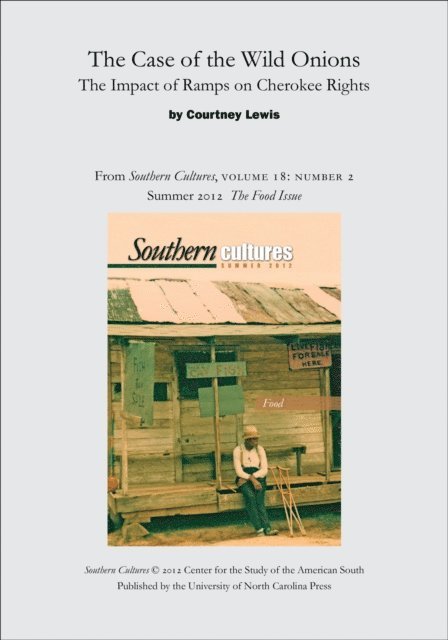
Finally, the defendant was called to testify. The air went from lighthearted post-lunch chatting to dour and intense. Judging from the sudden solemnity, one might have imagined that this trial was for drug trafficking or a violent crime. But it was about something that had much more profound implications: picking plants—specifically, wild onions."This article appears in the Summer 2012 issue of Southern Cultures. The full issue is also available as an ebook.Southern Cultures is published quarterly (spring, summer, fall, winter) by the University of North Carolina Press. The journal is sponsored by the University of North Carolina at Chapel Hill''s Center for the Study of the American South.
Inbunden, Engelska, 2019
1 211 kr
Skickas inom 10-15 vardagar
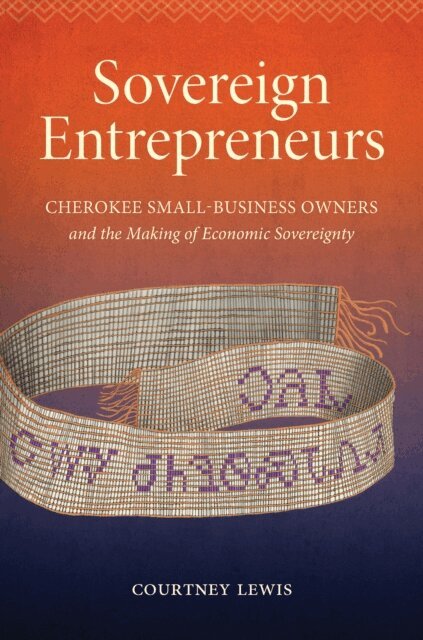
By 2009, reverberations of economic crisis spread from the United States around the globe. As corporations across the United States folded, however, small businesses on the Qualla Boundary of the Eastern Band of Cherokee Indians (EBCI) continued to thrive. In this rich ethnographic study, Courtney Lewis reveals the critical roles small businesses such as these play for Indigenous nations. The EBCI has an especially long history of incorporated, citizen-owned businesses located on their lands. When many people think of Indigenous-owned businesses, they stop with prominent casino gaming operations or natural-resource intensive enterprises. But on the Qualla Boundary today, Indigenous entrepreneurship and economic independence extends to art galleries, restaurants, a bookstore, a funeral parlor, and more.Lewis's fieldwork followed these businesses through the Great Recession, and against the backdrop of a rapidly expanding EBCI-owned casino. Lewis's keen observations reveal how Eastern Band small business owners have contributed to an economic sovereignty that empowers and sustains their nation both culturally and politically.
Häftad, Engelska, 2019
423 kr
Skickas inom 10-15 vardagar
By 2009, reverberations of economic crisis spread from the United States around the globe. As corporations across the United States folded, however, small businesses on the Qualla Boundary of the Eastern Band of Cherokee Indians (EBCI) continued to thrive. In this rich ethnographic study, Courtney Lewis reveals the critical roles small businesses such as these play for Indigenous nations. The EBCI has an especially long history of incorporated, citizen-owned businesses located on their lands. When many people think of Indigenous-owned businesses, they stop with prominent casino gaming operations or natural-resource intensive enterprises. But on the Qualla Boundary today, Indigenous entrepreneurship and economic independence extends to art galleries, restaurants, a bookstore, a funeral parlor, and more.Lewis's fieldwork followed these businesses through the Great Recession, and against the backdrop of a rapidly expanding EBCI-owned casino. Lewis's keen observations reveal how Eastern Band small business owners have contributed to an economic sovereignty that empowers and sustains their nation both culturally and politically.
E-bok
Engelska, 20191 991 kr
Läs direkt efter köp
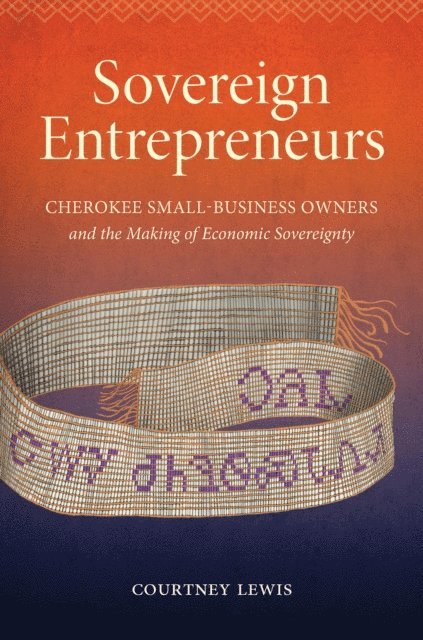
By 2009, reverberations of economic crisis spread from the United States around the globe. As corporations across the United States folded, however, small businesses on the Qualla Boundary of the Eastern Band of Cherokee Indians (EBCI) continued to thrive. In this rich ethnographic study, Courtney Lewis reveals the critical roles small businesses such as these play for Indigenous nations. The EBCI has an especially long history of incorporated, citizen-owned businesses located on their lands. When many people think of Indigenous-owned businesses, they stop with prominent casino gaming operations or natural-resource intensive enterprises. But on the Qualla Boundary today, Indigenous entrepreneurship and economic independence extends to art galleries, restaurants, a bookstore, a funeral parlor, and more.Lewis’s fieldwork followed these businesses through the Great Recession and against the backdrop of a rapidly expanding EBCI-owned casino. Lewis’s keen observations reveal how Eastern Band small business owners have contributed to an economic sovereignty that empowers and sustains their nation both culturally and politically.
E-bok
PDF, Engelska, 2019347 kr
Läs direkt efter köp
By 2009, reverberations of economic crisis spread from the United States around the globe. As corporations across the United States folded, however, small businesses on the Qualla Boundary of the Eastern Band of Cherokee Indians (EBCI) continued to thrive. In this rich ethnographic study, Courtney Lewis reveals the critical roles small businesses such as these play for Indigenous nations. The EBCI has an especially long history of incorporated, citizen-owned businesses located on their lands. When many people think of Indigenous-owned businesses, they stop with prominent casino gaming operations or natural-resource intensive enterprises. But on the Qualla Boundary today, Indigenous entrepreneurship and economic independence extends to art galleries, restaurants, a bookstore, a funeral parlor, and more.Lewis’s fieldwork followed these businesses through the Great Recession and against the backdrop of a rapidly expanding EBCI-owned casino. Lewis’s keen observations reveal how Eastern Band small business owners have contributed to an economic sovereignty that empowers and sustains their nation both culturally and politically.
E-bok
PDF, Engelska, 20191 565 kr
Läs direkt efter köp
By 2009, reverberations of economic crisis spread from the United States around the globe. As corporations across the United States folded, however, small businesses on the Qualla Boundary of the Eastern Band of Cherokee Indians (EBCI) continued to thrive. In this rich ethnographic study, Courtney Lewis reveals the critical roles small businesses such as these play for Indigenous nations. The EBCI has an especially long history of incorporated, citizen-owned businesses located on their lands. When many people think of Indigenous-owned businesses, they stop with prominent casino gaming operations or natural-resource intensive enterprises. But on the Qualla Boundary today, Indigenous entrepreneurship and economic independence extends to art galleries, restaurants, a bookstore, a funeral parlor, and more.Lewis’s fieldwork followed these businesses through the Great Recession and against the backdrop of a rapidly expanding EBCI-owned casino. Lewis’s keen observations reveal how Eastern Band small business owners have contributed to an economic sovereignty that empowers and sustains their nation both culturally and politically.