Craig Bauer – författare
881 kr
Skickas inom 10-15 vardagar
841 kr
Läs direkt efter köp
Eschewing the often standard dry and static writing style of traditional textbooks, Discrete Encounters provides a refreshing approach to discrete mathematics. The author blends traditional course topics and applications with historical context, pop culture references, and open problems. This book focuses on the historical development of the subject and provides fascinating details of the people behind the mathematics, along with their motivations, deepening readers’ appreciation of mathematics.
This unique book covers many of the same topics found in traditional textbooks, but does so in an alternative, entertaining style that better captures readers’ attention. In addition to standard discrete mathematics material, the author shows the interplay between the discrete and the continuous and includes high-interest topics such as fractals, chaos theory, cellular automata, money-saving financial mathematics, and much more. Not only will readers gain a greater understanding of mathematics and its culture, they will also be encouraged to further explore the subject. Long lists of references at the end of each chapter make this easy.
Highlights:
Features fascinating historical context to motivate readers
Text includes numerous pop culture references throughout to provide a more engaging reading experience
Its unique topic structure presents a fresh approach
The text’s narrative style is that of a popular book, not a dry textbook
Includes the work of many living mathematicians
Its multidisciplinary approach makes it ideal for liberal arts mathematics classes, leisure reading, or as a reference for professors looking to supplement traditional courses
Contains many open problems
Profusely illustrated
841 kr
Läs direkt efter köp
Eschewing the often standard dry and static writing style of traditional textbooks, Discrete Encounters provides a refreshing approach to discrete mathematics. The author blends traditional course topics and applications with historical context, pop culture references, and open problems. This book focuses on the historical development of the subject and provides fascinating details of the people behind the mathematics, along with their motivations, deepening readers’ appreciation of mathematics.
This unique book covers many of the same topics found in traditional textbooks, but does so in an alternative, entertaining style that better captures readers’ attention. In addition to standard discrete mathematics material, the author shows the interplay between the discrete and the continuous and includes high-interest topics such as fractals, chaos theory, cellular automata, money-saving financial mathematics, and much more. Not only will readers gain a greater understanding of mathematics and its culture, they will also be encouraged to further explore the subject. Long lists of references at the end of each chapter make this easy.
Highlights:
Features fascinating historical context to motivate readers
Text includes numerous pop culture references throughout to provide a more engaging reading experience
Its unique topic structure presents a fresh approach
The text’s narrative style is that of a popular book, not a dry textbook
Includes the work of many living mathematicians
Its multidisciplinary approach makes it ideal for liberal arts mathematics classes, leisure reading, or as a reference for professors looking to supplement traditional courses
Contains many open problems
Profusely illustrated
742 kr
Skickas inom 10-15 vardagar
1 237 kr
Skickas inom 10-15 vardagar
1 009 kr
Läs direkt efter köp
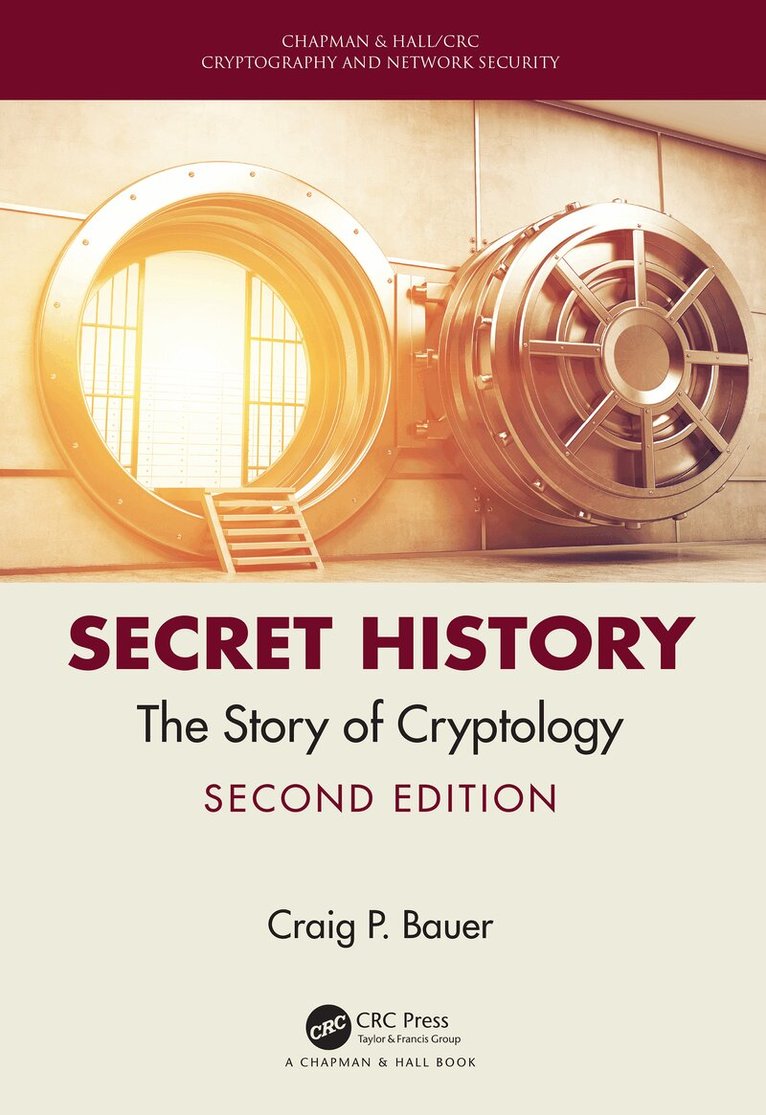
The first edition of this award-winning book attracted a wide audience. This second edition is both a joy to read and a useful classroom tool. Unlike traditional textbooks, it requires no mathematical prerequisites and can be read around the mathematics presented. If used as a textbook, the mathematics can be prioritized, with a book both students and instructors will enjoy reading.
Secret History: The Story of Cryptology, Second Edition incorporates new material concerning various eras in the long history of cryptology. Much has happened concerning the political aspects of cryptology since the first edition appeared. The still unfolding story is updated here.
The first edition of this book contained chapters devoted to the cracking of German and Japanese systems during World War II. Now the other side of this cipher war is also told, that is, how the United States was able to come up with systems that were never broken.
The text is in two parts. Part I presents classic cryptology from ancient times through World War II. Part II examines modern computer cryptology. With numerous real-world examples and extensive references, the author skillfully balances the history with mathematical details, providing readers with a sound foundation in this dynamic field.
FEATURES
Presents a chronological development of key concepts
Includes the Vigenère cipher, the one-time pad, transposition ciphers, Jefferson’s wheel cipher, Playfair cipher, ADFGX, matrix encryption, Enigma, Purple, and other classic methods
Looks at the work of Claude Shannon, the origin of the National Security Agency, elliptic curve cryptography, the Data Encryption Standard, the Advanced Encryption Standard, public-key cryptography, and many other topics
New chapters detail SIGABA and SIGSALY, successful systems used during World War II for text and speech, respectively Includes quantum cryptography and the impact of quantum computers
1 009 kr
Läs direkt efter köp
The first edition of this award-winning book attracted a wide audience. This second edition is both a joy to read and a useful classroom tool. Unlike traditional textbooks, it requires no mathematical prerequisites and can be read around the mathematics presented. If used as a textbook, the mathematics can be prioritized, with a book both students and instructors will enjoy reading.
Secret History: The Story of Cryptology, Second Edition incorporates new material concerning various eras in the long history of cryptology. Much has happened concerning the political aspects of cryptology since the first edition appeared. The still unfolding story is updated here.
The first edition of this book contained chapters devoted to the cracking of German and Japanese systems during World War II. Now the other side of this cipher war is also told, that is, how the United States was able to come up with systems that were never broken.
The text is in two parts. Part I presents classic cryptology from ancient times through World War II. Part II examines modern computer cryptology. With numerous real-world examples and extensive references, the author skillfully balances the history with mathematical details, providing readers with a sound foundation in this dynamic field.
FEATURES
Presents a chronological development of key concepts
Includes the Vigenère cipher, the one-time pad, transposition ciphers, Jefferson’s wheel cipher, Playfair cipher, ADFGX, matrix encryption, Enigma, Purple, and other classic methods
Looks at the work of Claude Shannon, the origin of the National Security Agency, elliptic curve cryptography, the Data Encryption Standard, the Advanced Encryption Standard, public-key cryptography, and many other topics
New chapters detail SIGABA and SIGSALY, successful systems used during World War II for text and speech, respectively Includes quantum cryptography and the impact of quantum computers
2 438 kr
Skickas inom 10-15 vardagar