
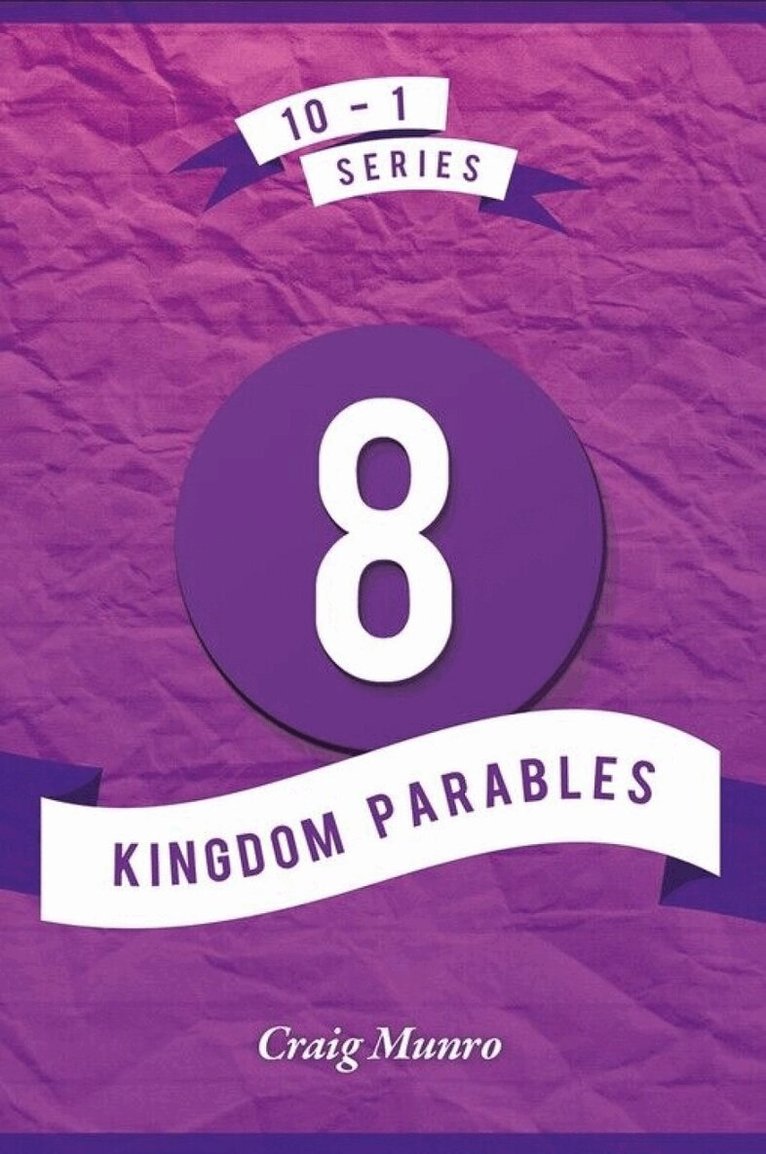
This is the third of a series, dealing with familiar Bible topics. Craig first covered The Ten Commandments and then The Nine Beatitudes. He now covers The Eight Kingdom Parables. Eight Kingdom Parables! Are we not accustomed to speaking of “The Seven Parables of the Kingdom” in Matthew 13? Craig contends that the reference to the householder at v.52 should be included, and so he speaks of eight parables. Although basically doctrinal, the book is incisive in the challenge it presents regarding our commitment to sow seed. Are we employing every avenue open to us to communicate the Word of God? Stress is laid on the fact that it is the only method whereby souls are reached for the Kingdom. Craig’s expositions and conclusions are well backed up with a multitude of Bible references that demonstrate his wide knowledge of the Scriptures, even those parts that we might regard as obscure. In his introduction, Craig suggests that each chapter of his book can be read in five minutes. We recommend that you devote just a little longer to it! If you are going to digest all that is there, and follow up on the Bible references, it will need some diligent thought. We do trust that the little volume will be really enlightening to those of you who are exploring these things for the first time, and an encouraging refresher course for those of you who have known them for many years.

David is one of the principal characters of our Bible. HIs name is mentioned over 1000 times in Scripture, and it is the most referenced name in the Bible. In the New Testament, his name comes immediately after that of the Lord Jesus: "The book of the generation of Jesus Christ, the son of David" (Matt 1.1). Interestingly, David is also the second last name in the New Testament: "I am the root and offspring of David...the grace of our Lord Jesus Christ be with you all. Amen" (Rev 22.16-21). In other words, David is a character who seems to shadow our blessed Lord, and his life is full of meaning and lessons for all believers.The emphasis of this character study is not so much in re-telling David's story, although some of that has been necessary, but rather in considering the lessons we can learn from the life of David for our lives today. Therefore, this book is devotional and practical in nature, rather than being expository. Thirteen of the titles of the 75 psalms of David share details of their settings, and these 13 psalms are all arranged chronologically in this book, after each chapter, without commentary, and after the relevant setting for each psalm has been discussed. If there is no psalm that we are aware of being written in the period under consideration, then a psalm has been selected that is relevant.It is hoped that the simple reading of the psalm in its context will prove to be a selah moment of deeper reflection upon the Word of God and appreciation of our God.
This is the third of a series, dealing with familiar Bible topics. Craig first covered The Ten Commandments and then The Nine Beatitudes. He now covers The Eight Kingdom Parables. Eight Kingdom Parables! Are we not accustomed to speaking of “The Seven Parables of the Kingdom” in Matthew 13? Craig contends that the reference to the householder at v.52 should be included, and so he speaks of eight parables. Although basically doctrinal, the book is incisive in the challenge it presents regarding our commitment to sow seed. Are we employing every avenue open to us to communicate the Word of God? Stress is laid on the fact that it is the only method whereby souls are reached for the Kingdom. Craig’s expositions and conclusions are well backed up with a multitude of Bible references that demonstrate his wide knowledge of the Scriptures, even those parts that we might regard as obscure. In his introduction, Craig suggests that each chapter of his book can be read in five minutes. We recommend that you devote just a little longer to it! If you are going to digest all that is there, and follow up on the Bible references, it will need some diligent thought. We do trust that the little volume will be really enlightening to those of you who are exploring these things for the first time, and an encouraging refresher course for those of you who have known them for many years.
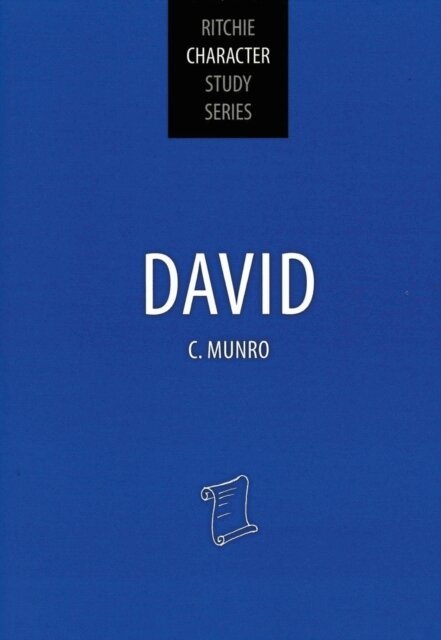
David is one of the principal characters of our Bible. HIs name is mentioned over 1000 times in Scripture, and it is the most referenced name in the Bible. In the New Testament, his name comes immediately after that of the Lord Jesus: "The book of the generation of Jesus Christ, the son of David" (Matt 1.1). Interestingly, David is also the second last name in the New Testament: "I am the root and offspring of David...the grace of our Lord Jesus Christ be with you all. Amen" (Rev 22.16-21). In other words, David is a character who seems to shadow our blessed Lord, and his life is full of meaning and lessons for all believers.The emphasis of this character study is not so much in re-telling David's story, although some of that has been necessary, but rather in considering the lessons we can learn from the life of David for our lives today. Therefore, this book is devotional and practical in nature, rather than being expository. Thirteen of the titles of the 75 psalms of David share details of their settings, and these 13 psalms are all arranged chronologically in this book, after each chapter, without commentary, and after the relevant setting for each psalm has been discussed. If there is no psalm that we are aware of being written in the period under consideration, then a psalm has been selected that is relevant.It is hoped that the simple reading of the psalm in its context will prove to be a selah moment of deeper reflection upon the Word of God and appreciation of our God.