Craig N. Shealy - Böcker
Visar alla böcker från författaren Craig N. Shealy. Handla med fri frakt och snabb leverans.
2 produkter
2 produkter
1 354 kr
Skickas inom 5-8 vardagar
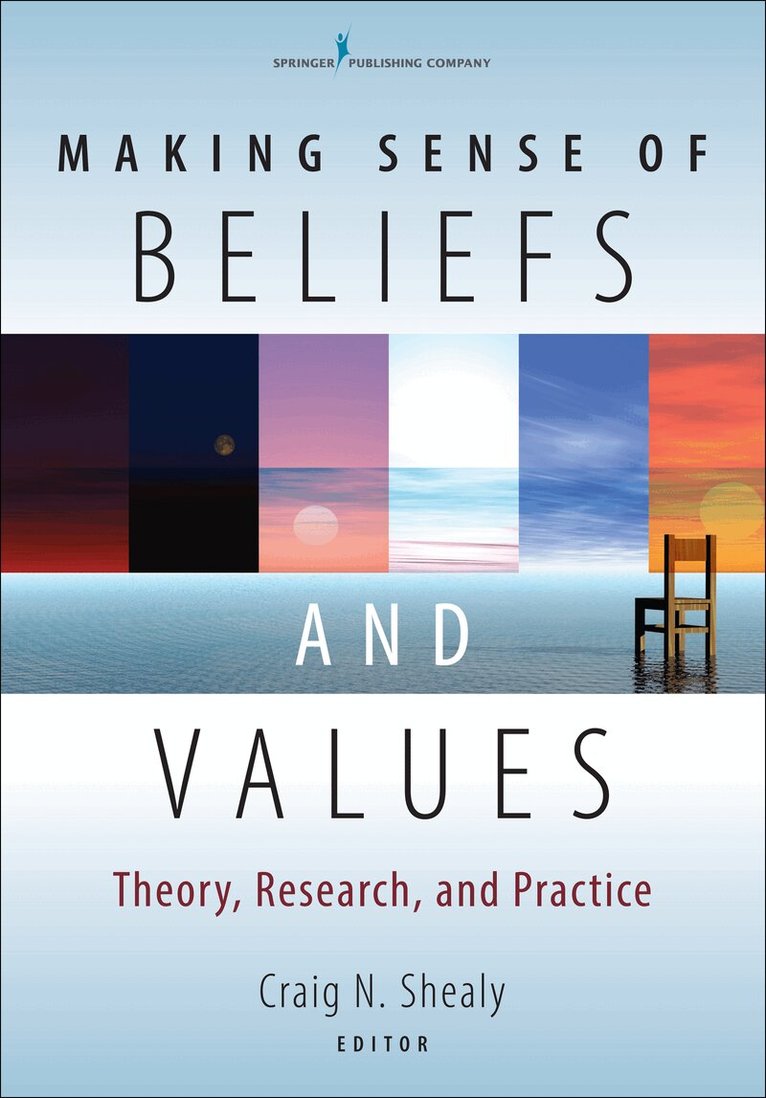
This book is both inspirational and informative. Shealy and co-authors show how understanding why we form beliefs and values and how we use them can promote rich and reflective accounts of human motivation and action - essential ideas as we try to cultivate a global society and citizenry. -- Merry Bullock, PhD, Executive Committee, International Union of Psychological Science In educating our children, we as a society put great emphasis on knowledge and abstract analytical thinking. But if you look at what moves a society and changes it, you don't find knowledge and abstract analytical thinking having much to do with it. Rather, you find that societies move forward, and too often, backward, on the basis of the beliefs and values of their citizens and their leaders. This book will help you understand how those beliefs and values come to be, how they are organized, and how they translate into the actions that make our world either a better, or a worse place in which to live. --Robert J. Sternberg, PhD, Professor of Human Development, Cornell University Social psychologists have studied beliefs and values and related constructs such as "attitudes" and "prejudice" for decades. But as this innovative andinterdisciplinary book convincingly demonstrates, the scientific examination of beliefs and values now influences research and practice across a range ofdisciplines. Specifically, this edited volume explores the many cutting-edge implications and applications of Equilintegration (EI) Theory and the Beliefs, Events, and Values Inventory (BEVI). Grounded in 20 years of research and practice, EI Theory seeks to explain the processes by which beliefs, values, and worldviews are acquired and maintained, why their alteration is resisted, and under what circumstances they are modified. Based upon EI Theory, the BEVI is a comprehensive analytic tool that examines how and why we come to see ourselves, others, and the world as we do, as well as the influence of such processes on multiple aspects of human functioning. Edited by the developer of the EI model and BEVI method, and informed by contributions from leading U.S. and international scholars, this book features captivating research findings and pioneering practice applications. Research-focused chapters explain how the EI model and BEVI method increase our conceptual sophistication and methodological capacity across a range of areas: culture, development, environment, gender, politics, and religion.Practice-oriented chapters demonstrate how the BEVI is used in the real world across a range of applied domains: assessment, education, forensics, leadership, and psychotherapy. Written in an accessible and engaging manner, this fascinating and timely volume speaks to many of the most pressing issuesof our day, illuminating why we believe what we believe and demonstrating how our beliefs and values may be assessed, explained, and transformed in the real world.
779 kr
Skickas inom 7-10 vardagar
This is the authoritative guide for current and future psychologists around the world who are or want to be engaged in international efforts and opportunities and meet pressing global needs.Psychologists are increasingly applying their knowledge, skills, and values to big picture issues such as sustainability, human rights, conflict resolution, global education, and religious and cultural understanding. However, education, training, and professional development often overlook "thinking and acting globally" as a vital component of the professional identities of psychologists.With decades of international experience as scholars, educators, practitioners, policymakers, and consultants, contributors to this book describe exemplary programs, relevant trends, and dynamic possibilities for global engagement. They focus specifically on nine key areas of expertise through which psychologists can make a difference: advocacy, assessment, consultation, intervention, leadership, policy, research, service, teaching Chapters also highlight opportunities for international and interdisciplinary collaboration while empowering indigenous voices and psychologies.