Craig Watkins - Böcker
Visar alla böcker från författaren Craig Watkins. Handla med fri frakt och snabb leverans.
4 produkter
4 produkter
3 095 kr
Skickas inom 10-15 vardagar
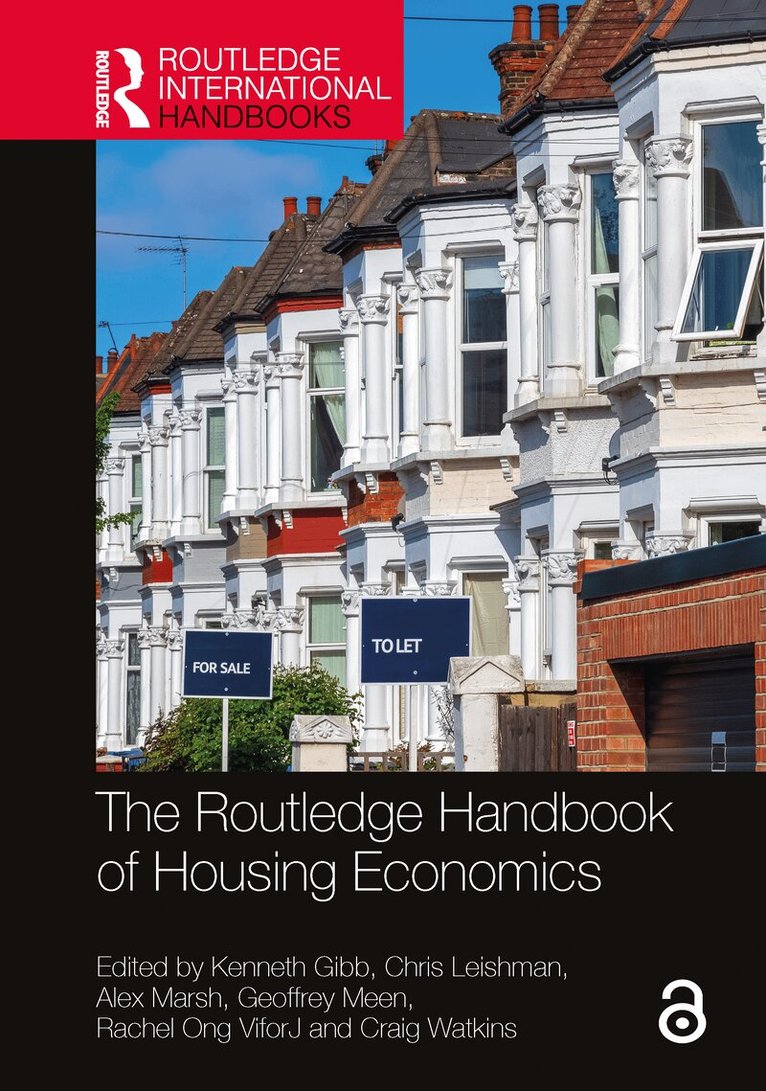
The Routledge Handbook of Housing Economics brings together an international panel of contributors to present a comprehensive overview of this important field within economics. Housing occupies an increasingly central role in modern society, dominating consumer assets and spending, forming an important part of social policy and being a large enough market to impact the macroeconomy. This handbook tackles these themes, along with other critical issues such as intergenerational housing inequality and the efficiency and social justice of housing interventions.This volume is structured in four main parts. It starts with eight chapters in microeconomics and housing. This is followed by two shorter sections on macroeconomics and finance. The final main part of the book is concerned with eight chapters on policy dimensions. While many of the chapters are rooted in mainstream economics and finance applied to housing, there are also chapters stressing institutional, behavioural and political economy orientations, as well as those that explicitly challenge more mainstream accounts. The contributing authors are based in Europe, North America and Australia and all draw in international literature to provide state of the art reviews of their topics.This carefully curated handbook will be essential reading for advanced students, researchers and policy makers in housing economics, urban economics, urban planning, public economics and real estate economics and finance.Chapter 22 of this book is freely available as a downloadable Open Access PDF at http://www.taylorfrancis.com under a Creative Commons Attribution-Non Commercial-No Derivatives (CC-BY-NC-ND) 4.0 license.
1 596 kr
Skickas inom 7-10 vardagar
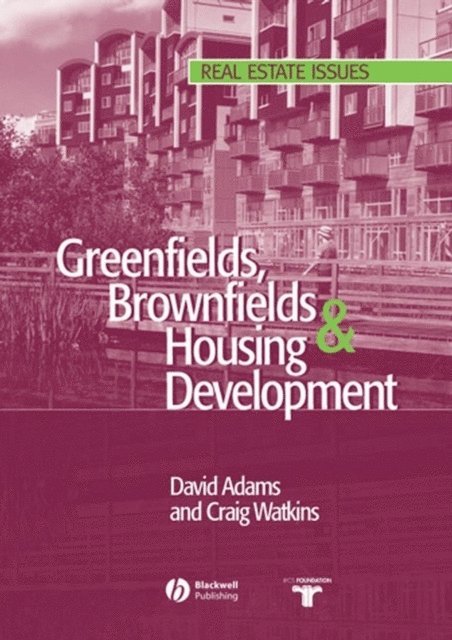
The location of new housing development has become one of the most intractable controversies of modern times. This book provides a powerful critique of the growing tendency to reduce the debate on the development of new housing to a mere choice between greenfield and brownfield locations. It calls for full account to be taken of such factors as the structure and organisation of the housebuilding industry, supply and demand pressures in the housing market, the contested nature of sustainability and the political character of the planning process if a truly effective housing land policy is to be devised. Drawing on theories from economics and political science, this book will provide an important reference point on the institutional context within which residential development takes place and on the concerns of planning authorities, environmentalists, housebuilders, and their customers in relation to the apparent choice between greenfield and brownfield development.
658 kr
Skickas inom 10-15 vardagar
The Routledge Handbook of Housing Economics brings together an international panel of contributors to present a comprehensive overview of this important field within economics. Housing occupies an increasingly central role in modern society, dominating consumer assets and spending, forming an important part of social policy and being a large enough market to impact the macroeconomy. This handbook tackles these themes, along with other critical issues such as intergenerational housing inequality and the efficiency and social justice of housing interventions.This volume is structured in four main parts. It starts with eight chapters in microeconomics and housing. This is followed by two shorter sections on macroeconomics and finance. The final main part of the book is concerned with eight chapters on policy dimensions. While many of the chapters are rooted in mainstream economics and finance applied to housing, there are also chapters stressing institutional, behavioural and political economy orientations, as well as those that explicitly challenge more mainstream accounts. The contributing authors are based in Europe, North America and Australia and all draw in international literature to provide state of the art reviews of their topics.This carefully curated handbook will be essential reading for advanced students, researchers and policy makers in housing economics, urban economics, urban planning, public economics and real estate economics and finance.Chapter 22 of this book is freely available as a downloadable Open Access PDF at http://www.taylorfrancis.com under a Creative Commons Attribution-Non Commercial-No Derivatives (CC-BY-NC-ND) 4.0 license.
1 644 kr
Skickas inom 7-10 vardagar
The focus of this book is on how public policy - and especially the planning system - both shapes and reflects the essential characteristics of land and property markets. It challenges the common misconceptions that property markets operate in isolation from public policy and that planning permission is the only significant form of state intervention in the market. Planning, Public Policy & Property Markets contends that effective state-market relations in land and property are critical to a prosperous economy and a robust democracy, especially at a time when development aims to be sustainable and environmental protection needs to be matched by urban and rural regeneration. The book thus reflects an increased realisation among academics and practitioners of the importance of theoretical integration and ‘joined-up’ policy-making. Its rounded perspective addresses a significant weakness in the academic literature and will encourage broader debate and a more pluralist agenda for property research. Prominent contributors present important new research on different market sectors and policy arenas, including regeneration and renewal, housing growth, housing planning, transport and economic competitiveness, while the editors specifically draw out more general lessons on the dynamic nature of the state/property market relationship in a modern economy. This book will encourage all those involved in property research who strive for theoretical and practical connectivity to demonstrate that, just as property market operations cannot be analysed without understanding state processes, policy decisions cannot be taken without an appreciation of how the market operates.