Crislayne Alfagali - Böcker
Visar alla böcker från författaren Crislayne Alfagali. Handla med fri frakt och snabb leverans.
2 produkter
2 produkter
Blacksmiths of Ilamba
A Social History of Labor at the Nova Oeiras Iron Foundry (Angola, 18th Century)
Inbunden, Engelska, 2023
855 kr
Skickas inom 5-8 vardagar
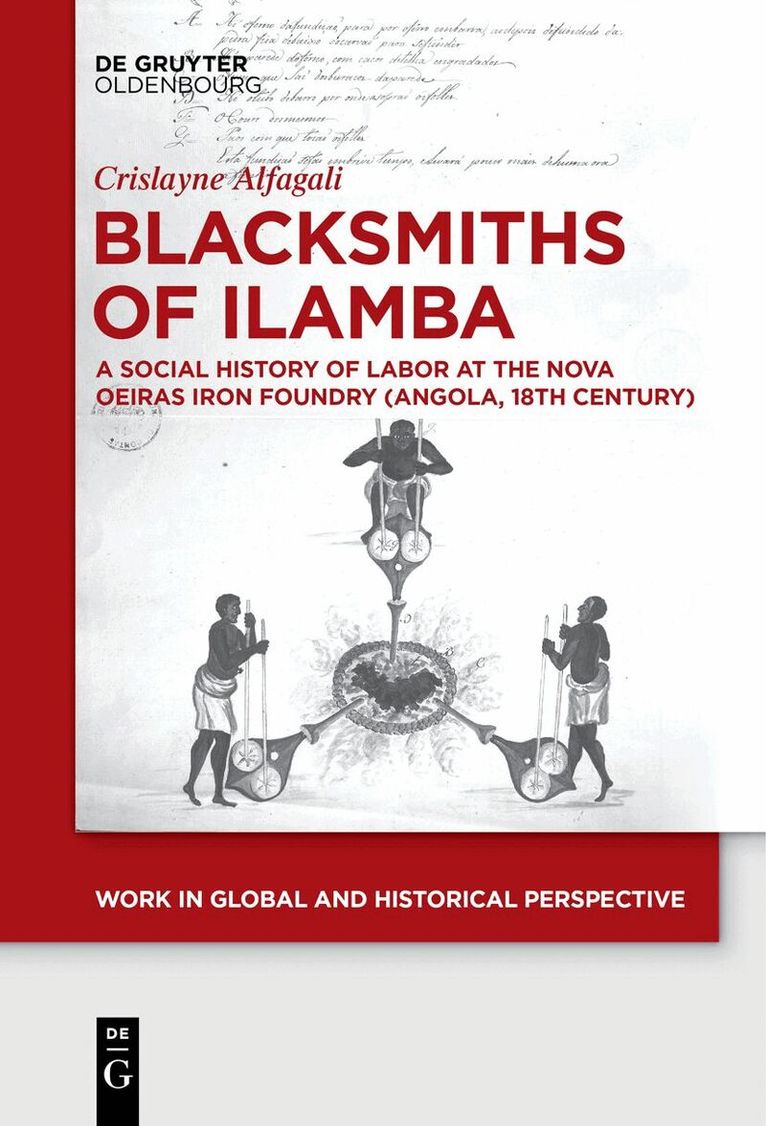
This study analyzes the establishment of an iron foundry in the interior 18th-century of Angola. It was a fruit of the Portuguese Enlightenment, which encouraged investment in manufacturing, particularly of iron, a metal indispensable for military and technological purposes. However, the plans faced the resistance of African blacksmiths and founders who refused to learn foreign techniques and work processes. By emphasizing Central African agency, the book highlights the successful strategies of historical actors who scholars have largely ignored. Based upon a wide variety of sources from Brazilian, Portuguese, and Angolan archives, the book reconstructs how Africans were taken to work at the foundry and the important role they played in developing the form of production employed there. By emphasizing continuities with African technology and the quality of the iron produced, it counters interpretations of the project as an example of the failure of the Portuguese Enlightenment. The analysis demonstrates the circulation of knowledge about iron production, thus revitalizing debates that have posited knowledge transmission as unidirectional. It also highlights the relationship between local political leaders and the colonial government, in addition to elucidating the processes by which workers were organized.
Del 15 - Work in Global and Historical Perspective
Blacksmiths of Ilamba
A Social History of Labor at the Nova Oeiras Iron Foundry (Angola, 18th Century)
Häftad, Engelska, 2024
307 kr
Skickas inom 3-6 vardagar
This study analyzes the establishment of an iron foundry in the interior 18th-century of Angola. It was a fruit of the Portuguese Enlightenment, which encouraged investment in manufacturing, particularly of iron, a metal indispensable for military and technological purposes. However, the plans faced the resistance of African blacksmiths and founders who refused to learn foreign techniques and work processes. By emphasizing Central African agency, the book highlights the successful strategies of historical actors who scholars have largely ignored. Based upon a wide variety of sources from Brazilian, Portuguese, and Angolan archives, the book reconstructs how Africans were taken to work at the foundry and the important role they played in developing the form of production employed there. By emphasizing continuities with African technology and the quality of the iron produced, it counters interpretations of the project as an example of the failure of the Portuguese Enlightenment. The analysis demonstrates the circulation of knowledge about iron production, thus revitalizing debates that have posited knowledge transmission as unidirectional. It also highlights the relationship between local political leaders and the colonial government, in addition to elucidating the processes by which workers were organized.