Cristian Tileagă - Böcker
Visar alla böcker från författaren Cristian Tileagă. Handla med fri frakt och snabb leverans.
4 produkter
4 produkter
723 kr
Skickas inom 7-10 vardagar
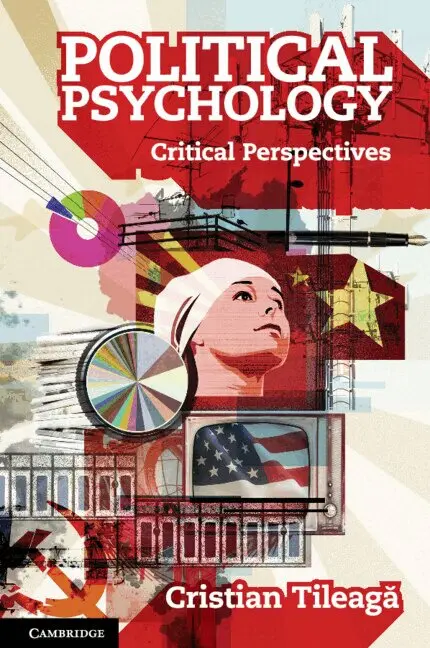
This book provides an introduction to political psychology through a focus on European politics and topics. It describes a style of doing political psychology in Europe that has developed out of dialogue with as well as critique of North American approaches. By emphasising the theoretical and methodological diversity of political psychology, the book is intended to contribute to a greater understanding of the strength and utility of the field. • Opens up and extends the study of political psychology to a variety of socio-political contexts and manifestations of political behaviour • Clearly outlines the usefulness and promises of distinctive critical approaches in social and political psychology • Explicitly considers the role of language, communication, identity and social representations in the construction of political meanings. Political Psychology will appeal to upper-level students and scholars who seek to extend their knowledge of the complex relationship between psychology, politics and society.
1 417 kr
Skickas inom 7-10 vardagar
As disciplines, psychology and history share a primary concern with the human condition. Yet historically, the relationship between the two fields has been uneasy, marked by a long-standing climate of mutual suspicion. This book engages with the history of this relationship and possibilities for its future intellectual and empirical development. Bringing together internationally renowned psychologists and historians, it explores the ways in which the two disciplines could benefit from a closer dialogue. Thirteen chapters span a broad range of topics, including social memory, prejudice, stereotyping, affect and emotion, cognition, personality, gender and the self. Contributors draw on examples from different cultural contexts - from eighteenth-century Britain, to apartheid South Africa, to conflict-torn Yugoslavia - to offer fresh impetus to interdisciplinary scholarship. Generating new ideas, research questions and problems, this book encourages researchers to engage in genuine dialogue and place their own explorations in new intellectual contexts.
349 kr
Skickas inom 7-10 vardagar
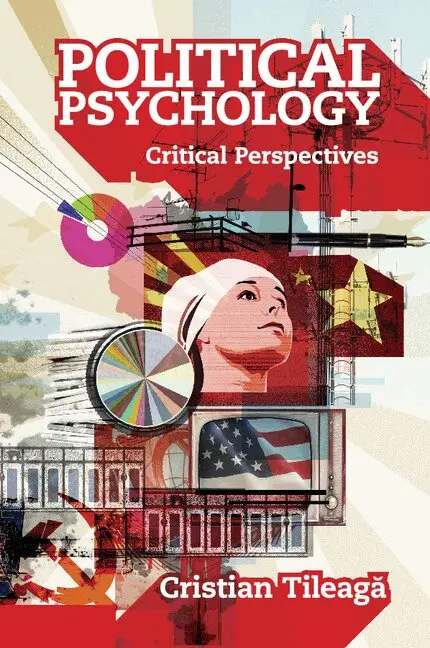
This book provides an introduction to political psychology through a focus on European politics and topics. It describes a style of doing political psychology in Europe that has developed out of dialogue with as well as critique of North American approaches. By emphasising the theoretical and methodological diversity of political psychology, the book is intended to contribute to a greater understanding of the strength and utility of the field. • Opens up and extends the study of political psychology to a variety of socio-political contexts and manifestations of political behaviour • Clearly outlines the usefulness and promises of distinctive critical approaches in social and political psychology • Explicitly considers the role of language, communication, identity and social representations in the construction of political meanings. Political Psychology will appeal to upper-level students and scholars who seek to extend their knowledge of the complex relationship between psychology, politics and society.
468 kr
Skickas inom 7-10 vardagar
As disciplines, psychology and history share a primary concern with the human condition. Yet historically, the relationship between the two fields has been uneasy, marked by a long-standing climate of mutual suspicion. This book engages with the history of this relationship and possibilities for its future intellectual and empirical development. Bringing together internationally renowned psychologists and historians, it explores the ways in which the two disciplines could benefit from a closer dialogue. Thirteen chapters span a broad range of topics, including social memory, prejudice, stereotyping, affect and emotion, cognition, personality, gender and the self. Contributors draw on examples from different cultural contexts - from eighteenth-century Britain, to apartheid South Africa, to conflict-torn Yugoslavia - to offer fresh impetus to interdisciplinary scholarship. Generating new ideas, research questions and problems, this book encourages researchers to engage in genuine dialogue and place their own explorations in new intellectual contexts.