Cristina Castel-Branco – författare
Visar alla böcker från författaren Cristina Castel-Branco. Handla med fri frakt och snabb leverans.
6 produkter
6 produkter
Häftad, Engelska, 2026
702 kr
Skickas inom 10-15 vardagar
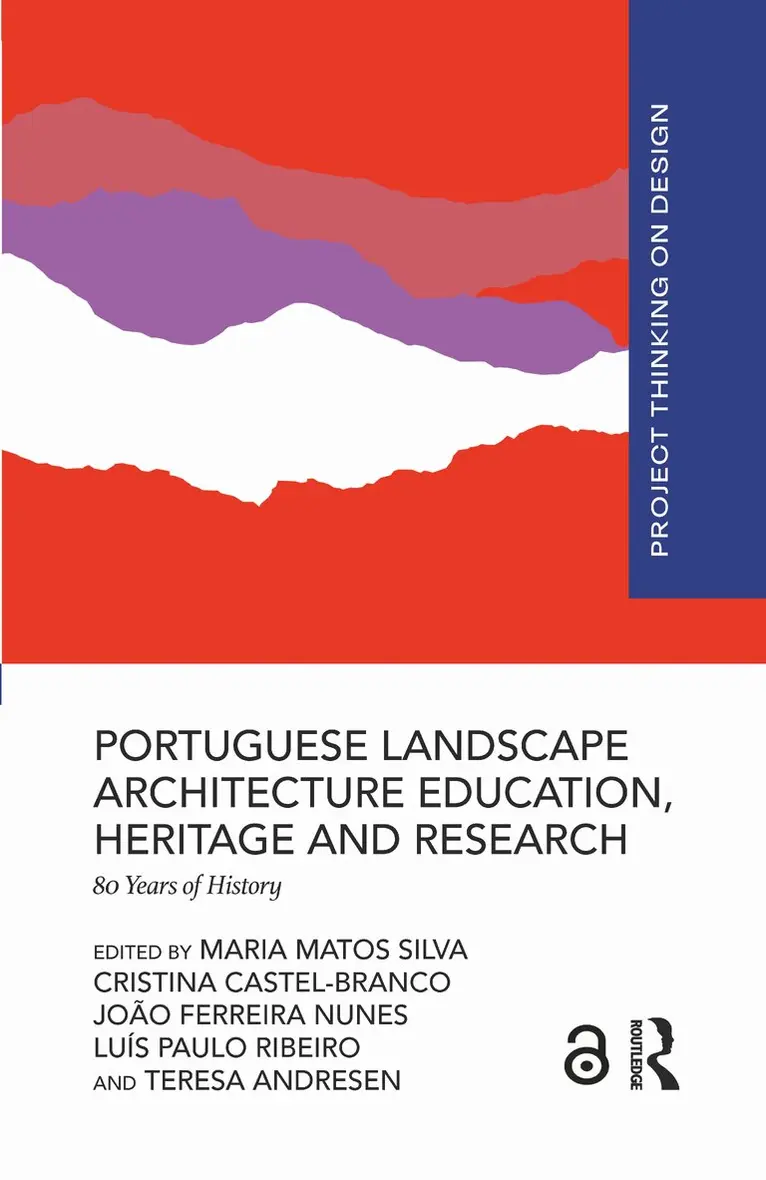
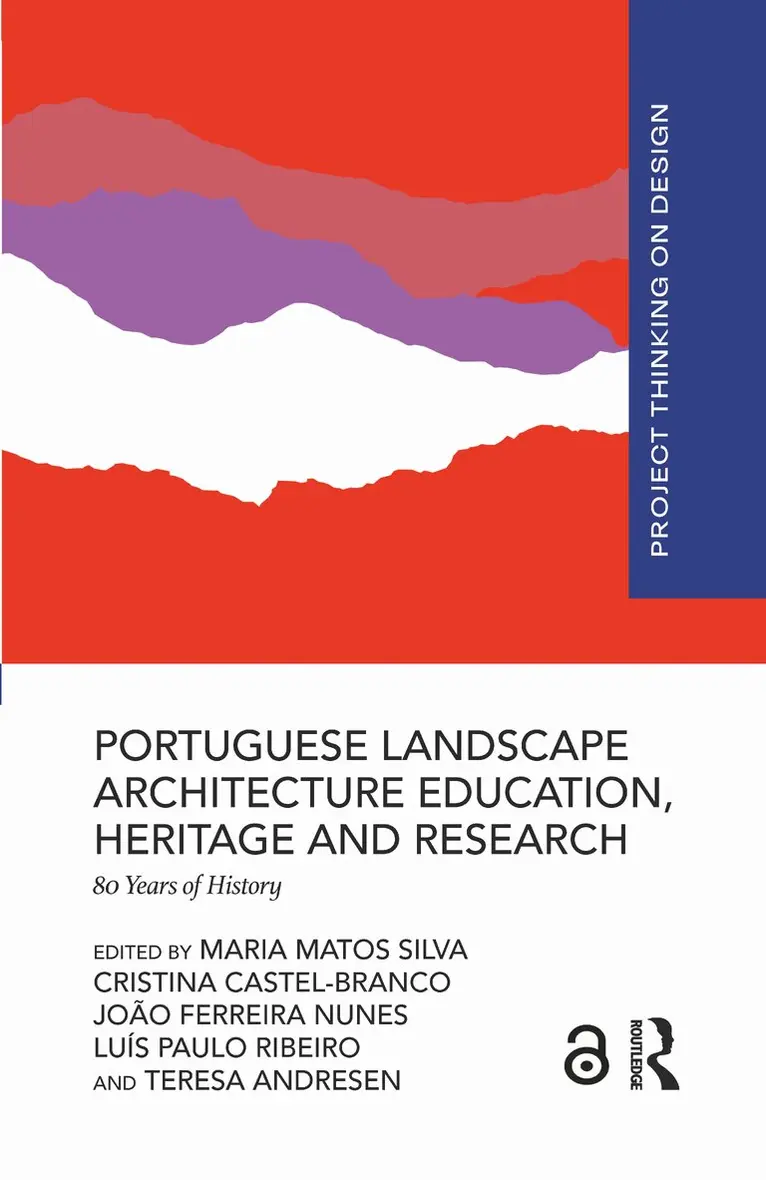
In 2022, the Landscape Architecture course in Portugal celebrated 80 years of existence. This edited collection, Portuguese Landscape Architecture Education, Heritage and Research, commemorates this important milestone by bringing together some of the most respected names in Portuguese Landscape Architecture.Although the book’s content is targeted at the assessment of the Portuguese history and influence, the themes under analysis are all-encompassing within the major fields, namely pedagogy; heritage; theory and methods; and design and landscape planning and management. The book seeks to address several research questions, includingHow has Landscape Architecture evolved in Portugal and how has it been revealed in the different disciplinary areas and educational institutions, particularly considering the great challenges of today?What legacy did Cabral, Sousa da Câmara and the first generation of landscape architects leave us that can be identified in the theory and practice of research projects, recent or ongoing, carried out by Portuguese landscape architects?How has the education, research and practice of Landscape Architecture in Portugal been influenced or reflected by the exchange of knowledge with other countries?This book will be of interest to researchers and students, as it encompasses an extensive contribution to the field of Landscape Architecture studies, aiming to impact both on the theory and practice of the discipline.The Open Access version of this book, available at http://www.taylorfrancis.com, has been made available under a Creative Commons Attribution (CC BY) 4.0 license.
Inbunden, Engelska, 2024
2 495 kr
Skickas inom 10-15 vardagar
In 2022, the Landscape Architecture course in Portugal celebrated 80 years of existence. This edited collection, Portuguese Landscape Architecture Education, Heritage and Research, commemorates this important milestone by bringing together some of the most respected names in Portuguese Landscape Architecture.Although the book’s content is targeted at the assessment of the Portuguese history and influence, the themes under analysis are all-encompassing within the major fields, namely pedagogy; heritage; theory and methods; and design and landscape planning and management. The book seeks to address several research questions, includingHow has Landscape Architecture evolved in Portugal and how has it been revealed in the different disciplinary areas and educational institutions, particularly considering the great challenges of today?What legacy did Cabral, Sousa da Câmara and the first generation of landscape architects leave us that can be identified in the theory and practice of research projects, recent or ongoing, carried out by Portuguese landscape architects?How has the education, research and practice of Landscape Architecture in Portugal been influenced or reflected by the exchange of knowledge with other countries?This book will be of interest to researchers and students, as it encompasses an extensive contribution to the field of Landscape Architecture studies, aiming to impact both on the theory and practice of the discipline.The Open Access version of this book, available at http://www.taylorfrancis.com, has been made available under a Creative Commons Attribution (CC BY) 4.0 license.
Inbunden, Engelska, 2023
1 135 kr
Skickas inom 5-8 vardagar
Inbunden, Engelska, 2019
1 664 kr
Skickas inom 10-15 vardagar
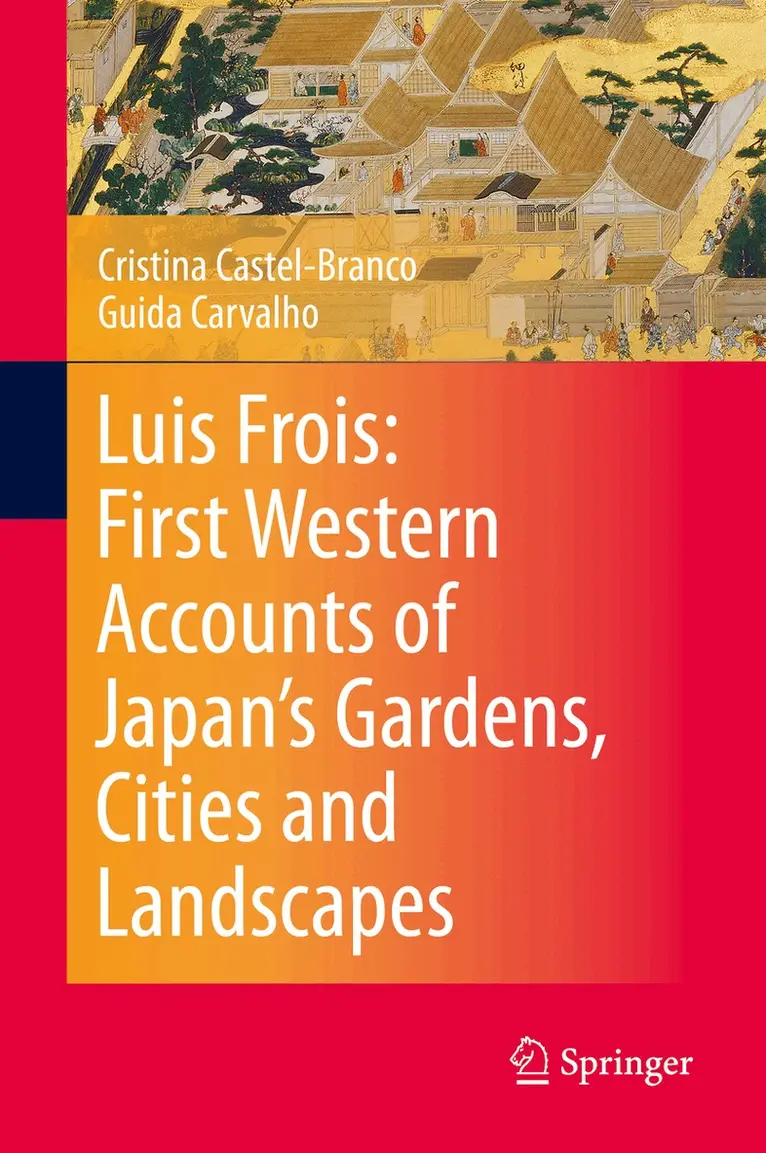
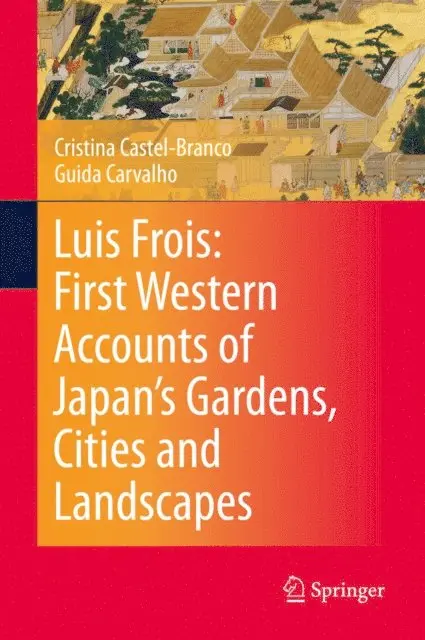
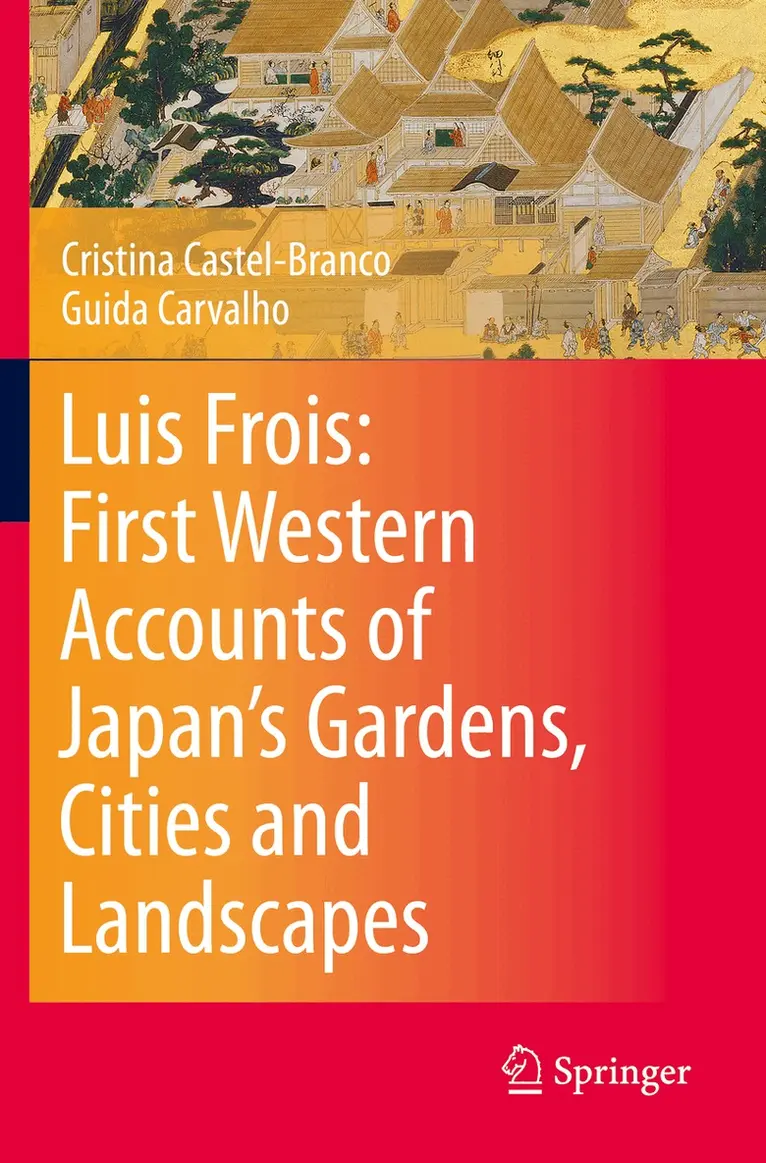
This book focuses on Luis Frois, a 16th-century Portuguese Jesuit and chronicler, who recorded his impressions of Japanese gardens, cities and building practices, tea-drinking rituals, Japan’s unification efforts, cultural traditions, and the many differences between Europe and Japan in remarkable manuscripts almost lost to time. This research also draws on other Portuguese descriptions from contemporary sources spanning the years 1543 – 1597, later validated by Japanese history and iconography. Importantly, explorer Jorge Alvares recorded his experiences of discovery, prompting St. Francis Xavier to visit Japan in 1549, thus ushering in the “Christian Century” in Japan.During this long period of accord and reciprocal curiosity, the Portuguese wrote in excess of 1500 pages of letters to European Jesuits that detail their impressions of the island nation—not to mention their observations of powerful public figures such as Oda Nobunaga, Toyotomi Hideyoshi,and Sen no Rikyu. In addition to examining these letters, the authors translated and researched early descriptions of 23 gardens in Kyoto and Nara and 9 important cities—later visited by the authors, sketched, photographed and compared with the imagery painted on 16th-century Japanese screens.However, the data gathered for this project was found mainly within five large volumes of Frois’ História do Japão (2500 pages) and his Treaty on Contradictions—two incomparable anthropological works that were unpublished until the mid-20th century for reasons detailed herein. His volumes continue to be explored for their insightful observations of places, cultural practices, and the formidable historical figures with whom he interacted.Thus, this book examines the world’s first globalization efforts that resulted in profitable commerce, the introduction of Portuguese firearms that changed Japan’s history, scientific advances, religious expansion, and many artistic exchanges that have endured the centuries.
E-bok
Engelska, 20192 036 kr
Läs direkt efter köp
This book focuses on Luis Frois, a 16th-century Portuguese Jesuit and chronicler, who recorded his impressions of Japanese gardens, cities and building practices, tea-drinking rituals, Japan’s unification efforts, cultural traditions, and the many differences between Europe and Japan in remarkable manuscripts almost lost to time. This research also draws on other Portuguese descriptions from contemporary sources spanning the years 1543 – 1597, later validated by Japanese history and iconography. Importantly, explorer Jorge Alvares recorded his experiences of discovery, prompting St. Francis Xavier to visit Japan in 1549, thus ushering in the “Christian Century” in Japan.During this long period of accord and reciprocal curiosity, the Portuguese wrote in excess of 1500 pages of letters to European Jesuits that detail their impressions of the island nation—not to mention their observations of powerful public figures such as Oda Nobunaga, Toyotomi Hideyoshi,and Sen no Rikyu. In addition to examining these letters, the authors translated and researched early descriptions of 23 gardens in Kyoto and Nara and 9 important cities—later visited by the authors, sketched, photographed and compared with the imagery painted on 16th-century Japanese screens.However, the data gathered for this project was found mainly within five large volumes of Frois’ História do Japão (2500 pages) and his Treaty on Contradictions—two incomparable anthropological works that were unpublished until the mid-20th century for reasons detailed herein. His volumes continue to be explored for their insightful observations of places, cultural practices, and the formidable historical figures with whom he interacted.Thus, this book examines the world’s first globalization efforts that resulted in profitable commerce, the introduction of Portuguese firearms that changed Japan’s history, scientific advances, religious expansion, and many artistic exchanges that have endured the centuries.
Häftad, Engelska, 2020
1 664 kr
Skickas inom 10-15 vardagar
This book focuses on Luis Frois, a 16th-century Portuguese Jesuit and chronicler, who recorded his impressions of Japanese gardens, cities and building practices, tea-drinking rituals, Japan’s unification efforts, cultural traditions, and the many differences between Europe and Japan in remarkable manuscripts almost lost to time. This research also draws on other Portuguese descriptions from contemporary sources spanning the years 1543 – 1597, later validated by Japanese history and iconography. Importantly, explorer Jorge Alvares recorded his experiences of discovery, prompting St. Francis Xavier to visit Japan in 1549, thus ushering in the “Christian Century” in Japan.During this long period of accord and reciprocal curiosity, the Portuguese wrote in excess of 1500 pages of letters to European Jesuits that detail their impressions of the island nation—not to mention their observations of powerful public figures such as Oda Nobunaga, Toyotomi Hideyoshi,and Sen no Rikyu. In addition to examining these letters, the authors translated and researched early descriptions of 23 gardens in Kyoto and Nara and 9 important cities—later visited by the authors, sketched, photographed and compared with the imagery painted on 16th-century Japanese screens.However, the data gathered for this project was found mainly within five large volumes of Frois’ História do Japão (2500 pages) and his Treaty on Contradictions—two incomparable anthropological works that were unpublished until the mid-20th century for reasons detailed herein. His volumes continue to be explored for their insightful observations of places, cultural practices, and the formidable historical figures with whom he interacted.Thus, this book examines the world’s first globalization efforts that resulted in profitable commerce, the introduction of Portuguese firearms that changed Japan’s history, scientific advances, religious expansion, and many artistic exchanges that have endured the centuries.